Weather forecasts that reliably extend beyond two weeks have long been considered out of reach, but new research suggests the theoretical ceiling on skilful prediction may sit far higher — at roughly 129 days. The finding, from scientists at the University of Miami and the NOAA Cooperative Institute for Marine and Atmospheric Studies, offers a new estimate of the atmosphere's inherent predictability limit and challenges assumptions that have shaped the field for decades.
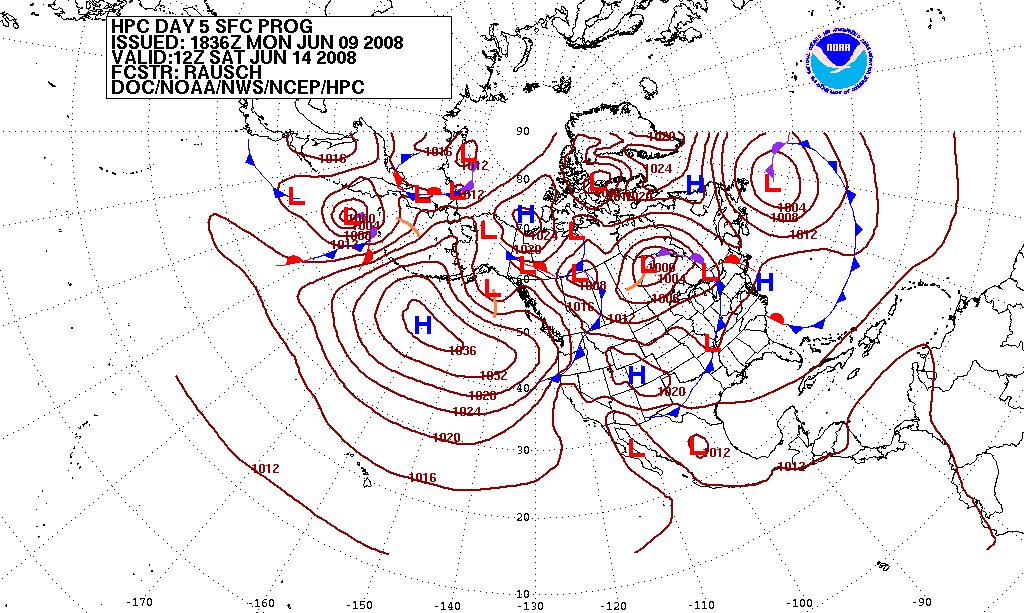
Numerical weather prediction, first developed in the late 1940s as one of the earliest major applications of electronic computers, has advanced dramatically alongside computing power. More sophisticated mathematical models now ingest vast streams of observational data, allowing forecasters to anticipate hurricane activity as much as eight days in advance — a feat once deemed impossible. Yet the question of how far ahead any forecast can remain skilful has remained unsettled.
Previous attempts to determine that limit focused on how tiny perturbations in the atmosphere grow over time. According to Zoltan Toth of NOAA, who led the study with colleague Wei Zhang, those small errors are inaccessible both observationally and through numerical modelling. Past studies therefore had to make assumptions about how the errors behave, assumptions Toth describes as necessarily somewhat arbitrary.
The new method sidesteps that problem entirely by returning to the atmosphere's energetic balance. The researchers began by imagining the atmosphere as a closed system whose deterministic dynamics would preserve information about its initial state indefinitely, allowing forecasts stretching to infinity. In reality, the atmosphere is not closed: it absorbs solar radiation and emits energy back to space.
Because the phases of photons in sunlight are completely random and cannot be determined, quantum-scale uncertainty is continuously injected into the system. These unknown characteristics act as noise, eroding retained information first at the smallest scales and eventually across the entire system. Once all the energy in the atmosphere has been replaced by incoming solar radiation, the ability to make any prediction is lost.
Using well-measured quantities of total energy in the atmosphere and the incoming and outgoing solar radiation fluxes at its upper boundary, the team estimated that skilful forecasts could potentially be extended from today's 14 days to 129 days, with a margin of plus or minus seven days. Toth said the result differs sharply from mainstream discourse on atmospheric predictability, which remains strongly influenced by early publications in the field.
He noted that a 2018 article in the Bulletin of the American Meteorological Society speculated about whether forecast systems were approaching their limits for predicting tropical cyclones, while he and colleagues argued in 2020 that the limit was at least decades away, if not much farther.
The theoretical foundation of the new methodology is simple, Toth said. At its core is the realization that the energy turnover time — the period needed for all energy in the atmosphere to be replaced by incoming solar radiation — is equivalent to the upper limit of predictability. While no complex mathematics is involved, he acknowledged that describing the technique understandably was not easy given the subject's complexity.
Whether the 129-day limit can be approached in practice will depend on future improvements in forecasting technologies, the researchers say. They are now exploring several independent ways to estimate the limit of predictability and examining practical implications for both traditional equation-based and AI-based modelling of the atmosphere. The work is detailed in Advances in Atmospheric Sciences.
95