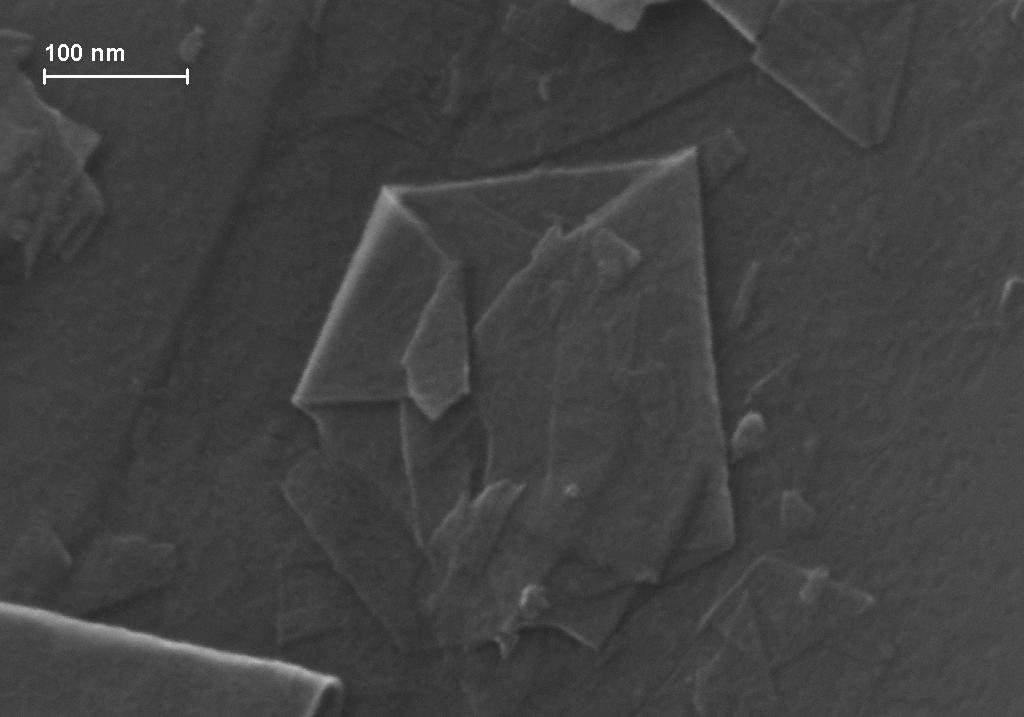
Researchers at the University of Chicago have uncovered unusual electronic behavior in a two-dimensional material that could one day underpin a new class of long-term memory devices. The team found that the material, a van der Waals magnet known as Fe₅GeTe₂, hosts a charge-ordered state in which electrons move both collectively and very slowly while remaining quantumly coherent — a combination that has not been observed before in a stoichiometric compound.
The discovery, published in Science Advances, emerged from a broader investigation into Fe₅GeTe₂, a material known to exhibit multiple structural phases with nearly identical stoichiometry. Each phase is associated with its own electronic and magnetic properties, and because the phases have almost degenerate energies, they can all be stabilized at room temperature. That raised two questions for the research team: what is the nature of each phase, and can these nearly energy-degenerate phases be used to encode information?
Using angle-resolved photoemission spectroscopy (ARPES), the researchers probed the electronic structure and magnetic states of individual phase regions, each tens of microns in size. They discovered that the electronic band in Fe₅GeTe₂ is flat, meaning electrons move through the lattice far more slowly than expected. Further analysis showed that the charge order arises from the folding of electronic bands in the Brillouin zone within 30 meV of the Fermi level.
This flat-band configuration gives rise to what the team describes as a Kondo-like phase, in which localized electronic states interact strongly with itinerant states, producing quantum coherent flat bands right at the Fermi level. That interaction dictates low-temperature transport properties. The finding is surprising from a theoretical standpoint because the Kondo-like behavior appears in a ferromagnetic phase rather than a magnetically non-ordered one, forcing the researchers to reconsider their models.
According to Shuolong Yang, who led the study, the results provide the first experimental evidence that an interaction-driven flat band can itself drive electronic ordering through a mechanism called flat-band nesting. This occurs without relying on Moiré patterns or geometrically frustrated flat-band engineering, techniques that have previously been used to create such exotic electronic states in twisted 2D materials. The discovery opens a new avenue for studying complex many-body physics in stoichiometric, strongly correlated materials.
The potential technological payoff lies in the material's multiple magnetic states, which could theoretically encode information for memory systems. The team is now testing this idea by using a micro-focused laser to switch between the newly observed quantum many-body phase and other phases. Yang explained that carefully designed laser pulses of different frequencies are being used to toggle between the phases, and if successful, the approach could harness many-body physics for real memory operations.
Practical applications, however, face a significant hurdle: the quantum effects have so far only been realized at ultralow temperatures, while any viable memory technology would need to operate at room temperature. Fundamental work continues to understand the exact nature of the Kondo-like phase, including whether it has topological properties and whether it connects to structural defects. Yang noted that the ultimate goal is to develop a microscopic description of this exotic system.
87