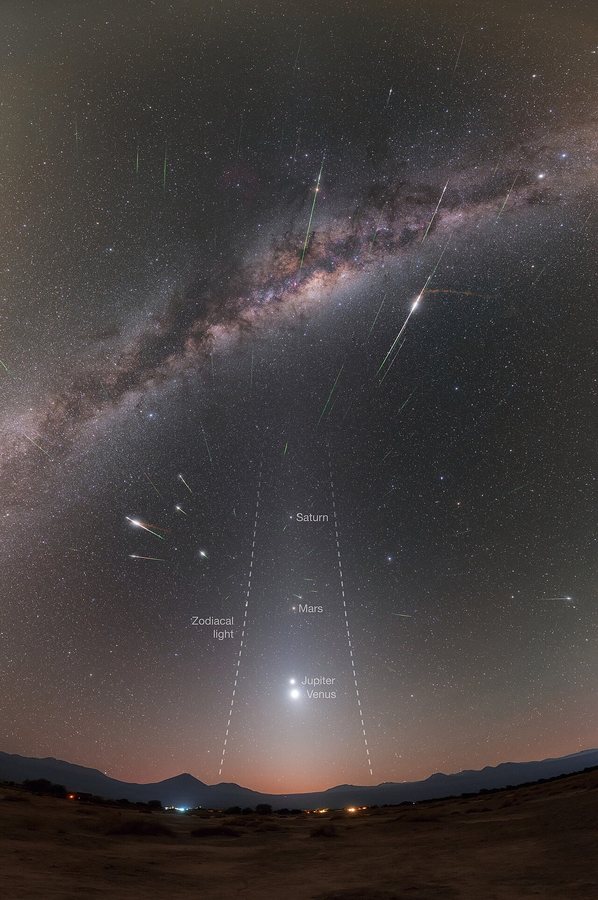
The Orionid meteor shower will return in 2026, giving skywatchers a chance to see fragments of Halley's Comet burn up in Earth's atmosphere. The shower is an annual event produced when Earth passes through the stream of dust and debris left behind by the famous comet, and it is named for the constellation Orion, the point in the sky from which the meteors appear to radiate.
The Orionids typically peak in late October, and the 2026 peak is expected around the same period. Viewing is generally best in the hours after midnight and before dawn, when the radiant point — the area of sky near Orion's club, above the bright star Betelgeuse — climbs higher above the horizon. Observers in dark locations away from city lights have the best chance of seeing the shower, which usually produces a modest but steady rate of meteors rather than a dramatic storm.
Halley's Comet itself is only visible from Earth about once every 76 years, and it last appeared in the inner solar system in 1986. The Orionids offer a way to observe material from the comet without waiting for its return. Each October, Earth crosses the comet's orbital path, and particles shed during previous passages strike the upper atmosphere at high speed and create brief streaks of light. The same debris stream also produces the Eta Aquariids in May, though the Orionids are the better-known autumn display.
For the 2026 shower, skywatchers should plan to observe from a dark site and allow time for their eyes to adjust to the darkness. No special equipment is needed; the meteors are best seen with the naked eye across a wide area of sky. Moonlight can wash out fainter meteors, so checking the lunar phase for the peak nights is worthwhile. The radiant rises late in the evening, meaning the best viewing window is generally in the early morning hours.
The Orionids are one of several annual meteor showers linked to comets, and they serve as a reminder that cometary debris continues to cross Earth's orbit long after the comet itself has moved on. For casual observers and dedicated astronomers alike, the shower is a reliable opportunity to connect with a piece of the solar system's history — material shed by one of the most famous comets ever recorded.
18