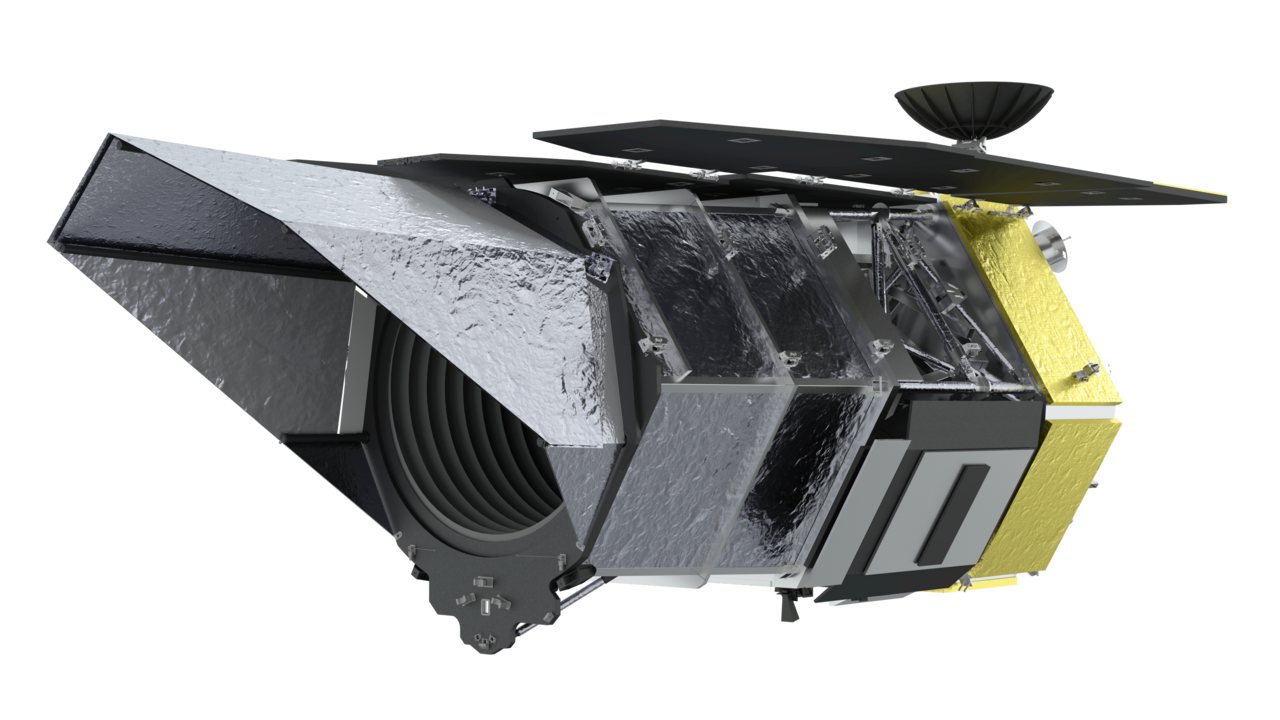
NASA's Nancy Grace Roman Space Telescope has surpassed expectations after engineers made extraordinarily small adjustments to sharpen its view of the cosmos. By moving a mirror just one-sixteenth the width of a human hair, the team brought the observatory's powerful instruments into near-perfect alignment, and its Wide Field Instrument now produces image quality nearly 30% better than predicted.
The result points to exceptionally sharp cosmic surveys once the telescope is operating. The Wide Field Instrument is central to Roman's mission, and its performance exceeding design predictions means the observatory should be able to capture its planned wide-field images with greater clarity than engineers had anticipated. The alignment work was carried out on the ground as part of preparing the telescope's optics and instruments for flight.
The correction was measured in fractions of a human hair, underscoring the precision required in space telescope engineering. Small misalignments in optical systems can degrade image quality across an entire instrument, so the team's ability to tune the mirror at that scale is a significant technical achievement. The near-perfect alignment now achieved means the telescope's optics and detectors are working together more effectively than the original specifications assumed.
Roman is designed to conduct wide-field surveys of the universe, and sharper images translate directly into better science. Improved image quality can help astronomers distinguish faint objects, measure the shapes and positions of distant galaxies more accurately, and extract more information from each exposure. The nearly 30% gain over predictions suggests the mission may deliver richer data than planners expected when the instrument was designed.
The announcement comes as NASA continues preparing the Roman Space Telescope for its role in studying dark energy, exoplanets, and the broader structure of the cosmos. The Wide Field Instrument's performance is a key indicator of how well the observatory will meet its scientific goals. Engineers will continue testing and calibration work to confirm that the alignment holds and that the instrument performs as expected across its full range of operations.
For a mission built around surveying vast swaths of sky, even modest improvements in image sharpness can compound across millions of observations. The fact that Roman's image quality is now nearly 30% better than predicted is therefore more than a technical footnote: it suggests the telescope's scientific return could exceed the baseline plan. The team's success in aligning the mirror at a scale of one-sixteenth the width of a human hair shows how meticulous engineering underpins the observatory's ability to deliver sharp cosmic surveys.
11