NASA's James Webb Space Telescope has found that a turbulent planet 20 light-years from Earth has a surprisingly orderly weather system, with three recurring atmospheric states shaped by temperature changes and shifting clouds. The discovery gives astronomers a powerful new way to map weather on distant worlds and to understand what shapes their atmospheres.
The result comes from Webb's ability to observe an exoplanet's atmosphere over time rather than in a single snapshot. By tracking changes in the planet's atmosphere, researchers identified three distinct states that repeat, suggesting that even highly dynamic worlds can settle into recognizable patterns. Temperature shifts and cloud movement appear to drive the transitions between these states.
The finding matters because exoplanet atmospheres are notoriously difficult to study. Most worlds are too far away and too faint to be seen directly, so scientists rely on subtle signals in the light that passes through or around them. Webb's sensitivity allows researchers to follow those signals across multiple observations, turning scattered data points into a picture of changing weather.
That capability could change how astronomers approach the study of distant planets. Instead of treating an atmosphere as a fixed set of chemical fingerprints, researchers can begin to ask how conditions evolve, how clouds form and dissipate, and how temperature differences drive circulation. The three-state pattern on this world offers an early template for that kind of analysis.
The planet itself remains mysterious, but its weather is now the most closely observed of any world at that distance. The recurring states suggest a system with internal order, not random chaos, which makes it a useful test case for models of atmospheric dynamics. Scientists can compare what Webb sees with simulations of how heat and clouds move through an atmosphere.
The work also has implications for the broader search for habitable environments. Weather shapes how energy moves through an atmosphere, how chemicals mix, and what a telescope might detect from afar. Understanding those processes on a well-studied world helps researchers interpret fainter signals from smaller, cooler planets where conditions might allow liquid water.
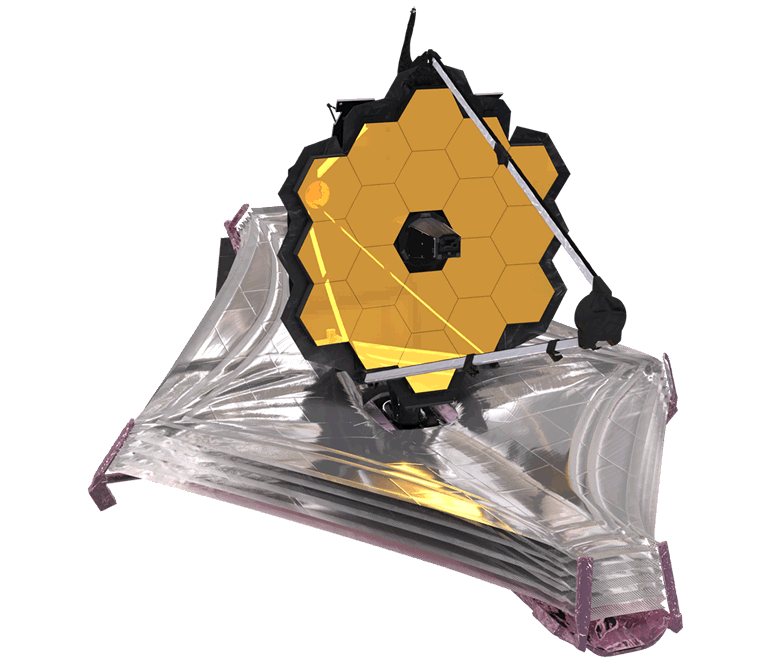
Webb was designed in part to characterize exoplanet atmospheres, and this result shows how its repeated observations can reveal behavior that a single measurement would miss. The telescope's infrared instruments are particularly suited to detecting the thermal and cloud signatures that drive the weather states seen on this world.
Astronomers caution that the finding is a first step, not a complete forecast. The three states are recurring, but their timing and the exact mechanisms that switch the atmosphere between them still need to be pinned down. Follow-up observations will test whether the pattern holds over longer periods and whether similar cycles appear on other worlds.
For now, the result stands as a demonstration that weather on distant planets can be studied as a dynamic process. A world 20 light-years away, once known only as a turbulent mystery, now has a recognizable rhythm — one that researchers hope to use as a Rosetta stone for reading the atmospheres of planets across the galaxy.
14