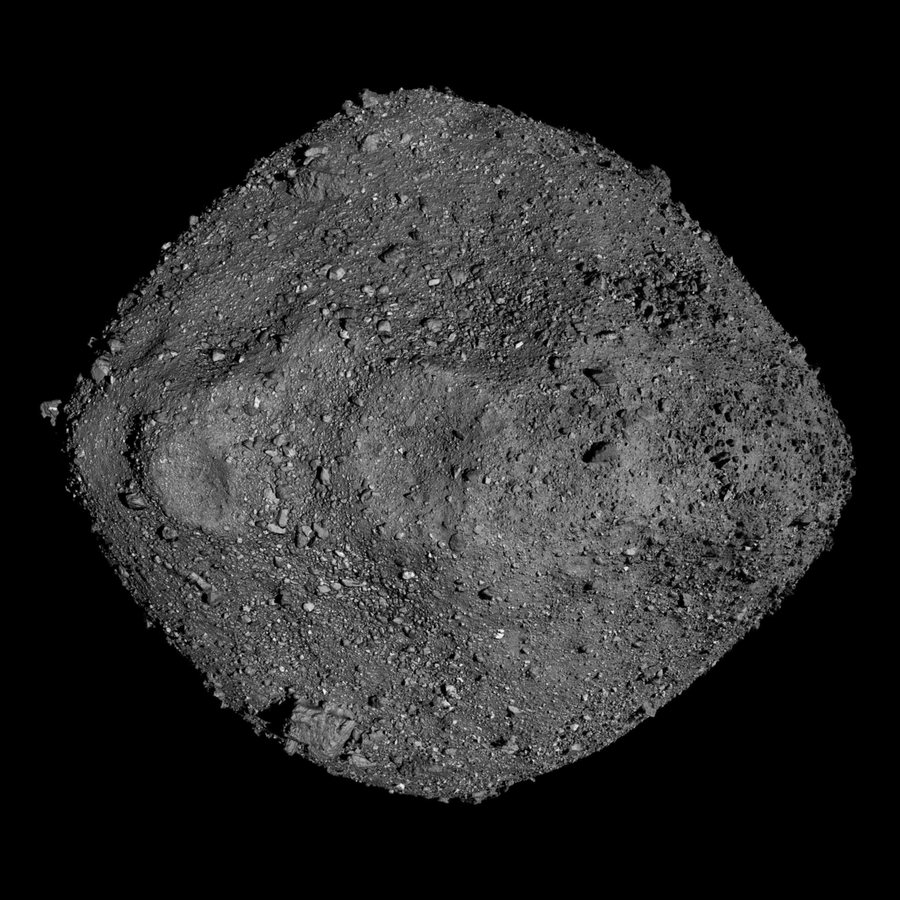
Tiny samples returned from the asteroid Bennu are reshaping scientists' understanding of how our Solar System took shape. New evidence indicates that Bennu formed in a region where material from the inner and outer Solar System came together, and that Jupiter played a surprising part in that process.
The findings suggest that the early Solar System was far more mixed than many models have assumed. Materials that originated near the Sun and materials from farther out appear to have been combined in the same place, producing the building blocks that later became Bennu. The result points to a dynamic environment in which the giant planets helped redistribute matter across vast distances.
Jupiter's influence is central to the new interpretation. As the largest planet in the Solar System, its gravity can scatter and move small bodies and dust, and the evidence indicates that the planet's presence affected where and how Bennu's parent material accumulated. That role had not been a central feature of earlier explanations for the asteroid's origins.
The implications extend beyond a single asteroid. Bennu is a carbon-rich object that has changed relatively little since the Solar System's earliest days, so its material serves as a record of conditions roughly 4.5 billion years ago. Researchers say the samples offer a rare opportunity to test long-standing theories of planetary formation against physical evidence rather than relying on computer simulations alone.
The work builds on the mission that made these samples possible. NASA's OSIRIS-REx spacecraft studied Bennu up close, mapping its surface and collecting material that was returned to Earth for laboratory analysis. Because the sample was gathered directly from the asteroid rather than from a meteorite that has fallen through Earth's atmosphere, scientists can examine it with far fewer concerns about contamination from terrestrial sources.
Scientists continue to analyze the material, and the new results highlight how much of the early Solar System's history may still be preserved in small, carbon-rich rocks drifting between the planets. Each new measurement adds another piece to a picture that researchers are still assembling, and the Bennu samples are likely to remain a central reference point for studies of how the planets and their building blocks came together.
11