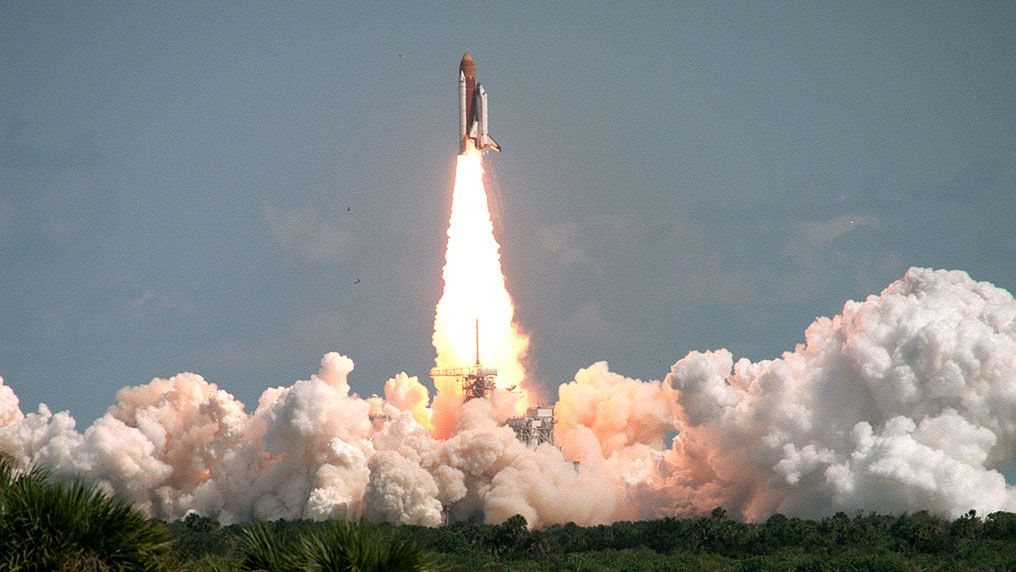
The ashes of Gene Roddenberry, the creator of the science fiction franchise Star Trek, were carried into space on October 22, 1992, aboard NASA's Space Shuttle Columbia. The flight gave the writer and producer, who had long championed a hopeful vision of humanity's future beyond Earth, a final journey into orbit.
Roddenberry died in October 1991 at the age of 70. His vision of a crew of explorers traveling through the galaxy had inspired generations of viewers and, in the years that followed, a large body of television series and films. Sending part of his remains into space reflected how closely his work had been tied to the idea of exploration and the possibility of human achievement beyond the planet.
The shuttle mission carried his ashes as part of a memorial payload, a practice that has been used for other notable figures who wished to be associated with spaceflight. The payload was released in orbit, placing Roddenberry's legacy in the same frame as the real-world space program that many of his fans admired and that his stories had helped popularize.
The flight is remembered among space enthusiasts as an unusual point where popular culture met the history of crewed spaceflight. It underscored the lasting influence of Star Trek, whose depiction of optimistic, cooperative exploration continued to resonate with audiences long after the original series ended, and whose imagery of starships and shared missions had become part of the public vocabulary of space.
The mission also highlighted how the entertainment industry and the civilian space community could share a common enthusiasm for the future. Roddenberry's franchise had helped inspire many people who later pursued careers in science and engineering, and the memorial flight offered a visible moment in which that inspiration was linked directly to the orbital environment it had imagined.
Coverage of the flight at the time framed it as a tribute rather than a scientific undertaking, and it remains one of the more unusual memorial missions associated with the shuttle program. The episode continues to be cited in discussions of how spaceflight and popular culture intersect, and of how the imagined future of Star Trek has been treated as a touchstone by audiences and by working engineers alike.
14