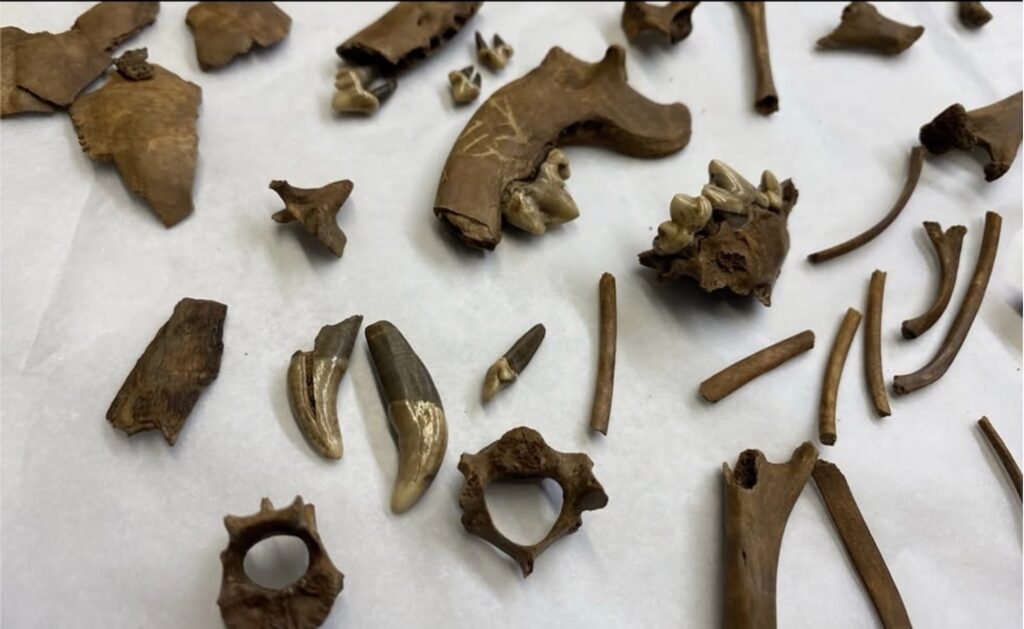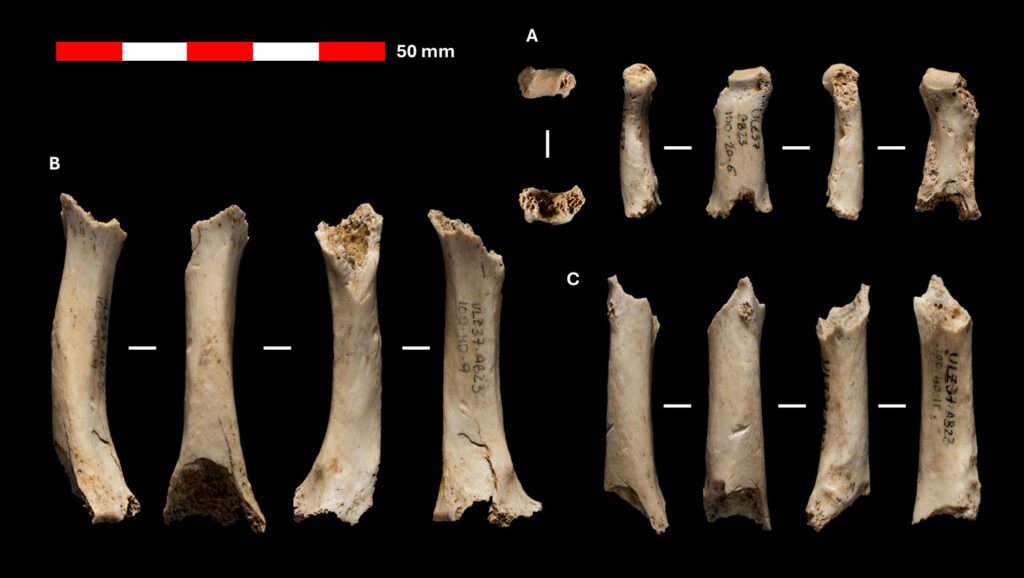
Well-preserved Neanderthal hand bones containing collagen have been recovered from Abauntz Cave in Navarre, northern Spain, according to a report that relays the findings. The bones have been radiocarbon dated to roughly 46,000 years ago, placing them in the final phase of Neanderthal presence in the region, when the species was approaching its disappearance from Europe.
Researchers Andión Arteaga of the University of Warsaw and the Catalan Institute of Human Paleoecology and Social Evolution, together with Mikel Arlegi of the Musée de l’Homme, say the cave’s location is central to its significance. Abauntz lies along a natural corridor connecting both sides of the Pyrenees. That position, they explained, makes the site particularly useful for investigating how late Neanderthal populations moved across the region and how different groups may have interacted. Mountain passes and valleys of this kind have long channeled movement between the Iberian Peninsula and the lands north of the range, so a cave in such a corridor can record more than a single group’s presence.
Preliminary genetic analysis of a sample from the bones indicates that they belonged to a male Neanderthal. Analysts also examined the surface of the remains and found marks suggesting that a small carnivore may have gnawed on them after death. The detail offers a glimpse into what happened to the body once it was no longer living, and it indicates that the bones were not simply deposited and left untouched by scavengers.
The preservation of collagen is especially valuable to researchers. Collagen is a structural protein that tends to break down over tens of millennia, so its survival in bone of this age allows scientists to attempt genetic and dietary studies that would otherwise be impossible. The researchers noted that further analysis of the Neanderthal genome is expected to provide more information about Europe’s last Neanderthal populations, and that the team will look for signs that could place this individual within known genetic lineages.
The researchers stressed that different Neanderthal lineages may have coexisted in Europe during this late period. “We know that different Neanderthal lineages may have coexisted in Europe,” they said. “The remains from Abauntz could therefore help us better understand the diversity of Neanderthal populations during this late phase of their history.” Such diversity is a central question in paleoanthropology, because it bears on whether late Neanderthal communities were isolated or connected across long distances, and on how they responded to the arrival of modern humans on the continent.
The discovery adds to a growing body of evidence from Iberia, where Neanderthal remains and tools have repeatedly been studied as some of the final traces of the species in Western Europe. Abauntz therefore joins a set of sites that are being used to reconstruct the final chapter of Neanderthal history, and the new genetic and taphonomic work at the cave is expected to refine that picture.
9