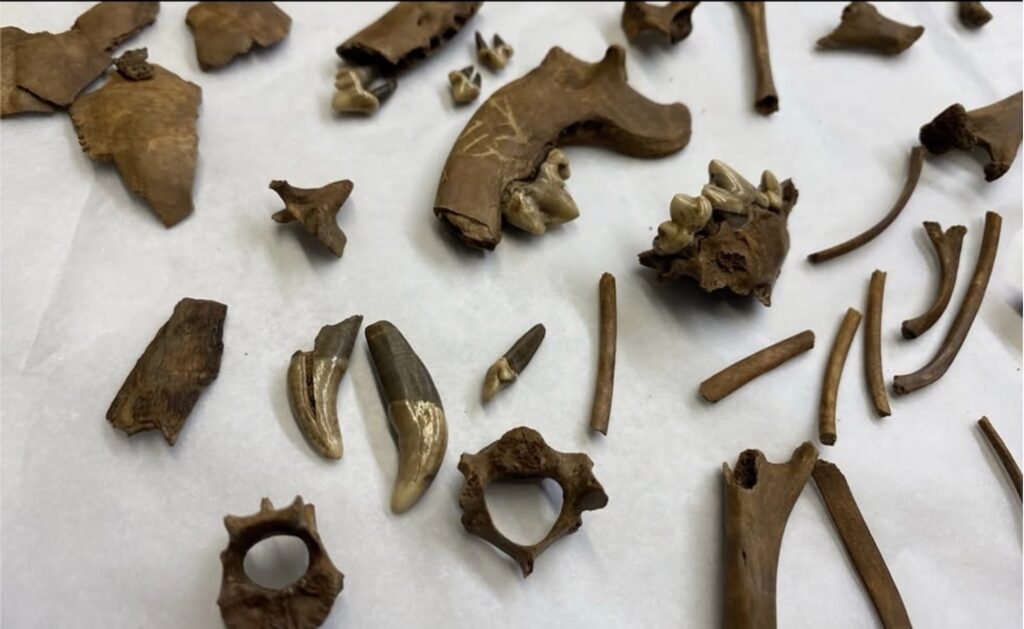
Archaeologists excavating at the foot of Huaca de la Luna, a temple in the Huacas de Moche complex on Peru's northern coast, have uncovered the roughly 1,400-year-old grave of an infant buried with an unusually rich assemblage of offerings. The find adds a rare child's burial to a platform already known for adult tombs thought to belong to people of elevated status.
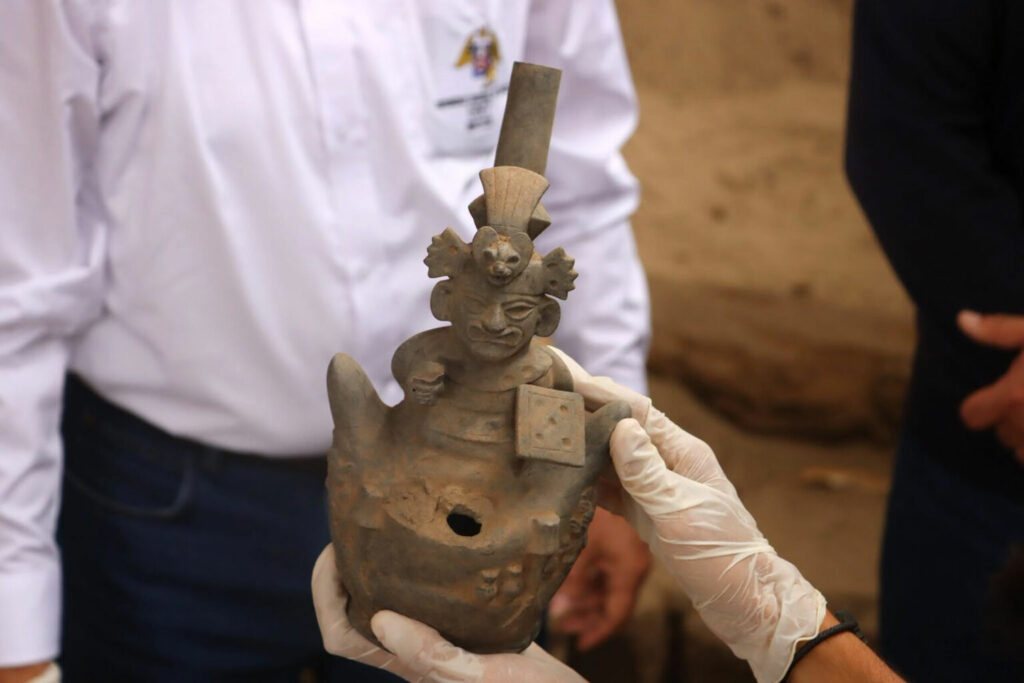
Carlos Rengifo of the Huacas de Moche Archaeological Project said the tomb was located on the Uhle funerary platform, where earlier excavations revealed the remains of adults believed to have held high rank in Moche society. The child's grave contained more than 30 ceramic objects, a concentration of goods that places the infant among the site's more elaborately furnished burials.
The vessels are decorated with a wide range of imagery. According to Rengifo, they include depictions of bird-shaped figures, prisoners, scenes of sacrifice and combat, and deities. One vessel stands out for its unusual landscape: it shows a body of water separated from the sea by a strip of sand, with birds, fish and two frogs painted on the bottle.
Archaeologist Enrique Zavaleta said the animals depicted on that vessel carry a specific environmental meaning. Frogs in particular are associated with fertility and the presence of water. «These animals in an area meant that there was a lot of moisture or that the rains were coming,» Zavaleta said, suggesting the imagery may reflect local observations of seasonal change and rainfall.
Recent analysis has also revealed metal associated with the burial. «We have also recently found that the area around the child's skull was covered with a kind of metal mask, which we believe could be copper and may have had decorations as well,» Rengifo said. He added that a second metal element was found toward the side of the foot bones. The presence of such objects alongside the ceramics reinforces the impression that the child was treated as a person of status, although the exact composition of the metal has yet to be confirmed.
The Moche, who flourished on Peru's northern coast before the rise of the Inca, are known for monumental adobe temples, sophisticated metalwork and ceramics that depict ritual, warfare, myth and daily life in remarkable detail. Huacas de Moche, which includes the Huaca de la Luna and the larger Huaca del Sol, is one of the principal archaeological sites for understanding the civilization's political and religious organization.
Burials on the Uhle platform have long been central to discussions of Moche social hierarchy, because the goods placed with the dead appear to reflect rank in life. The discovery of an infant accompanied by dozens of vessels and possible metal adornments raises questions about how status was inherited or ascribed at the site, and about the role children played in elite family lines.
Excavations at Huacas de Moche have continued for decades, and the project has produced a steady stream of findings on Moche ritual, craft production and funerary practice. The newly reported tomb is expected to contribute to ongoing study of the platform's burial population and of the symbolic language used on Moche ceramics.
For now, the infant's grave remains one of the more striking recent additions to that record, combining a rare child burial with an object assemblage rich in religious and environmental imagery. Further laboratory work on the metal elements and the ceramics is likely to clarify both the child's standing and the meaning of the scenes painted on the vessels.
12