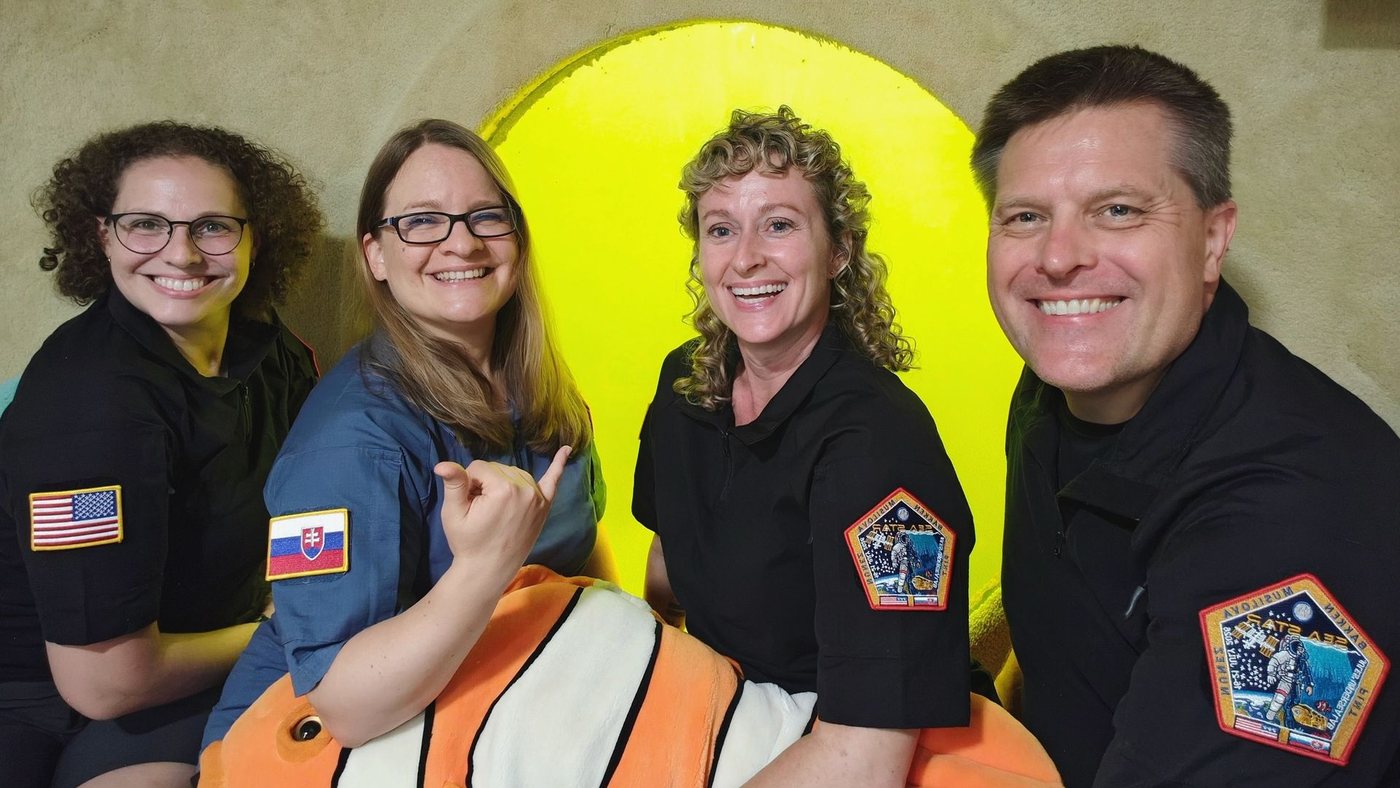
Living underwater in confined habitats may offer one of the most useful ways to prepare astronauts for long space missions, according to astrobiologist Michaela Musilova, who has led 40 simulated missions to the Moon and Mars, the most conducted by any leader to date.
Musilova is an award-winning astrobiologist, explorer and science communicator who has carried out research at institutions including NASA, the European Space Agency, Caltech and the Canada-France-Hawaii Telescope. She is the president and founder of the nonprofit XtremeFrontiers, which runs Astro Seven Summits, a project that combines expeditions to the highest mountain on each continent with scientific research carried out in collaboration with NASA and institutions worldwide. She is also one of very few people to have led research projects on all seven continents.
Analog missions, in which crews live and work in environments designed to mimic the conditions of space, allow researchers to study how people cope with isolation, confinement, teamwork and the demands of operating far from help. Underwater habitats are a particularly close match for some of these pressures, since crews must live in a small, enclosed space, manage limited resources and depend on carefully planned support systems to survive. Such settings let scientists observe human performance and group dynamics before astronauts face the same challenges in orbit or on another world.
Musilova's work has been recognized through several honors, including a place on Forbes 30 Under 30, a listing among the Top 100 Women in Aerospace and Aviation, and the Emerging Space Leaders Grant. She has also worked as a consultant for companies on topics ranging from Mars missions to museum exhibitions, including projects for the Smithsonian, and she regularly gives keynote presentations and outreach talks. She has spoken to international media for more than two decades and co-authored her biography, "Woman from Mars."
12