An international team of astronomers has detected a sugar molecule called erythrulose in a molecular cloud near the center of the Milky Way, marking the first direct discovery of a sugar in interstellar space. The finding, published in Nature Astronomy, provides crucial evidence supporting the theory that complex organic molecules essential for life may form among the stars and later reach planets like Earth aboard asteroids and comets.
The molecule was identified in the cloud designated G+0.693-0.027, located approximately 27,000 light-years from Earth in the vicinity of the galactic center. This region is already known for its extraordinary richness in organic molecules. Erythrulose, a four-carbon sugar with the chemical formula C4H8O4, occurs naturally in raspberries on Earth and is used in the cosmetics industry as an ingredient in some self-tanning products.
Researchers used two Spanish radio telescopes — the Yebes Radio Telescope at the Guadalajara observatory and the IRAM radio telescope in the Sierra Nevada — to conduct spectroscopic surveys of the cloud. By comparing the spectra obtained from both instruments with laboratory measurements, the team identified twelve spectral lines perfectly matching the signature of erythrulose, confirming the presence of the sugar without ambiguity.
The discovery challenges a long-standing paradigm in astrochemistry. Typically, scientists observe that the abundance of a molecule in interstellar space decreases by about an order of magnitude for each additional carbon atom added to its structure. Erythrulose, however, defies this rule. Observations show that the sugar is eight to seventeen times more abundant than two simpler three-carbon sugars — glyceraldehyde and dihydroxyacetone — which are considered the most likely precursors of more complex sugars.
To explain how erythrulose formed in such abundance, the research team combined laboratory experiments, quantum chemistry calculations, and astrochemical simulations conducted in collaboration with chemists from the University of Extremadura and Radboud University in the Netherlands. The results suggest that erythrulose forms through the direct combination of two molecular fragments, each containing two carbon atoms (C2), rather than through the sequential addition of single carbon atoms that has long been assumed to be the dominant pathway for molecular growth in space.
«It was an unexpected discovery,» said Izaskun Jiménez-Serra, a researcher at the Centro de Astrobiología (CAB, CSIC-INTA) in Madrid and lead author of the study. «The prevailing view in astrochemistry is that interstellar molecules grow progressively through the sequential addition of carbon atoms.»
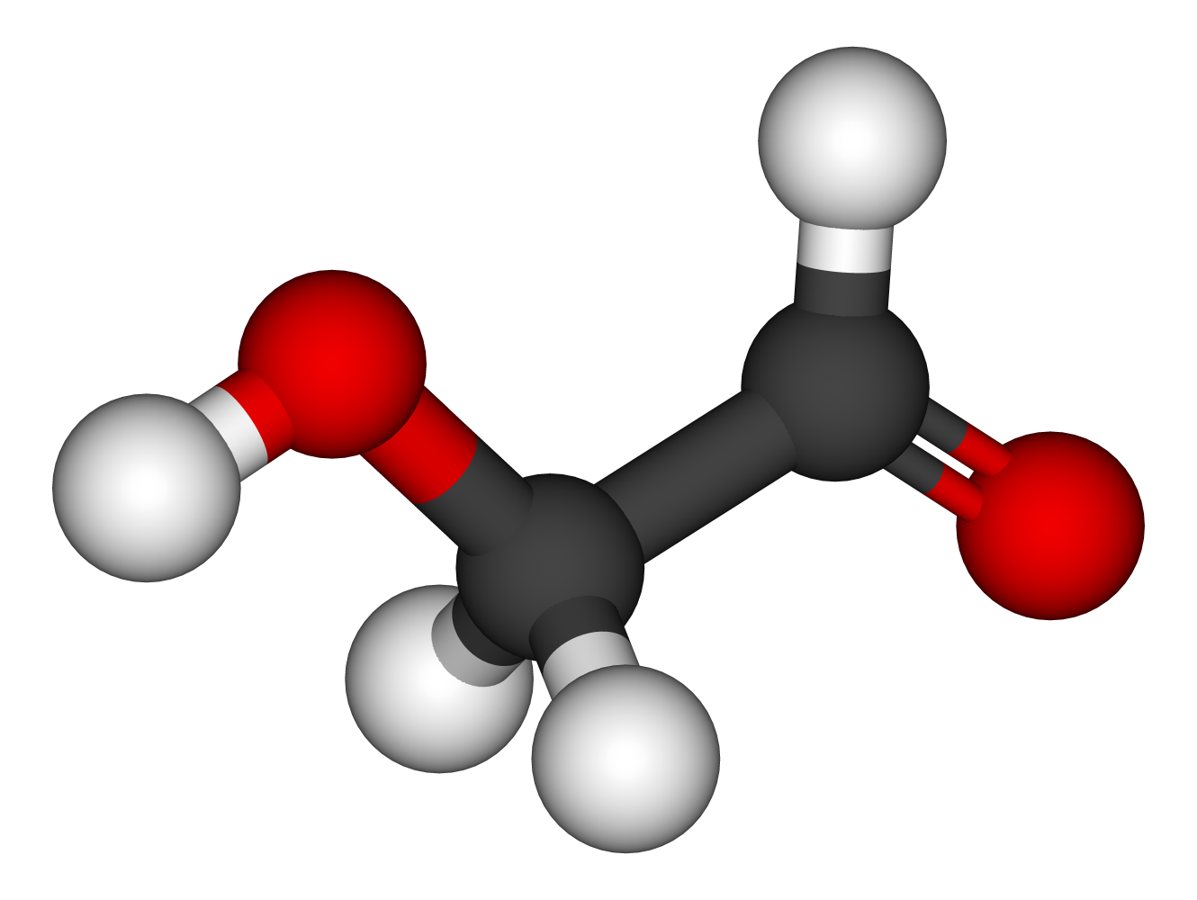
Recent laboratory experiments on methanol-rich ices have shown that sugars containing up to six carbon atoms can form through the recombination of smaller molecular fragments consisting of three carbon atoms each. Building on these results, the researchers focused on two molecules that are much more abundant in the molecular cloud: glycolaldehyde and ethylene glycol, both of which contain two carbon atoms. The hypothesis is that erythrulose forms from the union of two highly reactive radicals produced when these molecules are irradiated by cosmic rays within the icy coatings that cover tiny interstellar dust grains.
The team reconstructed the entire sequence of reactions through simulations, and the results indicate that the process is not only possible but also efficient. According to the proposed scenario, the sugar forms directly on the surface of dust grains coated with ice, where cosmic rays provide the energy needed to drive the chemical reactions.
Sugars are essential biomolecules for life as we know it. They serve as the primary energy source for cells and form the sugar-phosphate backbone of DNA and RNA, the macromolecules responsible for storing, transmitting, and expressing genetic information. Some theories about the origin of life on Earth propose that these compounds played a fundamental role in the emergence of the first nucleic acids. However, prebiotic chemistry experiments conducted so far indicate that their synthesis under the conditions of the primordial Earth would have been inefficient.
For years, scientists have hypothesized that at least some of these molecules may have formed among the stars and later reached Earth aboard asteroids and comets. This hypothesis has been supported by the discovery of ribose, glucose, and other monosaccharides in meteorites and asteroid samples. Until now, however, the crucial piece of evidence was missing: the direct detection of a sugar in the interstellar medium itself. The detection of erythrulose provides that missing link.
The discovery opens new questions about the chemical complexity that can be achieved in space and suggests that the pathways for forming complex organic molecules may be more varied and efficient than previously thought. It also strengthens the case that the building blocks of life could be widespread throughout the galaxy, potentially seeding planets with the raw materials necessary for the emergence of life.
114