Astrophysicists at the Massachusetts Institute of Technology are advancing a technique called X-ray reverberation to map the immediate surroundings of black holes, using the way X-rays bounce off gas and dust to reconstruct the geometry of matter in some of the most extreme environments in the universe. The method offers a way to probe regions that are far too small and too distant to be resolved directly by any telescope.
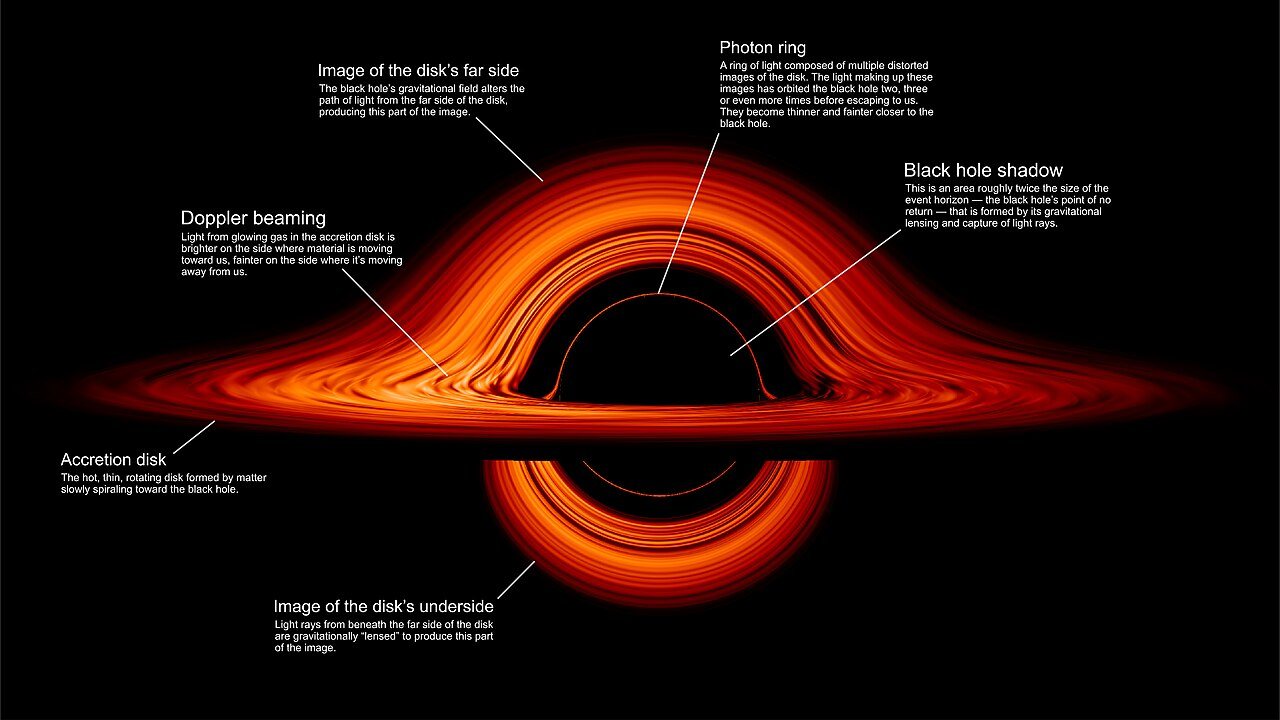
The approach relies on the fact that black holes do not emit light themselves. Instead, the material swirling toward them in an accretion disk heats up and radiates, including in X-rays. Some of that radiation travels outward and strikes surrounding clouds of gas, which then fluoresce and re-emit X-rays of their own. Because the reflected signal arrives slightly later than the direct emission, the delay carries information about how far the gas sits from the central source.
By measuring those time delays across different energies, researchers can build a picture of the reflecting material's distance, density, and motion. The technique is analogous to echo mapping, in which astronomers use the lag between a bright flare and its reflected echo to measure distances in space. In the X-ray band, the delays are typically short, requiring sensitive instruments and careful statistical analysis to extract the signal from noisy data.
MIT's work in this area sits within a broader international effort to understand how supermassive black holes grow and influence their host galaxies. The intense radiation and powerful jets associated with accreting black holes can heat surrounding gas, potentially affecting star formation and the evolution of entire galaxies. Mapping the inner accretion flow is a step toward understanding how energy is transported outward from the black hole's immediate vicinity.
The research also has implications for testing fundamental physics. The region closest to a black hole's event horizon is governed by strong gravity, where predictions from general relativity differ sharply from those of Newtonian physics. Observations of X-ray reflection can, in principle, probe the motion of gas in this regime, offering a way to check theoretical models against real data.
X-ray reverberation studies depend on long, uninterrupted observations from space-based telescopes, since Earth's atmosphere blocks X-rays from reaching the ground. Missions such as those operated by NASA and the European Space Agency have provided the high-quality data needed for this work, and future observatories are expected to improve the sensitivity and time resolution available to researchers.
For MIT's astrophysics group, the effort combines theoretical modeling with data analysis. Researchers must account for the complex physics of how X-rays are produced, absorbed, and re-emitted in a highly ionized environment, as well as for the effects of the black hole's spin and the viewing angle from Earth. Each of these factors shapes the observed signal and must be disentangled to produce a reliable map.
The broader goal is to turn these measurements into a clearer picture of how black holes interact with their surroundings. As the technique matures, astronomers hope to use it to study a wider range of black holes, from relatively nearby systems to more distant ones, and to compare results across different masses and accretion rates. Such comparisons could reveal whether the same physical processes operate across the full range of black hole environments.
The work reflects a growing emphasis in astrophysics on time-domain observations, in which the variability of a source over time is used to infer its structure. For black holes, where direct imaging remains out of reach, these indirect methods are currently the most promising route to understanding what happens close to the event horizon.
16