A new study has proposed a set of lunar landing sites that could serve as the best destinations for future human missions, shifting attention beyond the heavily studied South Pole region. The research evaluates candidate locations on the Moon according to criteria that balance scientific return with the practical demands of putting astronauts on the surface.
The work arrives as space agencies and commercial partners prepare for a new phase of crewed lunar exploration. While the lunar South Pole has drawn intense interest because of permanently shadowed regions that may hold water ice, the new analysis suggests that other sites may offer more favorable conditions for safe landings, surface operations, and long-term scientific work.
According to the study, site selection is not a simple matter of choosing the most scientifically intriguing terrain. Mission planners must also consider illumination, surface slope, communication with Earth, and the availability of resources that astronauts could use. The proposed locations are intended to represent a compromise among these competing factors.
The findings add to a growing body of research aimed at narrowing down where humans should return to the Moon. Landing site studies are a routine part of mission preparation, helping engineers and scientists decide where to place instruments, how to design spacecraft, and what kinds of experiments astronauts can conduct once they arrive.
Scientific priorities for a crewed lunar mission typically include sampling ancient rocks, studying the Moon's geological history, and investigating the presence of volatiles such as water ice. The new study's proposed sites are presented as candidates that could support these goals while remaining accessible to planned landing systems.
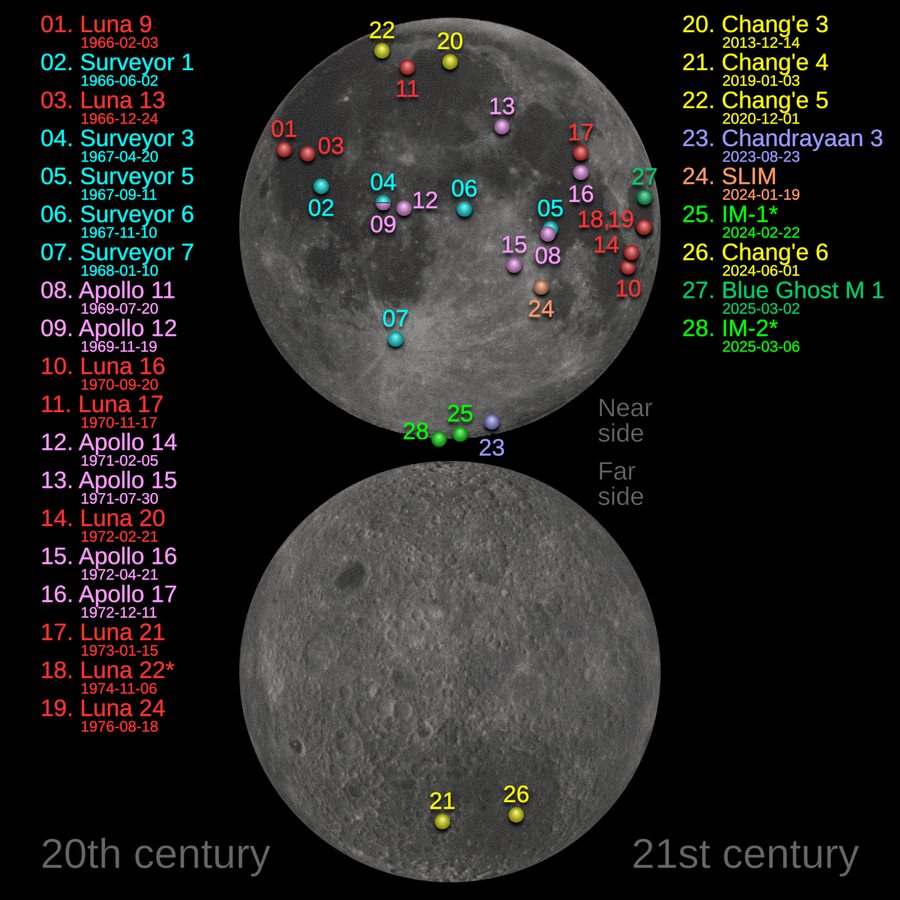
The analysis also reflects broader changes in lunar exploration. Unlike the Apollo era, when short visits were concentrated near the equator, current plans envision longer stays and eventually a sustained human presence. That shift places greater emphasis on sites where crews can operate safely and where resources might support future infrastructure.
The study does not settle the question of where the next crewed landing will occur. Final decisions will depend on the capabilities of specific landers, the timing of missions, and the priorities of the agencies and companies involved. Still, by proposing and comparing candidate sites, the research offers a framework that mission planners can use as they refine their objectives.
For now, the work underscores that returning humans to the Moon involves far more than choosing a dramatic landscape. It requires matching scientific ambition with engineering reality, and the new study's proposed sites are intended to help do exactly that.
8