A dust structure around the star Beta Pictoris, nicknamed the "Cat's Tail" by astronomers, is likely the remnant of a collision between two large bodies comparable to Pluto, according to a new study led by researchers at the University of Arizona. The findings, published this month in The Astrophysical Journal Letters, offer fresh clues about the origin of an unusual feature that had puzzled scientists since it was first detected.
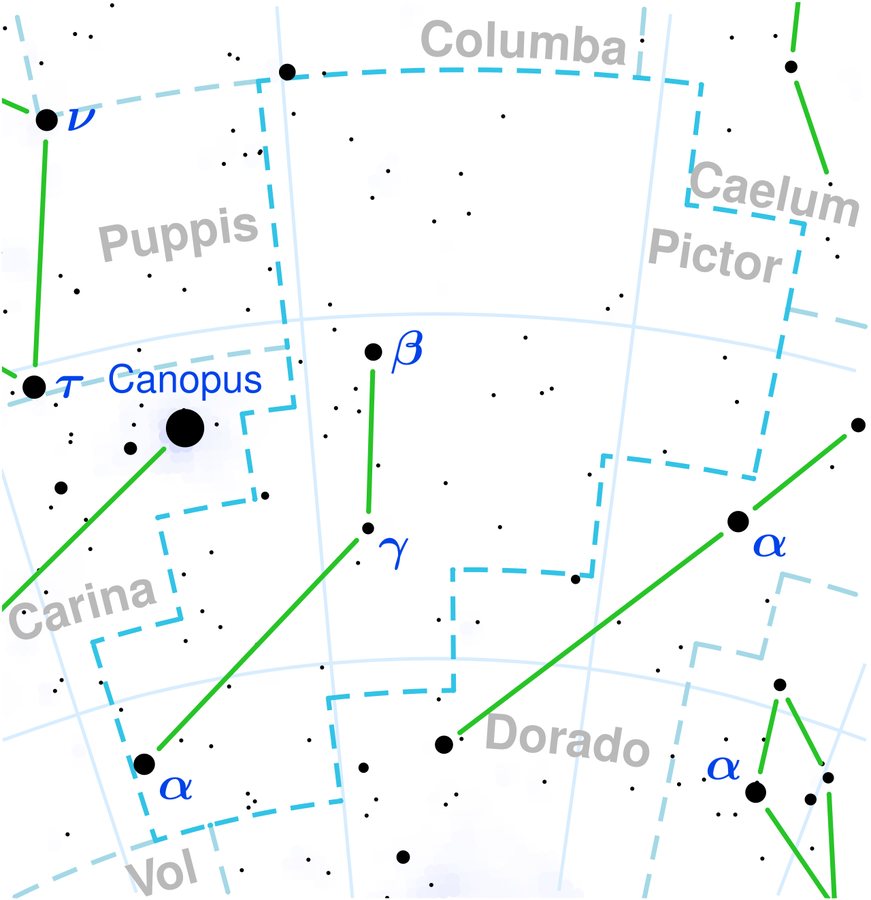
Beta Pictoris lies about 63 light-years from Earth in the constellation Pictor. The star, the second brightest in that constellation, has a mass 1.79 times that of the Sun and roughly eight times its luminosity. Three planets have been confirmed in orbit around it: Beta Pic b, Beta Pic c and Beta Pic d. The system has long drawn attention for its debris disk, a ring of dust and gas surrounding the star.
The Cat's Tail first came to light in 2024, when observations from the James Webb Space Telescope in infrared light revealed a cloud of dust extending billions of kilometers above the plane of the star's secondary debris disk. Its shape, resembling a feline tail, gave the structure its name. Infrared observations alone, however, had not shown it at shorter wavelengths, which left researchers uncertain about its nature.
In the new work, Arin Avsar, a researcher at the University of Arizona and lead author of the study, combined new Hubble observations with archival data and computer simulations to reconstruct the structure in three dimensions. Avsar said the team believes the tail is the result of a collision between large bodies. Its invisibility at visible wavelengths, he explained, comes from its composition. "It is made almost entirely of what we call refractory organic material, largely composed of carbon," Avsar said. "These long chains of carbon atoms absorb visible light, making the material very dark."
Earlier studies had suggested the structure extended hundreds of astronomical units deep into space, away from Earth and beyond the disk. The new observations point to a different geometry. "We found that, instead of extending a thousand astronomical units behind the star, the Cat's Tail may develop sideways relative to our line of sight, without a true extension in depth," Avsar said. "The structure lies essentially in the same plane as the star in the sky, extending only partly behind it."
The data also indicate the dust cloud is made of grains a few micrometers across that are highly porous, an unusual characteristic that raises a question. According to the scientists' hypothesis, the tail resulted from a collision between two large planetesimals roughly a century ago, which is very recent on astronomical timescales. Kevin Wagner, a University of Arizona researcher and co-author of the study, said the impact may have been violent enough to vaporize carbon grains. "It is possible that the speeds reached during the impact were so high that they vaporized the carbon grains, turning them into gas," Wagner said. "As the gas cooled, it could then have recondensed, giving rise to extremely porous grains."
Using Hubble's Space Telescope Imaging Spectrograph in coronagraphic mode, the team also identified a prominent distortion in the dust halo surrounding the star. The researchers attribute it to the interaction of the disk with Beta Pictoris b, a gas giant with a mass about ten times that of Jupiter. Avsar said the result provides further evidence that giant planets can influence comets and icy bodies through their gravitational pull, affecting surrounding dust out to distances of hundreds of astronomical units.
The study also offers insights into the early evolution of the Solar System. The researchers note that when the Kuiper Belt was only about twenty million years old, it may have been far more populated than it is today, a comparison that helps frame how collisions among icy bodies shaped planetary systems, including our own.
15