As NASA advances its plans to establish a permanent human presence on the Moon under the Artemis program, a fundamental question has emerged: how many astronauts should live and work at the lunar outpost? A recent study published in the journalActa Astronauticaoffers a data-driven analysis to help answer that question, weighing the operational needs, safety considerations, and logistical challenges of staffing a base on the Moon.
The research, led by a team from the University of Texas at Austin and NASA's Johnson Space Center, modeled various crew sizes for a lunar base located near the Moon's south pole, a region of high scientific interest due to the presence of water ice in permanently shadowed craters. The study considered factors such as the number of astronauts required to maintain the base's infrastructure, conduct scientific experiments, and respond to emergencies, while also accounting for the limited space, power, and supplies available in a lunar habitat.
According to the study's findings, a crew of four astronauts appears to be the minimum viable size for a lunar outpost, as it allows for a division of labor that includes a commander, a medical officer, a scientist, and an engineer. However, the researchers concluded that a crew of six to eight astronauts would be more optimal, providing greater flexibility for conducting research, handling unexpected situations, and maintaining the base's systems over extended periods. The analysis suggests that a larger crew would also reduce the risk of mission failure due to a single point of failure, such as a medical emergency or equipment malfunction.
The study's authors emphasized that the ideal crew size depends on the specific goals of the lunar base. For a base focused primarily on scientific exploration, a larger crew with diverse expertise would be beneficial. In contrast, a base designed to test technologies for future Mars missions might require a smaller, more specialized team. The researchers also noted that the crew size must be balanced against the costs and complexities of transporting additional astronauts and supplies to the Moon, as well as the psychological and social dynamics of living in a confined environment for months at a time.
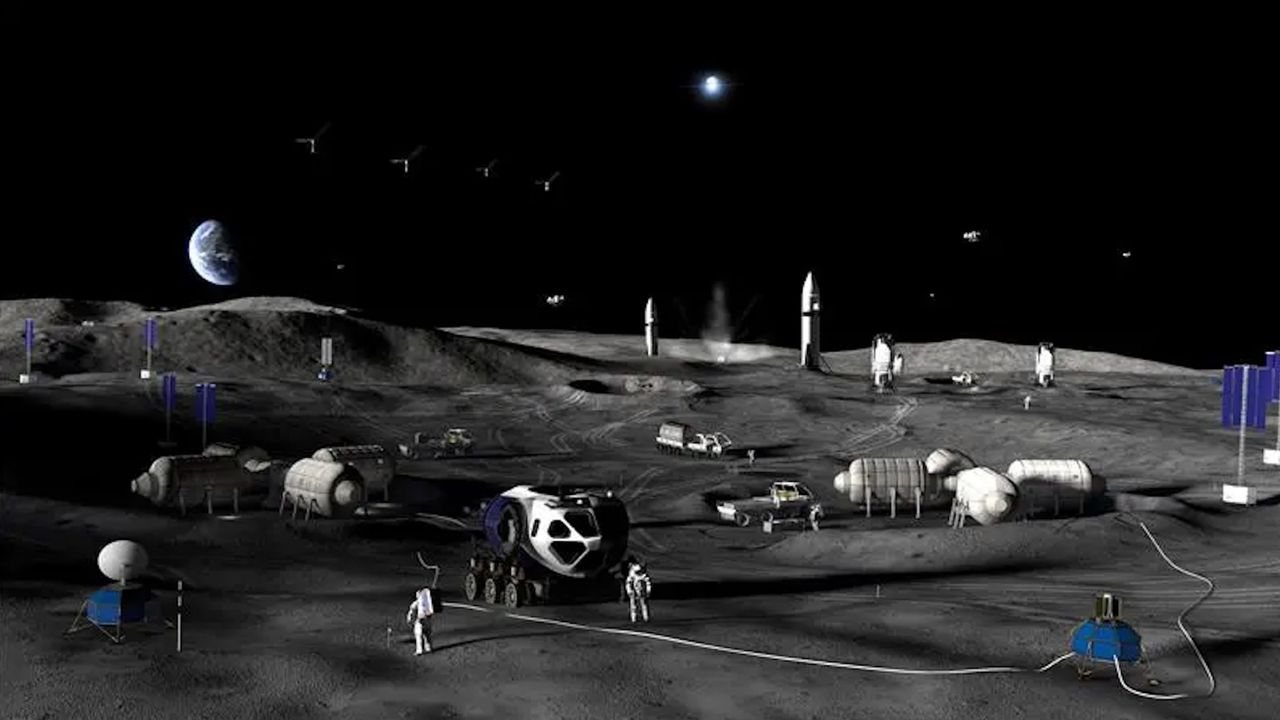
NASA's Artemis program aims to return humans to the Moon for the first time since the Apollo era, with the goal of establishing a sustainable presence by the end of the decade. The lunar outpost, known as the Artemis Base Camp, is envisioned as a hub for scientific research, resource utilization, and preparation for crewed missions to Mars. The base would include living quarters, laboratories, power generation systems, and landing pads, all designed to support long-duration stays.
The study's findings have implications for the design of the lunar habitat and the planning of crew rotations. For example, the researchers suggested that the base should be designed to accommodate at least six astronauts, with the ability to scale up to eight if needed. They also recommended that crew members be cross-trained in multiple skills to ensure redundancy and flexibility. The study highlighted the importance of autonomous systems and remote operations to reduce the workload on the crew and allow them to focus on high-priority tasks.
Beyond the technical and logistical considerations, the study also addressed the human factors of living on the Moon. The researchers pointed out that the psychological well-being of the crew is critical to mission success, and that a larger crew can provide social support and reduce feelings of isolation. However, they also noted that a larger crew could lead to conflicts and privacy issues, which must be managed through careful selection and training. The study called for further research into the behavioral health of astronauts in long-duration lunar missions.
The analysis builds on decades of experience from the International Space Station (ISS), where crews typically consist of six to seven astronauts on rotations of about six months. The ISS has provided valuable data on the effects of microgravity on the human body, the challenges of living in a confined space, and the importance of teamwork and communication. However, the lunar environment presents additional challenges, including lower gravity (about one-sixth of Earth's), higher radiation levels, and the need to operate in a vacuum with extreme temperature swings.
The study's authors acknowledged that their model is based on current assumptions about technology and resources, and that the optimal crew size may change as new capabilities are developed. For instance, advances in robotics, artificial intelligence, and in-situ resource utilization could reduce the need for human labor, allowing for smaller crews. Conversely, the discovery of valuable resources or the need to conduct complex scientific experiments could justify larger crews.
As NASA continues to refine its plans for the Artemis Base Camp, the question of crew size will remain a key topic of discussion. The study provides a framework for making informed decisions, but ultimately, the final number will depend on a combination of scientific, operational, and budgetary factors. The researchers hope that their work will help guide the design of the lunar outpost and ensure that it is staffed appropriately to achieve its ambitious goals.
125