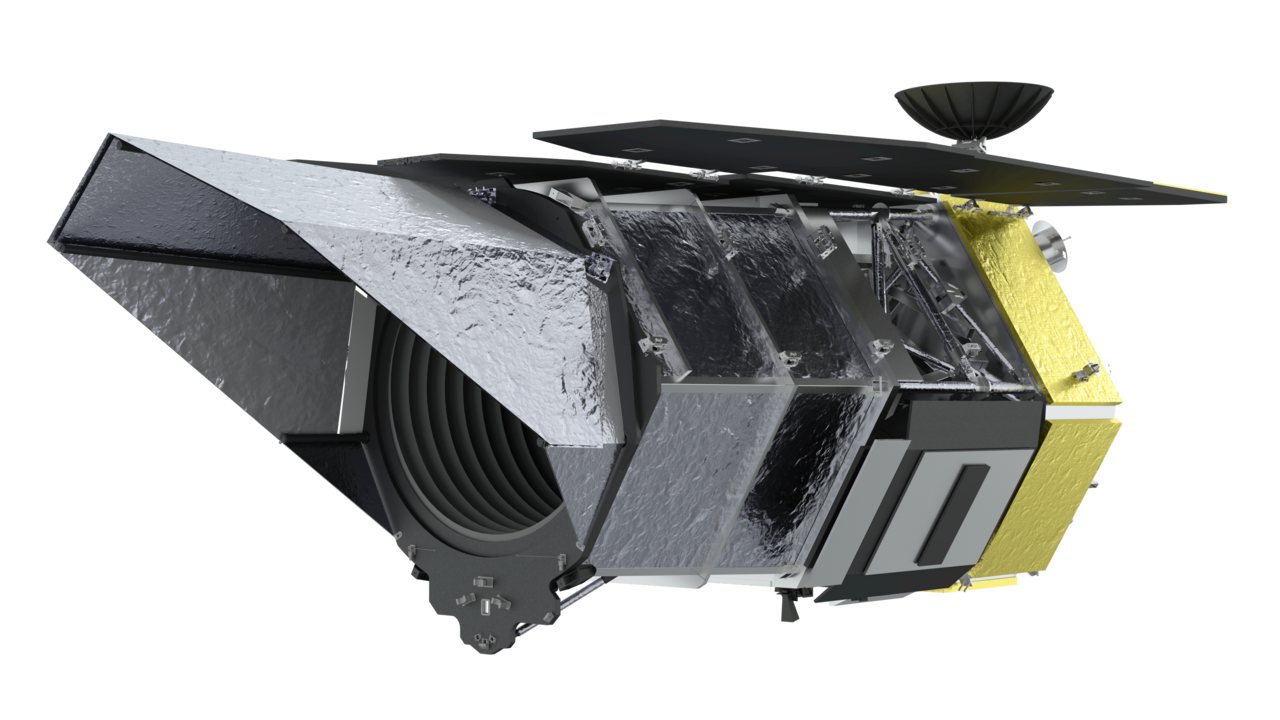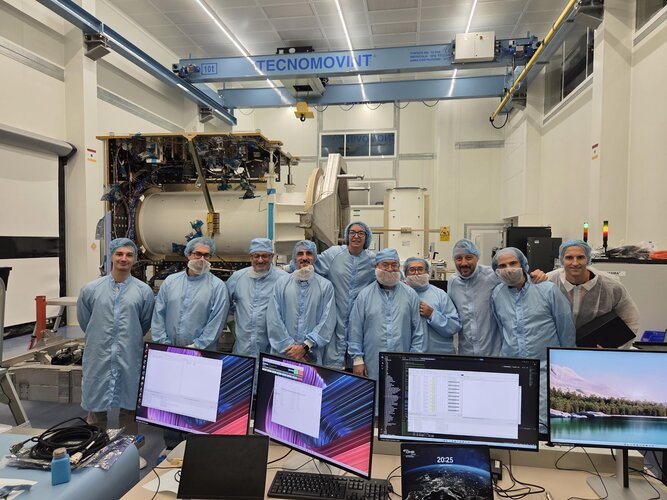
The European Space Agency and the Japan Aerospace Exploration Agency have achieved a major milestone in planetary defence, successfully powering on the Ramses spacecraft for the first time. The switch-on was performed by the mission's prime contractor, marking a critical step in a development schedule that is tightly constrained by the timing of its target asteroid's close approach to Earth.
Ramses, which stands for Rapid Apophis Mission for Space Safety, is designed to rendezvous with the asteroid Apophis. The mission aims to study the asteroid's physical properties and how its surface changes as it passes near Earth. The first switch-on confirms that the spacecraft's core systems are functional and that the project is on track for launch.
The mission is a collaborative effort between ESA and JAXA, combining European and Japanese expertise in space exploration. The prime contractor, responsible for building the spacecraft, conducted the initial power-up, which tested the electrical and data systems. This early verification is essential because the mission has a narrow window to launch and reach Apophis before or shortly after its 2029 flyby.
Apophis, a near-Earth asteroid about 340 metres across, will pass within 32,000 kilometres of Earth on 13 April 2029. While it poses no impact risk for at least a century, the close approach offers a rare opportunity to study a large asteroid up close. Ramses will arrive at Apophis to observe how the asteroid's surface and orbit are altered by Earth's gravity during the flyby.
The switch-on milestone is particularly significant because planetary defence missions must adhere to strict schedules. Missing the launch window would mean losing the chance to witness the 2029 encounter. The successful power-up demonstrates that the spacecraft's subsystems are ready for further integration and testing.
ESA and JAXA have not announced a specific launch date, but the mission is expected to launch in 2028 to reach Apophis before its closest approach. The spacecraft will carry a suite of scientific instruments to characterise the asteroid's shape, surface, and interior. Data collected by Ramses could inform future efforts to deflect hazardous asteroids.
The collaboration between ESA and JAXA reflects a growing international commitment to planetary defence. By studying Apophis, scientists hope to better understand the dynamics of near-Earth objects and improve strategies for protecting the planet. The first switch-on brings that goal one step closer to reality.
9