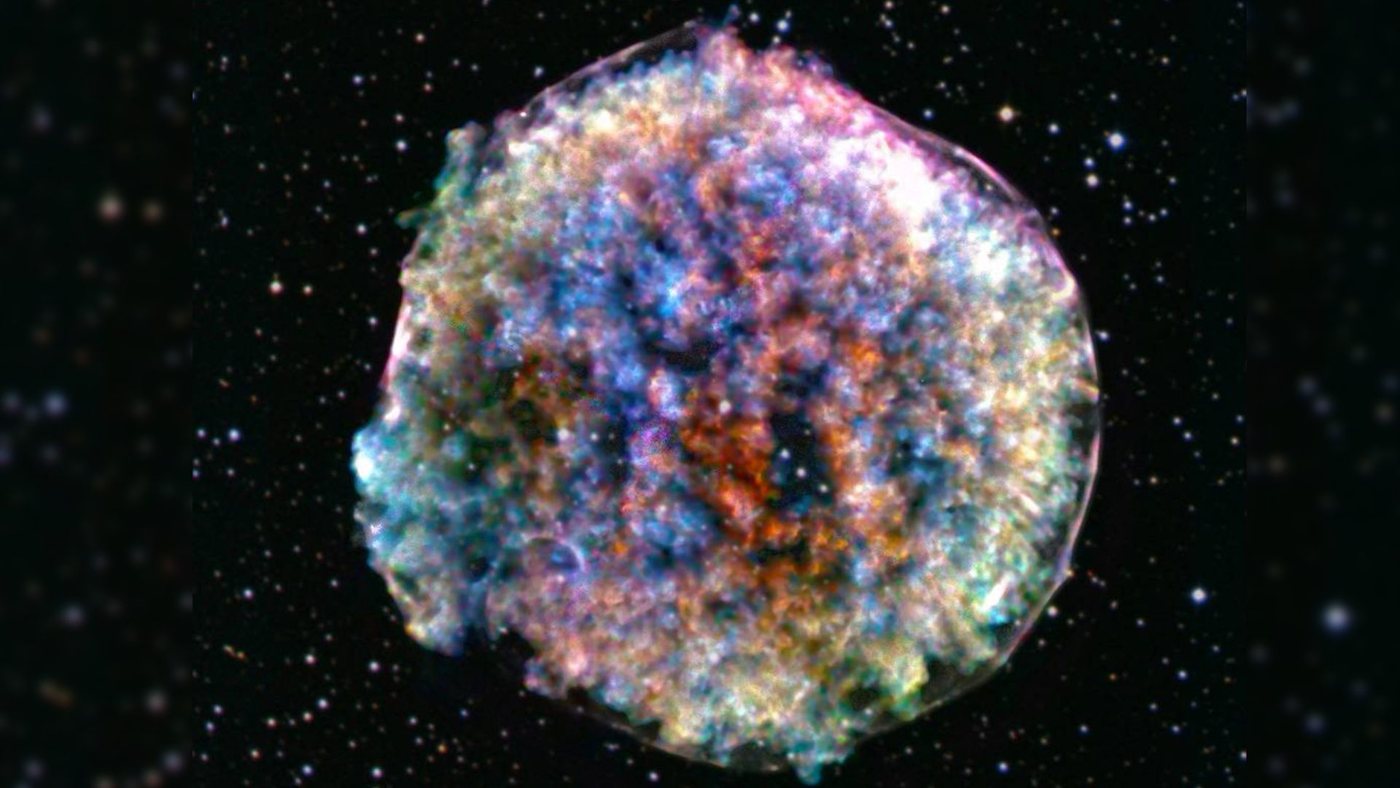
On November 6, 1572, a German astronomer became one of the first people to notice a dramatic cosmic event that would later carry his name. Observing the night sky with the naked eye, he saw a bright point of light where none had been before, a sight that was impossible to miss even without optical instruments.
At the time, most observers believed they were looking at a newly born star. The sky was thought to be fixed and unchanging, so the sudden appearance of a brilliant object caused considerable surprise. Only later did astronomers come to understand that the light came from a stellar explosion, a supernova, rather than the birth of a star.
The object became known as the Tycho supernova, a name that honors the astronomer whose sharp-eyed observation drew attention to it. Because the explosion was visible without telescopes, it was recorded by many people across the period, and it became an important event in the history of astronomy. The discovery helped challenge the long-held idea that the heavens were unchanging, a view that had shaped European thinking for centuries.
The event is one of the notable moments featured in Space.com's regular series marking significant anniversaries in space and astronomy history.
Credit. Based on reporting by Hanneke Weitering and Elizabeth Howell for Space.com. Is this your work? Write to us.
16