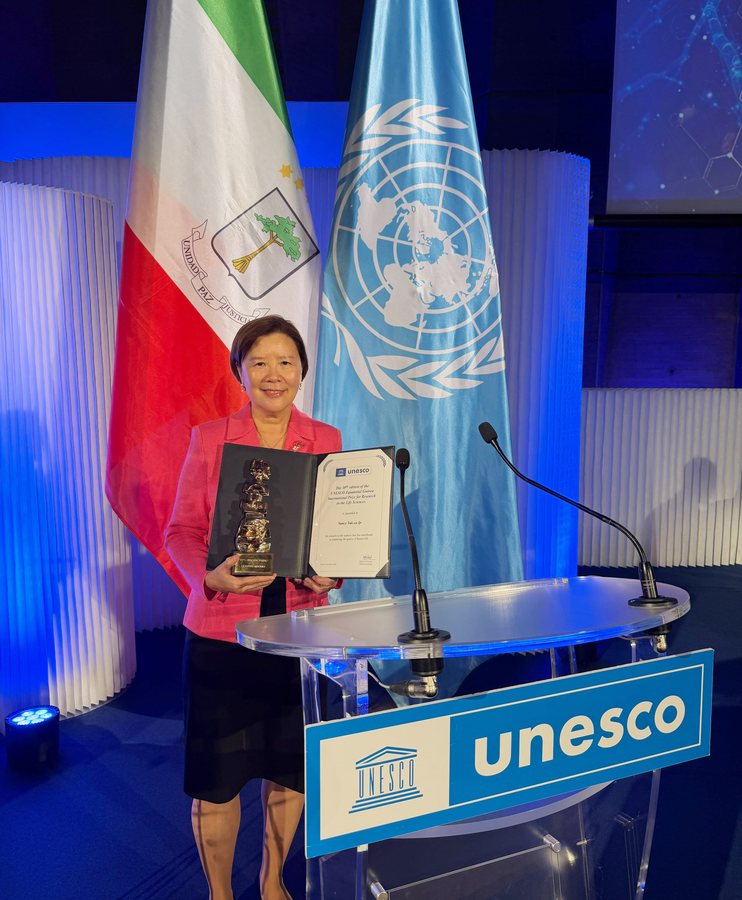
Nancy Ip, president of the Hong Kong University of Science and Technology, has received the 2026 UNESCO–Equatorial Guinea International Prize for Research in Life Sciences. The award recognizes her contributions to neuroscience and to the fight against Alzheimer's disease. The prize was presented at a ceremony on November 6, 2026, at UNESCO's headquarters in Paris.
Ip's research has focused on identifying the biological markers and genetic risk factors linked to Alzheimer's. Her team developed a blood-based test designed to detect the disease earlier and to track its progression over time. Hong Kong healthcare institutions have already adopted the test, and its use is now being extended to community settings. Her group is also working on gene therapy approaches aimed at preventing and treating neurodegenerative disease.
A central part of her work has been addressing a gap in existing research data, which draws heavily on Western populations. Ip led the creation of a large Chinese Alzheimer's biobank, which helped reveal genetic risk variants that are common among Chinese individuals. Researchers say such population-specific findings are important for making diagnosis and risk assessment more accurate across different groups.
Ip has spent more than three decades studying neurodegeneration and has published over 350 papers and secured 144 patents. She also directs the State Key Laboratory of Nervous System Disorders. The prize is shared among three laureates and carries a total pool of US$300,000. The trophy was created by Equatorial Guinean artist Leandro Mbomio Nsue.
Credit. Based on reporting for hkust.edu.hk. Is this your work? Write to us.
14