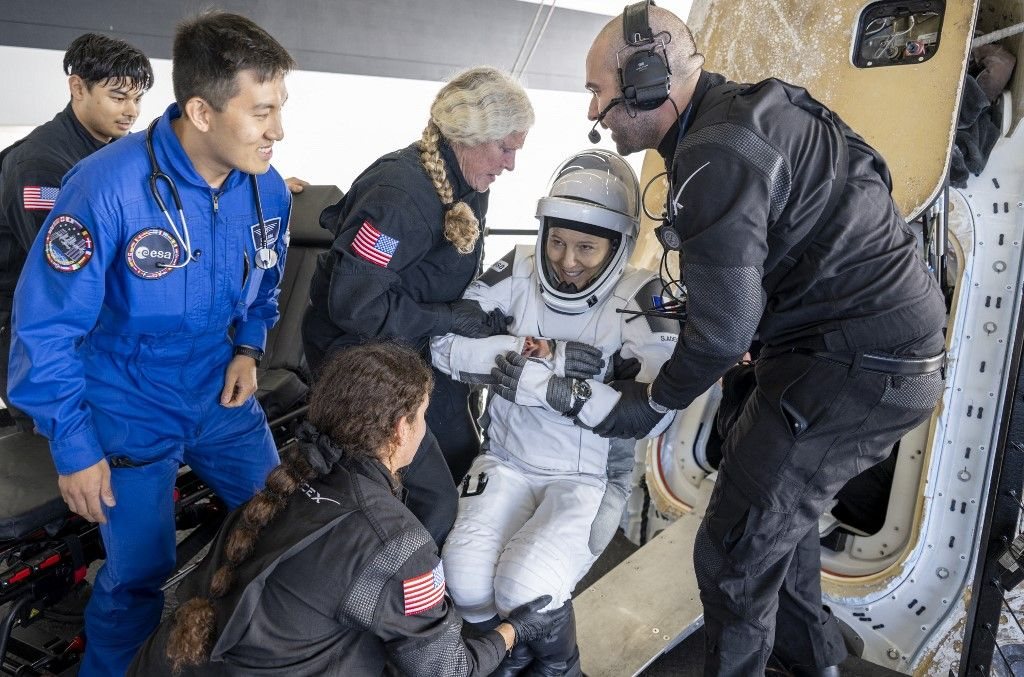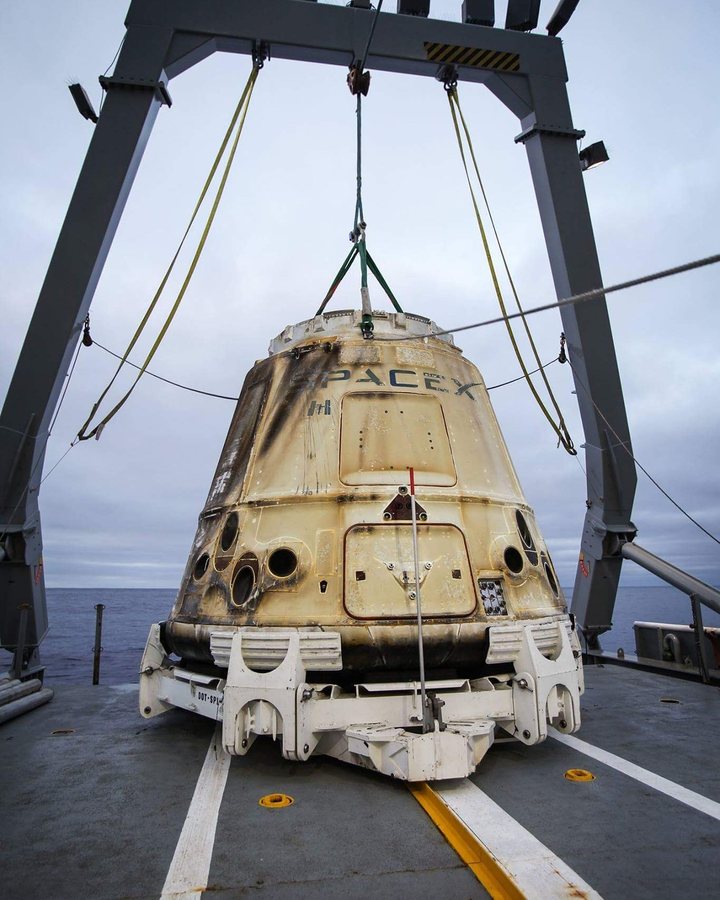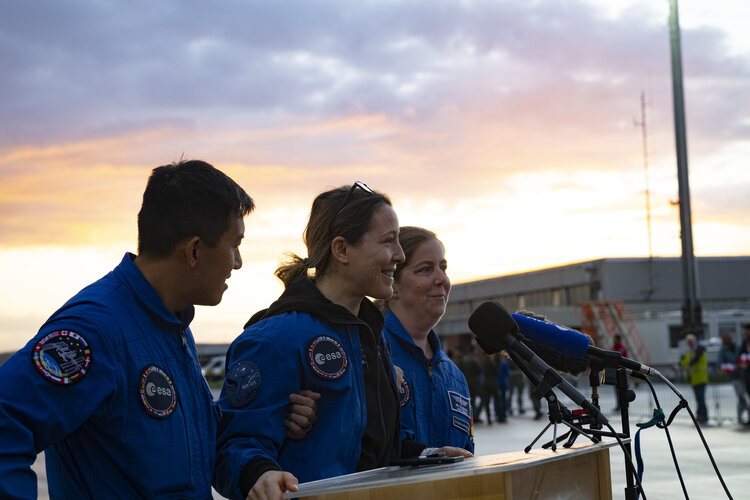
ESA astronaut Sophie Adenot has returned to Europe, landing in Cologne, Germany, after completing a 237-day stay aboard the International Space Station. Her return to Earth came with the Crew-12 spacecraft, closing out her first mission to the orbital laboratory, which ESA designated the εpsilon mission.
The nearly eight-month deployment represents a significant milestone for Adenot, who was selected as part of ESA's 2022 astronaut class. During her time in orbit, she contributed to the station's international research and operations, working alongside crewmates from multiple space agencies. The mission's duration places her among the ranks of European astronauts who have completed long-duration flights, a key requirement for advancing human spaceflight experience and supporting future exploration goals.
Her return to Cologne, home to the European Astronaut Centre, allows for initial post-flight medical assessments and debriefings. ESA typically conducts a period of rehabilitation for returning astronauts, as the human body undergoes significant physiological changes during extended exposure to microgravity. These include muscle atrophy, bone density loss, and fluid shifts that require gradual readaptation to Earth's gravity.
The εpsilon mission name follows ESA's tradition of assigning Greek-letter designations to astronaut flights. Adenot's mission focused on scientific experiments and technology demonstrations that leverage the unique environment of the space station. Such research often spans biology, materials science, human health, and Earth observation, contributing to both terrestrial applications and preparations for longer journeys to the Moon and Mars.
Her safe return marks another successful rotation of the station's international crew. The ISS continues to serve as a platform for cooperation among the United States, Russia, Europe, Japan, and Canada, despite geopolitical tensions on the ground. European astronauts like Adenot play a vital role in maintaining this partnership and ensuring that Europe retains its access to human spaceflight capabilities.
With her first mission complete, Adenot now joins the pool of experienced ESA astronauts eligible for future assignments. ESA has outlined ambitions for continued low-Earth orbit presence and participation in lunar exploration through programs like Artemis. The experience gained during long-duration flights is directly relevant to these goals, as mission planners study crew health, performance, and operational procedures for missions beyond the station.
The return also highlights the ongoing collaboration between ESA and its international partners. Crew-12, the commercial crew flight that brought Adenot home, is part of NASA's efforts to transport astronauts to and from the station using privately built spacecraft. This arrangement has become a cornerstone of station logistics since the end of the Space Shuttle program.
Adenot's mission may not have generated the same public attention as some high-profile flights, but it represents the steady, methodical work that sustains human presence in orbit. Each long-duration stay adds to the collective knowledge needed for future exploration, from understanding how the body adapts to space to testing new technologies that could support life on other worlds.
As she begins her post-flight recovery, ESA will likely share more details about the scientific results and any notable achievements from the εpsilon mission. For now, her safe return is a reminder of the routine yet remarkable nature of modern spaceflight, where months in orbit have become a standard part of humanity's off-world activities.
19