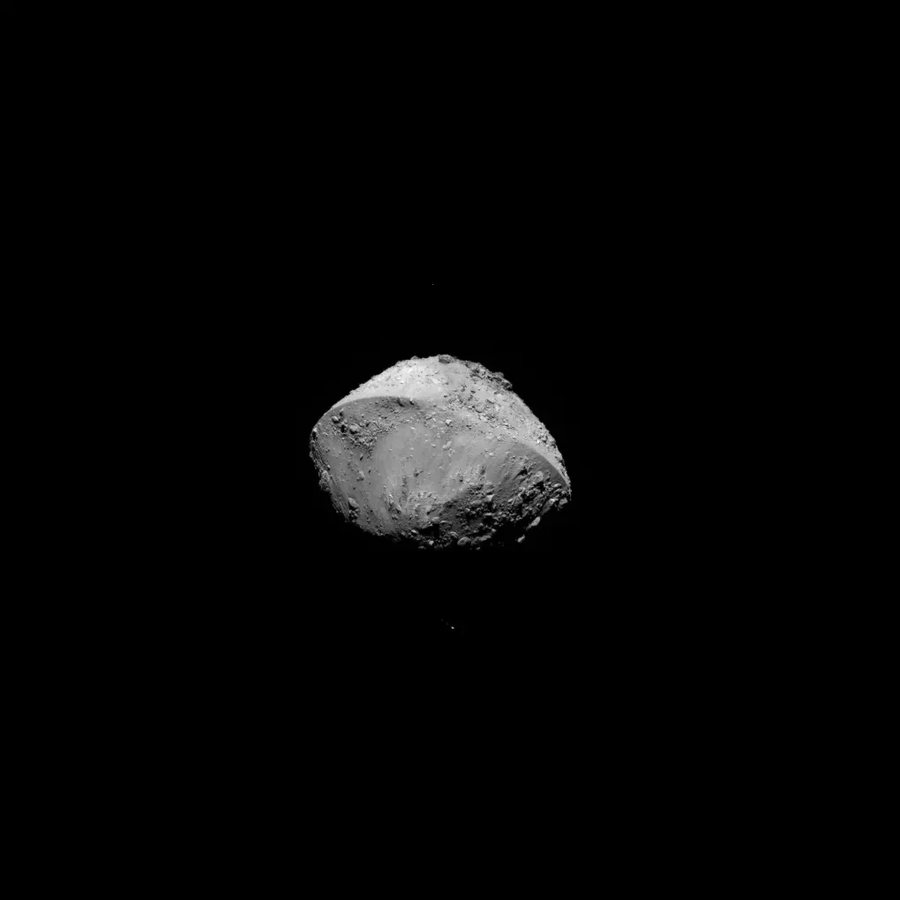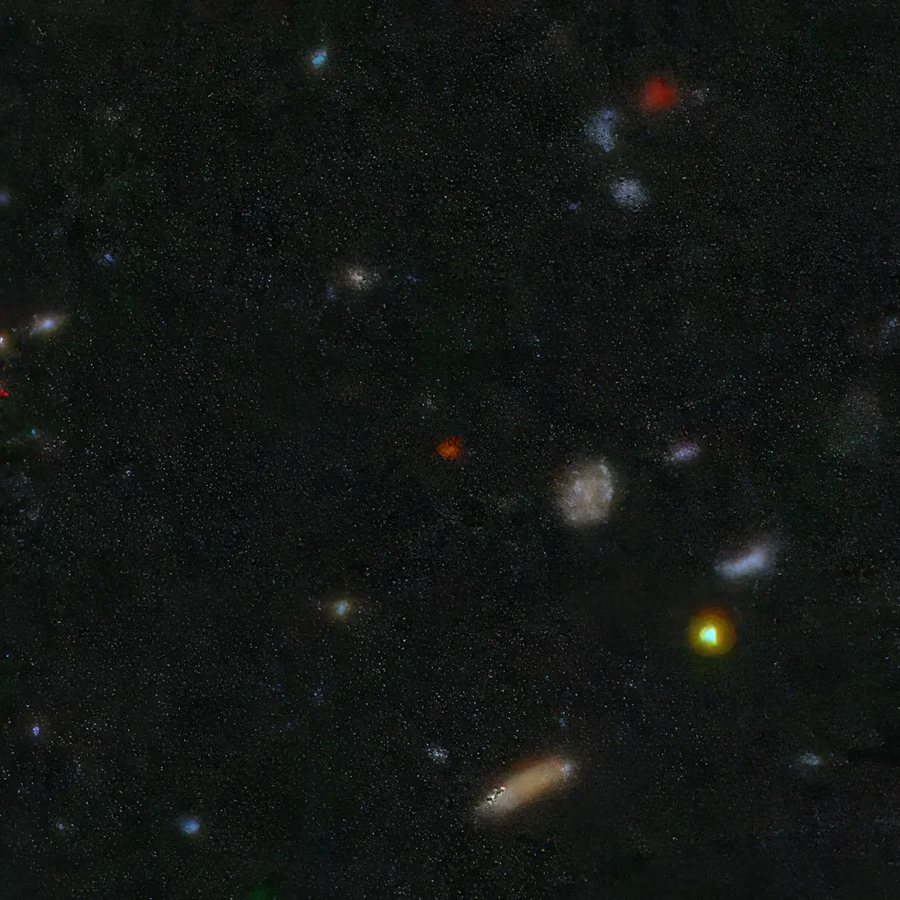
A supermassive black hole sitting at the heart of a young galaxy has become the most distant quasar ever seen by the European Space Agency's Euclid telescope. The object, catalogued as J1504+6252 and nicknamed Dún Aonghasa after an Irish stone fort because of its shape, is a quasar: a bright galactic nucleus powered by a black hole that is feeding on surrounding gas. Its mass is estimated at about 360 million times that of the Sun.
The light reaching Euclid left the quasar roughly 630 million years after the Big Bang, when the universe was only a small fraction of its present age. That places the observation about 13.1 billion years in the past and pushes the previous Euclid record back by roughly 40 million years. The discovery came from about 18 months of survey data, which the mission has now used to announce 31 early quasars in total.
Finding the object was only the first step. Researchers confirmed its distance and properties with follow-up observations from the Keck and Large Binocular Telescope on the ground, and from the Hubble and James Webb space telescopes. The study was led by Julien Wolf, then at the Max Planck Institute for Astronomy in Heidelberg and now at the European Southern Observatory, with researchers from the Italian National Institute for Astrophysics (INAF) among the contributors.
The quasar matters because its size is hard to explain. A black hole of this mass only about 630 million years after the Big Bang implies that it grew very quickly from a much smaller starting point. The measured rate at which it is currently accreting matter is unusually slow compared with other early quasars, which suggests it likely went through earlier phases of rapid growth to reach its present mass. Scientists are still debating how early black holes formed and how they grew so fast, and objects like this one provide direct evidence to test those models.
Credit. Based on reporting for Media INAF. Is this your work? Write to us.
10