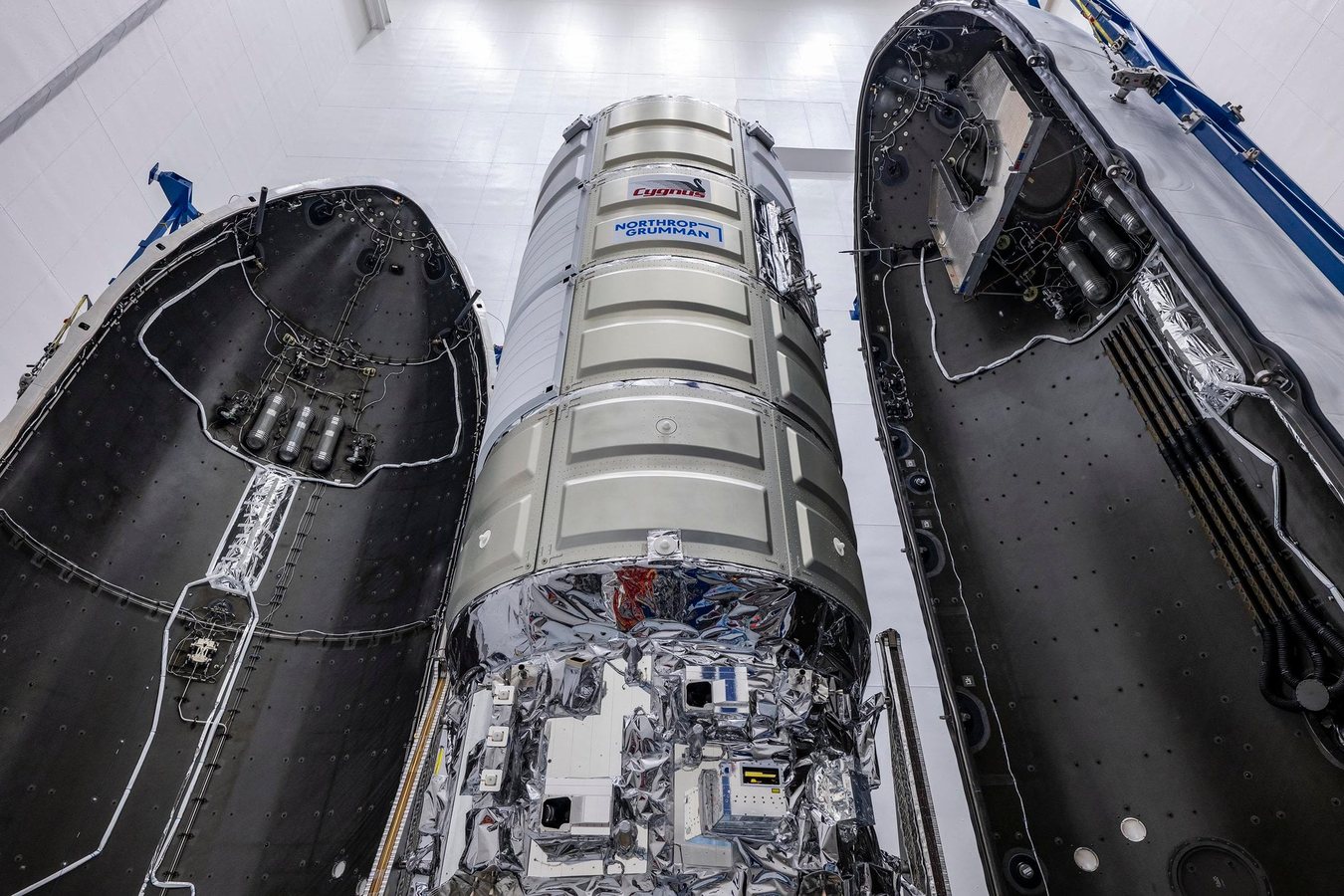
A Falcon 9 rocket is scheduled to lift off from Cape Canaveral Space Force Station in Florida on November 29, sending the Cygnus XL cargo spacecraft toward the International Space Station. The mission, designated CRS NG-25, will deliver roughly 4,990 kilograms of experiments, supplies and hardware to the orbiting laboratory.
The launch will take place from Space Launch Complex 40 and follow a northeasterly trajectory that matches the station's 51.6-degree orbital inclination. Because the window is instantaneous, the rocket must reach the station's orbital plane at exactly the right moment. The first-stage booster, flying for the ninth time, is set to return to land at Landing Zone 40 after separation.
If the schedule holds, Cygnus is expected to arrive at the station around December 1. Astronauts Jessica Watkins and Luke Delaney will use the station's Canadarm2 robotic arm to capture the spacecraft, which will then be berthed at the nadir port of the Unity module.
The cargo includes more than 35 payloads for the ISS National Lab. Among them is NASA's Ohalo III crop growth chamber, described as the first operational plant-growing system in space. The shipment also carries hardware for a Lockheed Martin welding test that will be conducted in the vacuum of space beginning in March 2027.
This flight is the third for the stretched Cygnus XL, a larger version of the vehicle, and it is named in honor of astronaut Jim Lovell. Northrop Grumman has said its Antares 330 rocket is expected to take over future Cygnus launches. Separately, repairs to the cargo module damaged during transit on the earlier NG-22 mission are still underway, and no new date has been set for that flight.
Credit. Based on reporting by Eleanor Day for NASASpaceflight. Is this your work? Write to us.
13