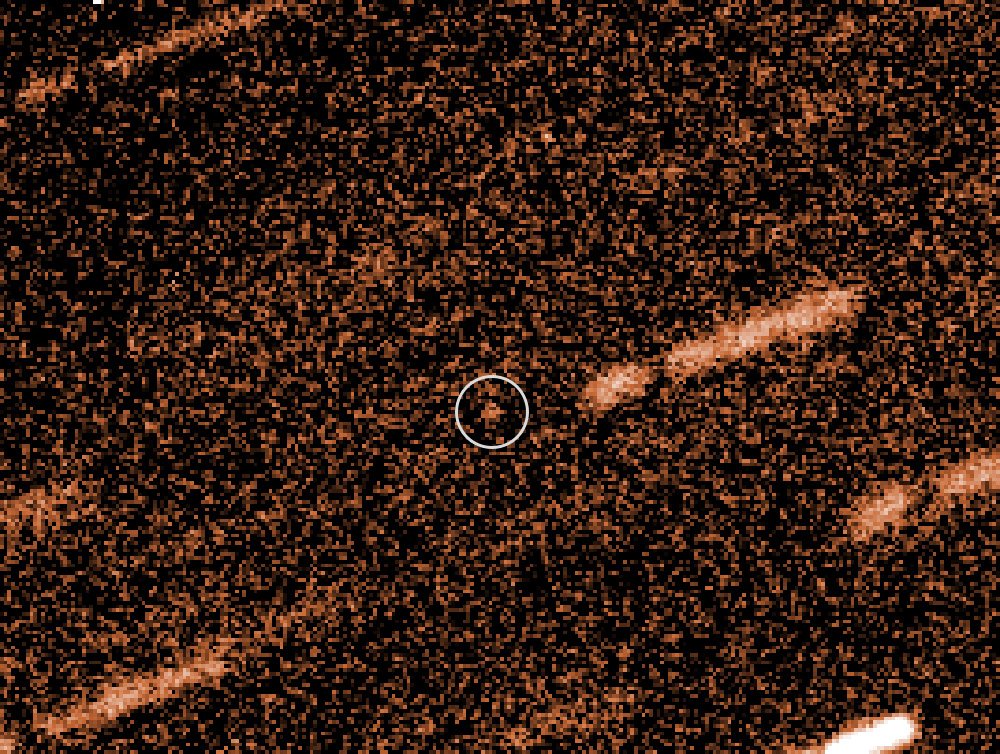
Japan's Hayabusa 2 spacecraft has successfully completed a high-speed flyby of the near-Earth asteroid Torifune, coming within 800 meters of its surface and capturing unprecedented close-up images of the bilobed object. The maneuver, performed on July 5, 2026, was part of an extended mission focused on planetary defense, testing the spacecraft's ability to intercept and characterize small, fast-moving asteroids that are difficult to track from Earth.
Torifune, also designated 98943 Torifune, is an Apollo-type near-Earth asteroid with a diameter of approximately 450 meters. Its orbit has an aphelion slightly above 1 astronomical unit (AU) and a perihelion slightly below 1 AU, placing it in a class of objects that cross Earth's orbit. The flyby revealed that the asteroid is bilobed, resembling a lopsided snowman, likely formed by a low-speed collision between two bodies that created a compact binary system.
The Japan Aerospace Exploration Agency (JAXA) spacecraft began observing Torifune in mid-June using its telescopic optical navigation camera (ONT-T), which captured direct images of the asteroid on June 20. As the spacecraft approached, observations intensified, employing the near-infrared spectrometer NIRS3, a thermal infrared camera, and a lidar instrument starting about one hour before closest approach. The flyby itself was conducted at a relative speed of 5 kilometers per second, a record for such a close encounter.
Ernesto Palomba, a researcher at the National Institute for Astrophysics (INAF) in Rome and a member of the Hayabusa 2 team, described the maneuver as highly complex but successful. He noted that the two encounters in Hayabusa 2's extended mission are classified as planetary defense missions because they aim to intercept these asteroids at very high speeds and characterize them. The close approach to within 800 meters of the surface represents a significant achievement in autonomous guidance, which is fundamental to all missions focused on planetary defense.
The flyby was monitored in real time by only a small number of people in JAXA's core Hayabusa 2 team, with other team members informed of the success shortly afterward. The choice of targets for the extended mission was driven by fuel availability and timing, as is standard for space missions. Hayabusa 2 has been traveling through the solar system since 2014, completing its primary mission in 2020 after delivering samples collected from the asteroid Ryugu to Earth. With remaining fuel, the spacecraft was directed toward two additional asteroids: Torifune and 1998 KY26.
The next target for Hayabusa 2 is 1998 KY26, an asteroid only 11 meters in diameter with an extremely rapid rotation period of just 5 minutes. This object is highly unusual, and the spacecraft is expected to reach it in 2031. If successful, it will become the smallest asteroid ever visited by a spacecraft, and JAXA may attempt a landing on its surface. The extended mission continues to demonstrate the capabilities of the Hayabusa 2 platform for both scientific exploration and planetary defense applications.
115