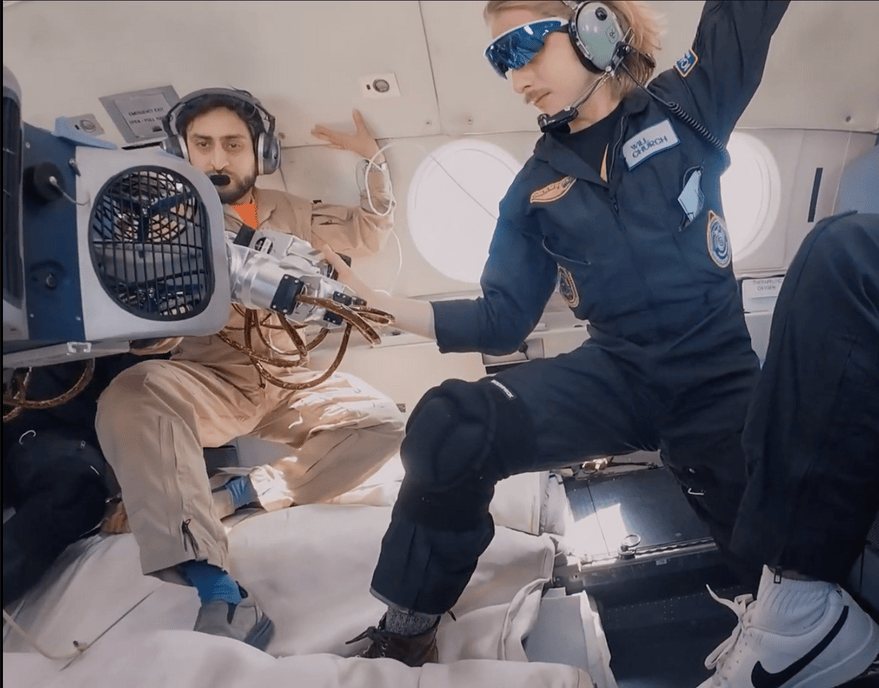
Icarus Robotics, a New York-based startup developing dexterous mobile robots for space missions, has completed a round of testing in Canada for its free-flying robotic platform, the company announced. The tests are part of preparations for a planned 2027 demonstration of the technology aboard the International Space Station.
The robot, named Joy, is designed to operate as a free-flying platform capable of performing dexterous tasks in the microgravity environment of low Earth orbit. Unlike fixed robotic arms that are bolted to a spacecraft or station module, a free-flying robot can move independently through a habitat or laboratory, potentially assisting astronauts with a range of tasks or conducting autonomous operations.
The Canadian testing campaign represents a key milestone for the startup as it works to mature the technology ahead of its orbital debut. While the company has not disclosed specific details about the tests, the campaign was aimed at validating the robot's free-flying capabilities and its ability to function in conditions that simulate aspects of spaceflight.
Icarus Robotics is one of a growing number of private companies pursuing robotic systems for space applications. As space agencies and commercial operators look to reduce the risk and cost of human spaceflight, dexterous mobile robots are seen as a promising tool for tasks such as inspection, maintenance, and logistics both inside and outside spacecraft.
The planned 2027 demonstration on the ISS would mark the first orbital test of the Joy platform. If successful, it could open the door to broader deployment of free-flying robots on future space stations, lunar habitats, and other off-world facilities. The ISS has long served as a proving ground for new space technologies, and a demonstration there would provide valuable data on how the robot performs in the actual space environment.
Details about the Canadian test site, the duration of the campaign, and the specific objectives remain limited. The company has not yet announced a launch provider or an exact date for the 2027 ISS demonstration. However, the completion of the Canadian tests suggests the project is moving forward on its development timeline.
The global space robotics market has attracted increasing investment in recent years, with applications ranging from satellite servicing to in-space manufacturing. Free-flying robots like Joy could play a role in these emerging sectors by providing a flexible, mobile platform for manipulation tasks that would otherwise require human spacewalks or specialized, single-purpose hardware.
For now, Icarus Robotics is focused on the next steps: analyzing data from the Canadian tests and continuing preparations for the ISS flight. The company's progress will be closely watched by both the space industry and potential customers looking for new ways to automate operations in orbit.