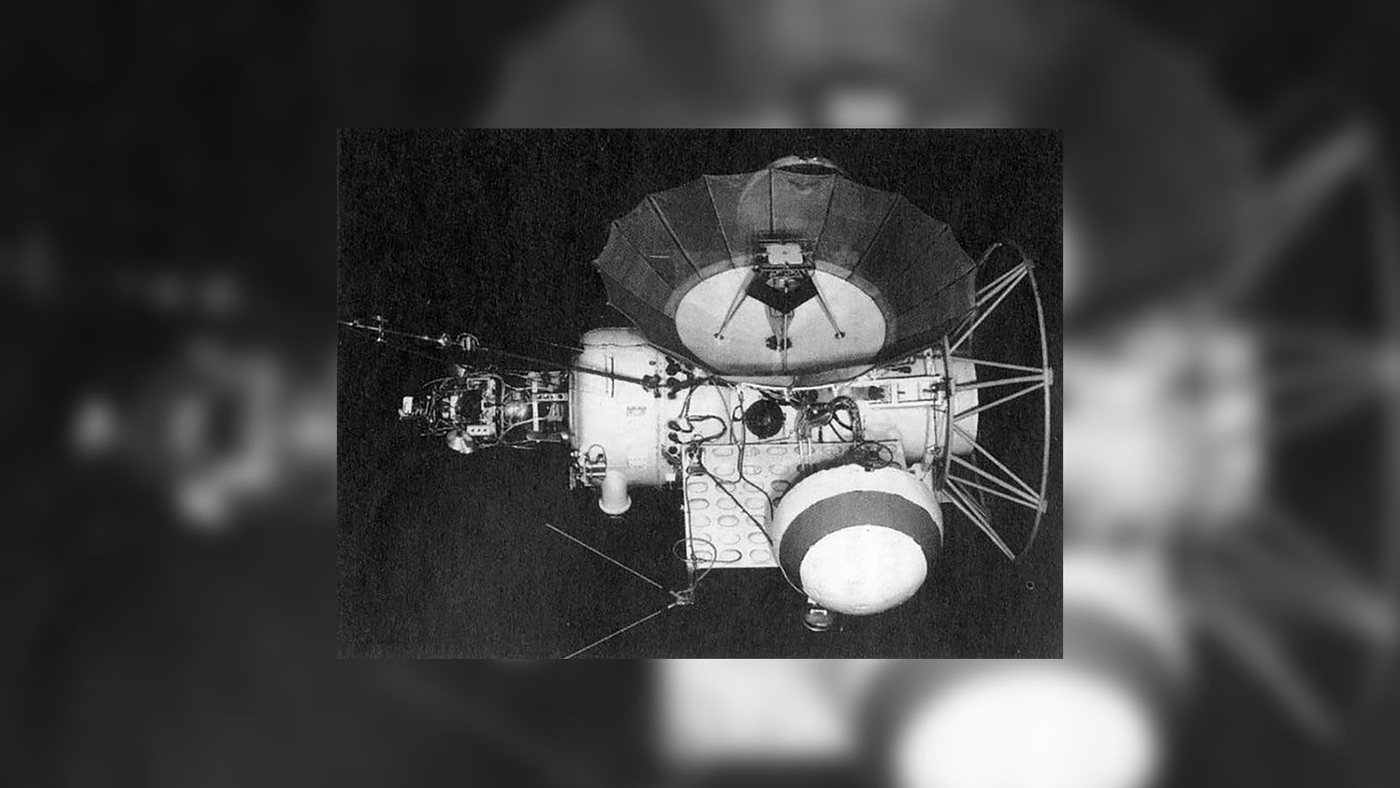
On November 1, 1962, the Soviet Union launched the Mars 1 spacecraft toward Mars, an early step in the robotic exploration of the Red Planet during the Space Race between the Soviet Union and the United States.
The launch was an ambitious attempt by Soviet engineers to reach a planet that had long fascinated scientists and the public alike. At the time, the competition between Moscow and Washington extended far beyond Earth orbit, with each superpower seeking to demonstrate technological leadership through spaceflight achievements. Sending a probe to Mars represented a demanding test of rocket power, navigation, and long-distance communication, because the spacecraft had to cross millions of kilometers of interplanetary space before it could return any data.
Mars 1 was part of a wider series of Soviet deep-space efforts in the early 1960s. Those missions aimed to gather data about the planets and the space environment between them, and they helped build the knowledge base that later interplanetary missions would rely on. Although the spacecraft was designed to study Mars from a distance, maintaining contact across such vast distances posed serious difficulties. The challenge of keeping a signal alive over tens of millions of kilometers underscored how much of early planetary exploration depended on engineering solutions that were still being tested for the first time.
The mission also reflected the broader pace of the Space Race. In the years before the launch, both nations had moved quickly from placing satellites in orbit to attempting lunar and planetary flights, and each success or setback was closely watched by governments and the press on both sides of the Iron Curtain. Mars 1 added to that momentum, showing that the Soviet program was willing to pursue distant targets even while the technical lessons from earlier flights were still being absorbed.
The launch is recalled today in retrospectives that mark notable moments in spaceflight history. It serves as a reminder of how rapidly the field developed in the decade after the first satellites reached orbit, and of how rivalry between nations pushed progress in rocketry, instrumentation, and mission planning. For readers following the history of Mars exploration, the November 1962 launch stands as one of the earliest Soviet attempts to reach the planet, an effort that preceded the decades of orbiters, landers, and rovers that followed.
12