New computer simulations suggest that comets may not have played the crucial role in kick-starting life on Earth that scientists have long attributed to them. The study, published Wednesday in the journal Scientific Reports, indicates that the fragile organic molecules supposedly carried by icy comets would most likely have been destroyed on impact, undermining a theory that dates back at least to 1961.
The research team modeled a period of heavy bombardment that Earth may have experienced more than 4 billion years ago, when more than 100,000 comets larger than 100 meters, or 328 feet, could have struck the planet. Using the latest models of comet formation and evolution, the researchers simulated this early period 100,000 times. Lead author Richard Anslow, who conducted the work while completing his doctorate at the Institute of Astronomy of the University of Cambridge in the United Kingdom, said the results were striking. "Given what we know about surface environments on the early Earth, on average, our simulations found that there were no successful impacts," he said.
The central problem is speed. Comets contain large concentrations of key molecules needed for life, but they struck the planet at velocities that proved too high to deliver those compounds intact. In 54 percent of the simulations there was no impact at all, while the remaining 46 percent produced at least one impact, with a "tiny minority" producing up to three collisions. "The typical velocities of these comets when they impact the Earth meant that actually very few, if any, would have been able to deliver intact organic molecules, so comets actually don't seem to be as useful for prebiotic chemistry as was previously thought," Anslow said.
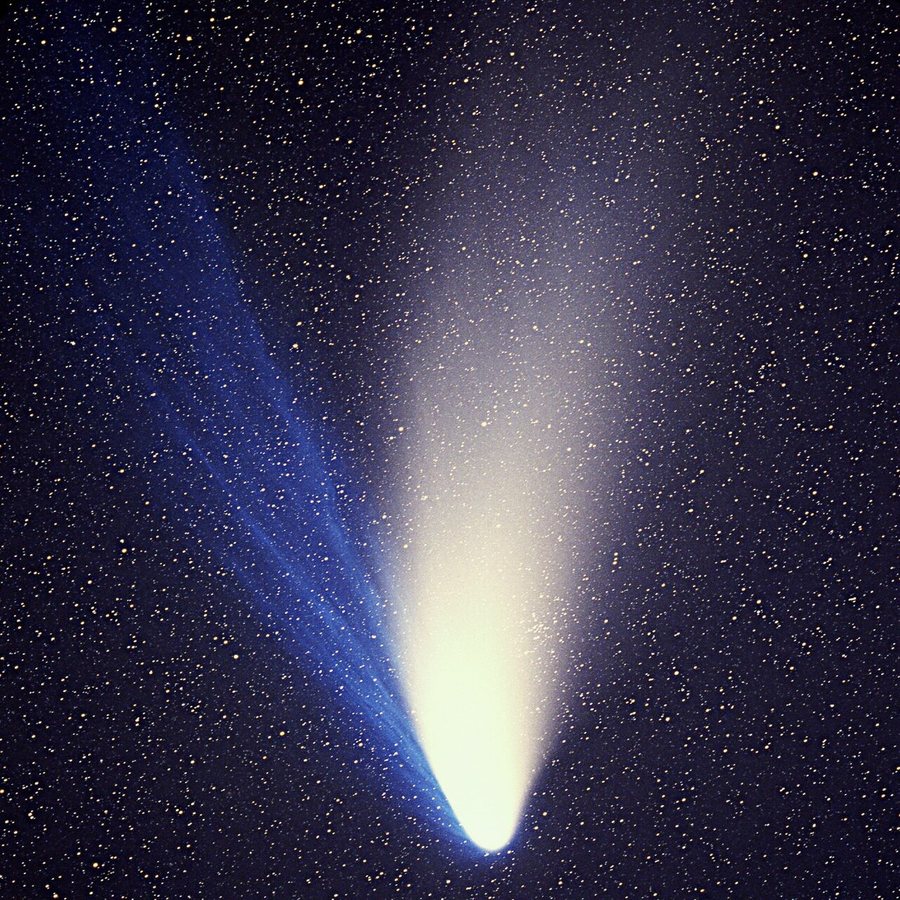
The study focuses in particular on hydrogen cyanide, or HCN, a naturally occurring chemical that has been detected in dozens of comets, including Halley's and Hale-Bopp. When combined with water, HCN can lead to the formation of amino acids, the molecules that make up proteins, and earlier studies had identified it as a potential key ingredient for the origin of life. Impacts, however, shock material to high temperatures and pressures, and recent research has found that many of these precursor molecules can be destroyed under such conditions. The authors also argue that even a successful impact would probably not have delivered HCN in a useful concentration, and that an ocean impact would have dissolved it quickly.
Anslow acknowledged that a rare lucky impact cannot be ruled out. "We can't rule out confidently that there was never a successful impact — there could have been one of these fluke impacts," he said. Such an event, however, would have had to land in a "perfect location" that already offered liquid water and other chemicals needed to support life, a combination that makes the overall process unlikely. Other essential precursors, such as compounds containing phosphorus and sulfur, are also not routinely found in comets. "Comets are really good for delivering hydrogen cyanide, but given it's random where a comet impacts onto Earth, we're not going to be guaranteed to have everything else that we need for this chemistry right in that spot," Anslow said.
If comets did not deliver life's building blocks, the researchers point to other possible sources. One long-standing alternative holds that Earth's primordial soup could have synthesized the necessary molecules on its own. Asteroids are another candidate, since they typically struck Earth more slowly and in greater numbers. Anslow cited recent findings on samples from the asteroids Bennu and Ryugu, which contain the majority of protein-building amino acids.
The study also raises a further possibility. While early Earth may not have offered ideal conditions for HCN to survive comet impacts, ancient Mars might have. "Because Mars is much smaller than Earth and further away from the sun, the typical impact velocity of comets is much lower, so while these impacts on Earth were destroying most of the HCN, this wasn't the case so much for Mars," Anslow said. He added that the idea offers "just another perspective to have in the back of our minds" as researchers try to understand the early evolution of Mars in more detail.
19