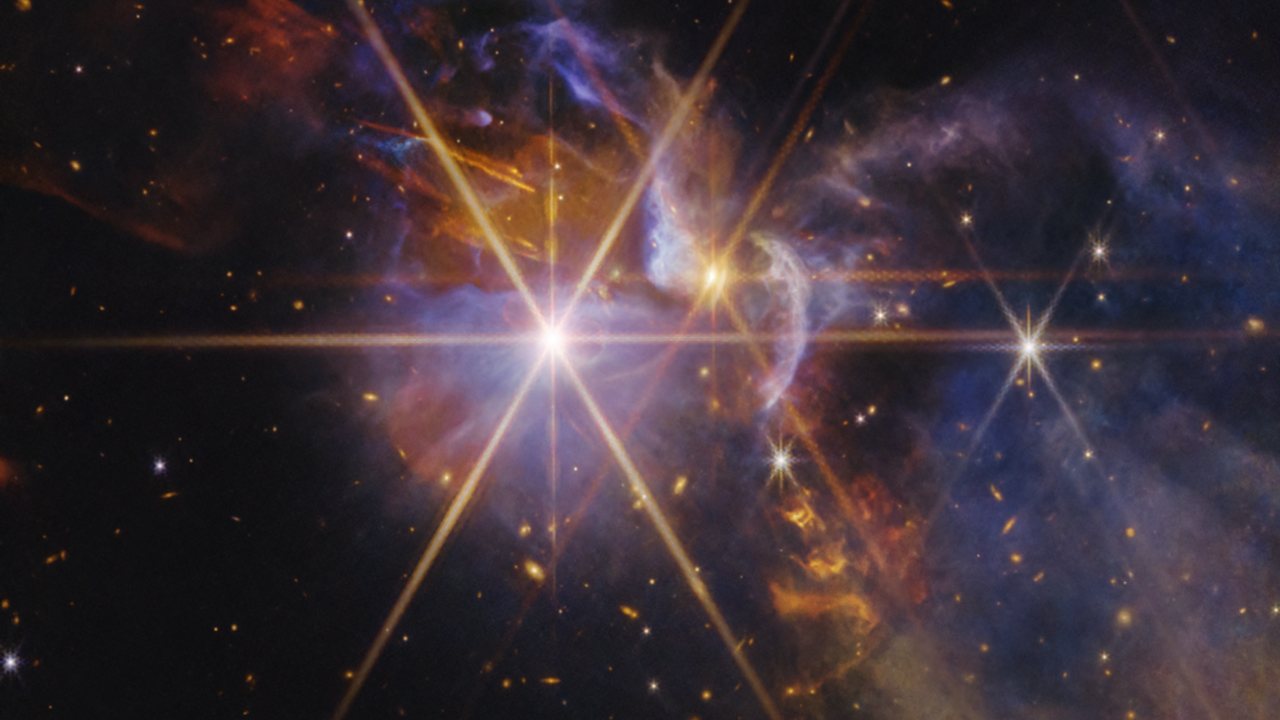
A spectacular new image from the Hubble Space Telescope has captured a group of infant stars celebrating their formation with a dazzling display of cosmic fireworks. The photograph, released on July 3, 2026, as part of the telescope's ongoing mission to observe the universe, reveals a cluster of young stellar objects in the Orion Nebula, one of the most active star-forming regions in the night sky. These nascent stars, still in their infancy by astronomical standards, are ejecting powerful jets of gas and dust that collide with surrounding material, creating bright, colorful outbursts reminiscent of fireworks.
The Orion Nebula, located approximately 1,344 light-years from Earth in the constellation Orion, is a stellar nursery where thousands of stars are born. The new image focuses on a specific area where protostars—stars in the earliest stages of formation—are actively accreting mass from their surrounding molecular clouds. As these protostars spin and grow, they generate strong magnetic fields that funnel material into narrow jets, which then slam into the interstellar medium at supersonic speeds. The resulting shock waves heat the gas to thousands of degrees, causing it to glow in vivid hues of red, blue, and green, as captured by Hubble's wide-field camera.
This phenomenon, known as Herbig-Haro objects, is a key indicator of active star formation. The image showcases several such objects, including HH 1 and HH 2, which were first discovered in the 1950s but are now seen in unprecedented detail. The jets from these infant stars can extend for trillions of miles, carving out cavities in the surrounding gas and dust and triggering the formation of additional stars. Astronomers study these processes to better understand how stars like our Sun came into existence billions of years ago.
The timing of the image's release, just ahead of Independence Day in the United States, has drawn a poetic parallel between the celestial fireworks and the celebratory displays seen on Earth. However, the scientific significance extends far beyond the aesthetic appeal. By analyzing the light emitted from these jets, researchers can determine the chemical composition of the material being ejected, the speed of the outflows, and the age of the protostars. This data helps refine models of stellar evolution and the formation of planetary systems.
Hubble, a joint project of NASA and the European Space Agency, has been observing the universe for over three decades. Despite its age, the telescope continues to deliver groundbreaking images and data, thanks to a series of servicing missions and upgrades. The latest image was taken using Hubble's Wide Field Camera 3, which was installed during the final servicing mission in 2009. This instrument is particularly sensitive to the infrared and visible light emitted by young stars, allowing it to peer through the dusty clouds that often obscure these regions from ground-based telescopes.
The Orion Nebula has been a focal point for astronomers studying star formation because of its proximity and richness. It contains hundreds of protostars, many of which are still surrounded by disks of gas and dust—the building blocks of future planets. The new image provides a snapshot of this dynamic environment, showing how the interplay between radiation, gravity, and magnetic fields shapes the birth of stars. In some cases, the jets from infant stars can even disrupt the formation of nearby stars, creating a competitive environment where only the most massive protostars thrive.
For the general public, the image serves as a reminder of the beauty and complexity of the cosmos. It also underscores the importance of continued investment in space-based observatories. With the James Webb Space Telescope now operational and complementing Hubble's capabilities, astronomers are poised to make even more detailed observations of star-forming regions. Webb's infrared instruments are particularly well-suited to studying the earliest stages of star formation, which are often hidden from Hubble's view by thick dust clouds.
As the infant stars in the Orion Nebula continue their journey toward maturity, they will eventually settle into stable, hydrogen-burning phases like our Sun. Some may even develop planetary systems, potentially hosting worlds that could one day be studied for signs of life. For now, their fiery outbursts provide a spectacular show and a wealth of scientific knowledge, reminding us that the universe is still very much alive with creation.
139