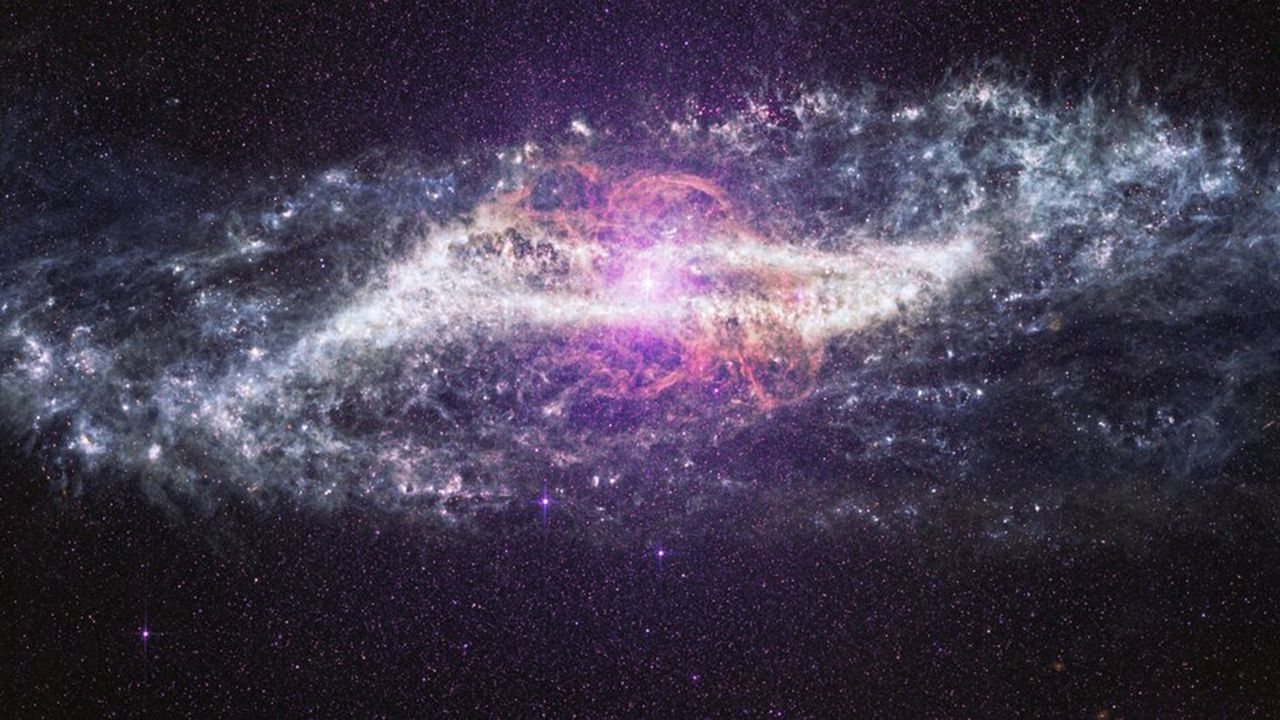
The James Webb Space Telescope has delivered a striking new image of the Centaurus A galaxy, offering astronomers an unprecedented view of the cosmic wreckage left behind by a past galactic collision. The image, released as this week's space photo of the week, reveals intricate details of the galaxy's turbulent history, showcasing the scars of a violent merger that occurred millions of years ago.
Centaurus A, also known as NGC 5128, is a peculiar galaxy located approximately 12 million light-years from Earth in the constellation Centaurus. It is one of the brightest and most studied galaxies in the night sky, renowned for its distinctive shape and powerful radio emissions. The galaxy's unusual appearance—a massive elliptical galaxy crossed by a dark, dusty lane—has long hinted at a dramatic past, but the new Webb observations provide a clearer picture of the aftermath.
The James Webb Space Telescope, launched in December 2021, is the most powerful space observatory ever built. Its advanced infrared capabilities allow it to peer through dense clouds of dust and gas that obscure visible light, revealing structures that were previously hidden. In this latest image, Webb's instruments have captured the galaxy's central region in unprecedented detail, highlighting the chaotic mix of gas, dust, and young stars that resulted from the collision.
According to astronomers, the dark dust lane that cuts across Centaurus A is the remnant of a smaller spiral galaxy that was consumed by the larger elliptical galaxy. The collision triggered a burst of star formation, as the infalling gas and dust were compressed and heated. The new Webb image shows this region in sharp relief, with intricate filaments and clumps of material that trace the ongoing process of star birth.
The image also reveals the galaxy's active galactic nucleus, a supermassive black hole at the center of Centaurus A that is actively feeding on surrounding material. This black hole, with a mass equivalent to about 55 million suns, produces powerful jets of plasma that extend thousands of light-years into space. Webb's infrared view allows scientists to study the interaction between these jets and the surrounding interstellar medium, providing insights into how such black holes influence their host galaxies.
The Centaurus A galaxy has been a target of astronomical study for decades, but each new generation of telescopes has revealed more of its secrets. The Hubble Space Telescope previously captured stunning images of the galaxy, showing the dust lane and star-forming regions in visible light. However, Webb's infrared vision penetrates deeper, uncovering structures that were invisible to Hubble. The new observations are expected to help researchers better understand the processes that shape galaxies over cosmic time.
Galactic collisions are common in the universe, and studying them is crucial for understanding how galaxies evolve. When galaxies merge, their gas and dust can be funneled toward the center, triggering star formation and feeding supermassive black holes. Over time, these mergers can transform the shape and structure of galaxies, turning spirals into ellipticals or creating irregular forms. Centaurus A provides a nearby laboratory for studying these processes in detail.
The James Webb Space Telescope is a joint project of NASA, the European Space Agency, and the Canadian Space Agency. Since beginning science operations in 2022, it has revolutionized astronomy with its ability to observe the universe in infrared light. Its instruments are designed to study everything from the first galaxies formed after the Big Bang to the atmospheres of exoplanets. The new image of Centaurus A is part of an ongoing effort to observe nearby galaxies and understand their histories.
For astronomers, the image is more than just a beautiful picture—it is a wealth of data that will be analyzed for years to come. The intricate details of the dust and gas structures will help refine models of galactic collisions and star formation. The interaction between the central black hole and its surroundings will shed light on the feedback processes that regulate galaxy growth. And the overall structure of Centaurus A will provide clues about its formation and evolution.
The release of the image has generated excitement in the astronomical community, as it demonstrates the power of Webb to reveal hidden aspects of the universe. As more observations are made, scientists expect to uncover even more secrets about Centaurus A and other galaxies like it. The image serves as a reminder of the dynamic and often violent nature of the cosmos, where galaxies are constantly changing through collisions and mergers.
In the broader context, the study of Centaurus A contributes to our understanding of the life cycle of galaxies. By examining the aftermath of a galactic collision, astronomers can piece together the sequence of events that led to the galaxy's current state. This, in turn, helps to build a more complete picture of how galaxies, including our own Milky Way, have evolved over billions of years. The Milky Way itself is on a collision course with the Andromeda Galaxy, expected to occur in about 4.5 billion years, making the study of such mergers particularly relevant.
The James Webb Space Telescope's observations of Centaurus A are expected to continue, with future studies focusing on the galaxy's star formation history and the dynamics of its gas. The data will be combined with observations from other telescopes, including Hubble and ground-based observatories, to create a multi-wavelength view of the galaxy. This comprehensive approach will allow astronomers to understand the full scope of the collision's effects.
As the telescope continues to operate, it will undoubtedly capture many more such images, each offering a new window into the universe's past. For now, the image of Centaurus A stands as a testament to the power of human curiosity and technological achievement, revealing the hidden beauty and complexity of the cosmos.
93