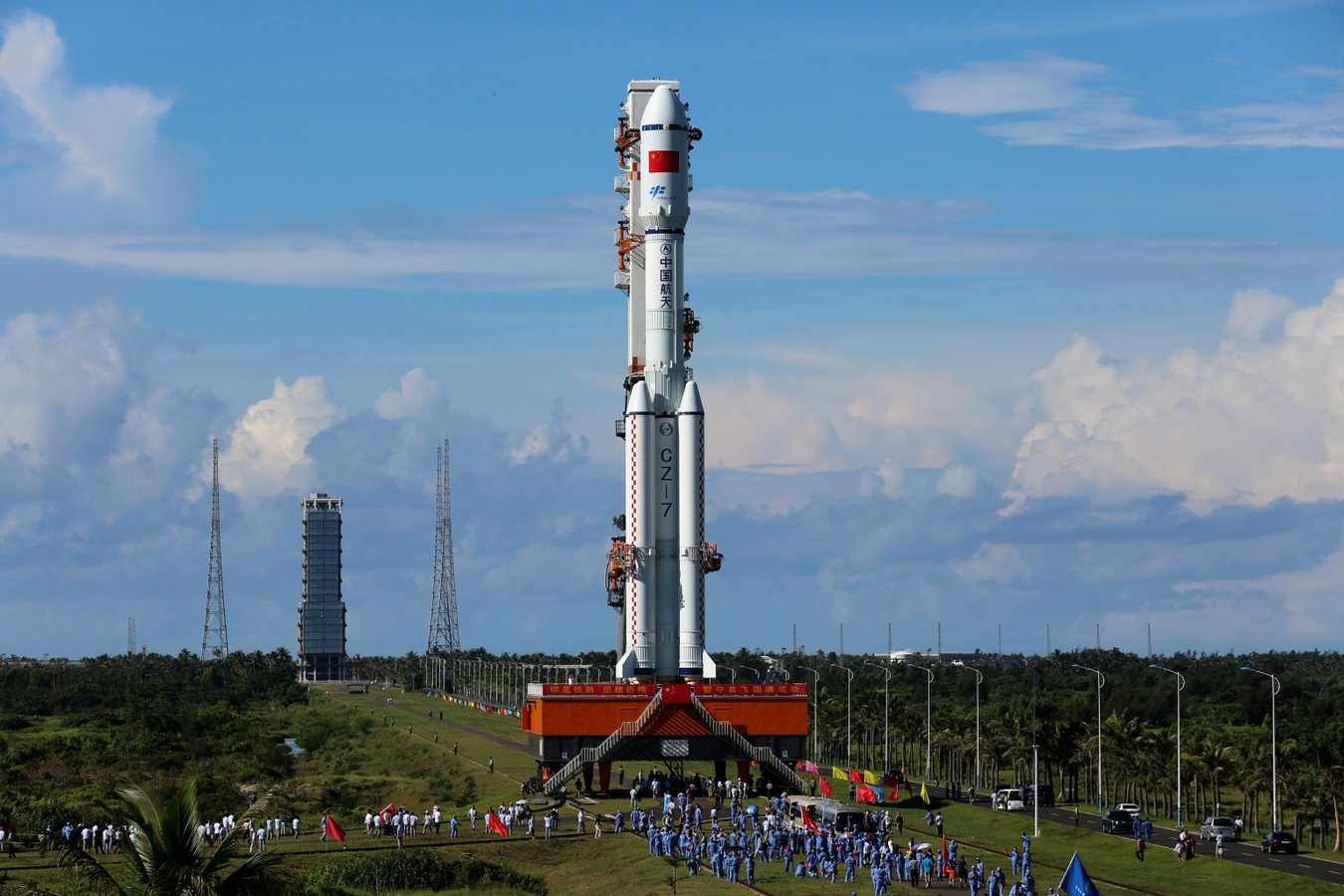
A Long March 7A rocket carrying ChinaSat 4B failed during an Aug. 10 launch from Wenchang, China, after an anomaly developed in flight. The mission was intended to deliver a communications satellite to orbit. Chinese authorities have not yet announced the technical cause.
For launch engineers, telemetry will matter more than the visible fireball or any single timestamp derived from video. A rocket can begin failing before a breakup becomes obvious. Pressure changes, thrust loss, guidance divergence, electrical faults or structural loads can appear in recorded data seconds before an external observer sees the vehicle disintegrate.
The widely repeated figure of approximately 85 seconds is not part of the initial official flight account. Investigators will need to publish or reconstruct the event timeline before that moment can be tied to the start of the failure.
ChinaSat 4B was a single communications satellite. Available reporting does not describe several satellites aboard the rocket and does not establish a mission consisting of multiple military communications spacecraft.
The Long March 7A has an important history for interpreting the event. It is not the same vehicle as the original Long March 7, whose first flight took place in 2016. The 7A variant made its own debut in March 2020, and that maiden launch failed. It later returned to service and accumulated successful missions.
On May 27, 2026, another Long March 7A successfully delivered a communications technology experiment satellite to its target orbit from Wenchang. At that point the developer described the system and its operational process as mature, with plans for higher launch frequency. The new failure therefore occurred in an established launch program rather than during an experimental first flight.
Failure investigations typically work backward from the last valid telemetry frame, comparing measurements against expected behavior and against data from successful missions. Engineers may also examine production records, inspections, software configuration and ground-support systems. The aim is to identify the chain of events that allowed the failure to propagate.
If the anomaly is traced to a unique defect, corrective work may be narrow. If investigators find a design-wide or process-wide vulnerability, the return to flight could require broader testing. The next Long March 7A mission will depend on which of those paths the evidence supports.
122