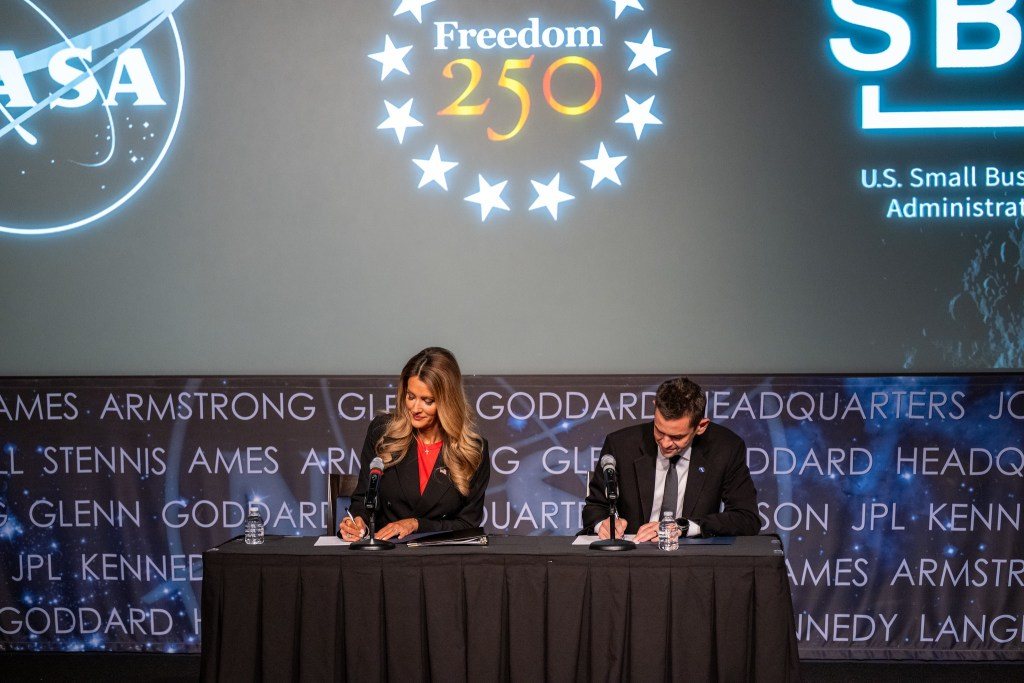
NASA has announced a new partnership with the U.S. Small Business Administration (SBA) aimed at attracting investment capital for companies that produce essential components for space missions. The collaboration is designed to address a persistent funding gap faced by small businesses working on advanced space technologies, from propulsion systems to satellite components.
Under the agreement, NASA and the SBA will work together to connect small technology firms with potential investors, including venture capital funds, private equity groups, and corporate investment arms. The initiative focuses on companies that develop hardware and software critical to NASA's exploration goals, such as those supporting the Artemis program, lunar landers, and deep-space infrastructure.
The partnership leverages the SBA's network of investment programs, including the Small Business Investment Company (SBIC) program, which licenses and regulates privately owned investment firms that provide capital to small businesses. NASA will contribute technical expertise and help identify which technologies are most vital for future missions, giving investors a clearer picture of market demand and strategic importance.
Small businesses have long been a driving force in the space industry, but many struggle to secure the funding needed to move from prototype to production. The new initiative aims to reduce that barrier by providing a structured pathway for capital flow, particularly for firms that produce components with limited commercial markets but high value for government space programs.
NASA officials have emphasized that a robust domestic supply chain for space technologies is essential for maintaining U.S. leadership in space exploration. By encouraging private investment in small suppliers, the agency hopes to reduce reliance on foreign sources and accelerate the development of next-generation systems.
The SBA brings decades of experience in facilitating small business growth through loan guarantees, venture capital partnerships, and technical assistance. The agency's SBIC program has historically invested billions of dollars in a wide range of industries, but space technology has been an underrepresented sector. This partnership is expected to change that by highlighting opportunities in the growing commercial space economy.
Industry analysts note that the timing of the initiative aligns with a broader trend of increasing private sector involvement in space. Companies like SpaceX, Blue Origin, and Rocket Lab have demonstrated that commercial firms can compete at the highest levels, but the ecosystem of smaller suppliers that feed into these larger systems often struggles to attract investment. The NASA-SBA partnership could help stabilize that supply chain by making it easier for investors to evaluate and fund promising small businesses.
The announcement comes as NASA prepares for a series of ambitious missions, including the return of humans to the Moon and eventual crewed missions to Mars. These efforts will require a wide array of new technologies, from advanced life support systems to in-space manufacturing capabilities. Many of these technologies are being developed by small companies that lack the financial resources of major aerospace contractors.
Under the partnership, NASA and the SBA will also host workshops and matchmaking events where small businesses can present their technologies directly to investors. The agencies will develop educational materials to help space startups understand the investment landscape and prepare for due diligence processes.
While the partnership does not involve direct government funding for individual companies, it is expected to unlock significant private capital by reducing information asymmetry between technology developers and investors. By certifying that certain technologies align with NASA's strategic needs, the agencies can provide a form of validation that investors often require before committing funds.
The initiative has been welcomed by trade groups representing the small satellite and space manufacturing sectors. They argue that many promising technologies have failed to reach operational status simply because their developers could not secure the capital to scale up production. The NASA-SBA partnership, they say, could be a game-changer for these firms.
Both agencies have indicated that the partnership will evolve over time, with potential expansions into workforce development and export assistance for space technology companies. The goal is to create a comprehensive support system that helps small businesses navigate the entire lifecycle from research and development to commercial deployment.
As the space industry continues to grow, with global launch activity and satellite deployments reaching record levels, the need for a diverse and resilient supplier base becomes increasingly urgent. The NASA-SBA partnership represents a targeted effort to ensure that small, innovative companies remain a vital part of that ecosystem.
120