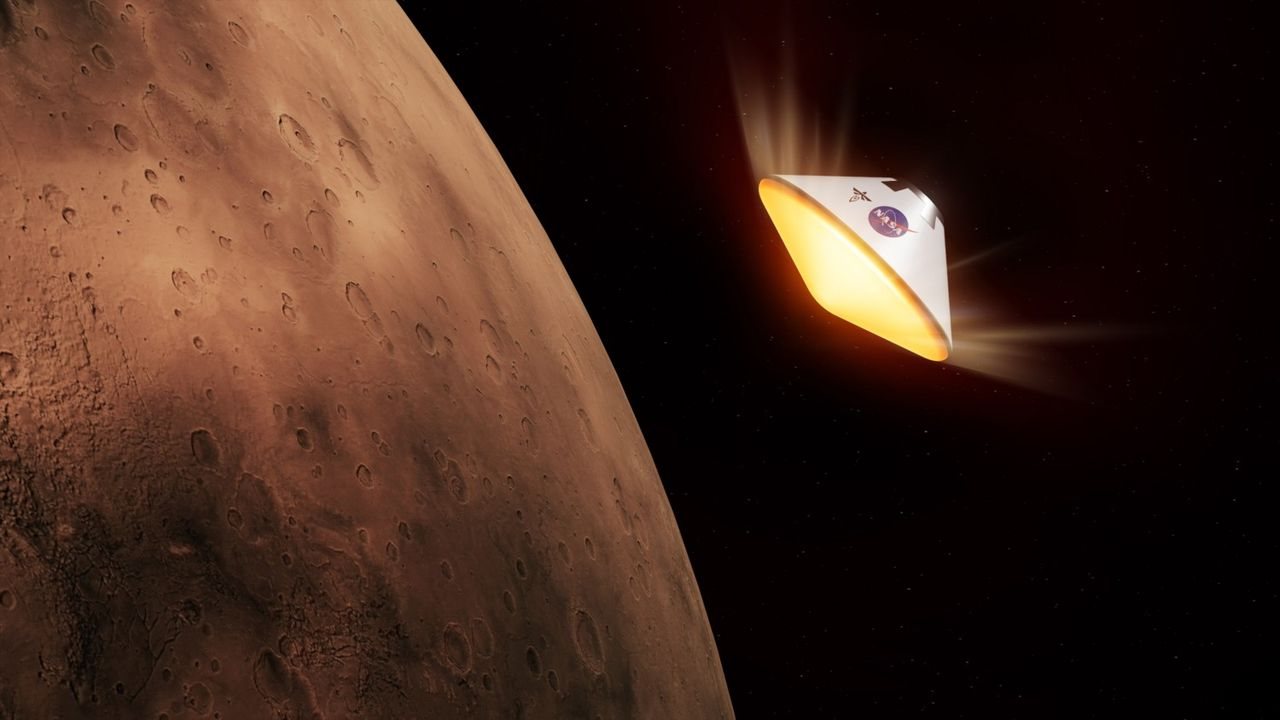
NASA has taken a significant step toward advancing aerial exploration on Mars by beginning to fund hardware development for the 'Skyfall' Mars helicopter mission. This initiative builds on the success of the Ingenuity helicopter, which demonstrated the feasibility of powered flight in the thin Martian atmosphere. The Skyfall mission aims to deploy a more capable rotorcraft to support future scientific investigations and potential human exploration.
The decision to fund hardware marks a transition from conceptual studies to tangible engineering work. Engineers will now focus on designing and testing key components, including rotor systems, avionics, and power management units tailored for Mars' extreme environment. The project is managed under NASA's Jet Propulsion Laboratory, which also oversaw Ingenuity's development and operations.
Skyfall is envisioned as a larger and more robust helicopter than Ingenuity, capable of carrying scientific instruments and covering greater distances. While Ingenuity weighed about 4 pounds and flew short hops, Skyfall could weigh up to 30 pounds and travel several kilometers per flight. This expanded capability would allow it to scout terrain for rovers, access hard-to-reach areas like cliffs and craters, and collect samples for future return missions.
The mission's name, 'Skyfall,' reflects its potential to descend into deep Martian valleys and impact craters that are inaccessible to ground vehicles. Such locations are of high scientific interest because they may preserve evidence of ancient water or microbial life. By providing a bird's-eye view, Skyfall could help identify promising sites for detailed study.
Funding for hardware development comes from NASA's Science Mission Directorate, which has allocated resources for early-stage technology maturation. The agency has not yet committed to a full mission launch, but this investment signals confidence in the concept. A final decision on whether to proceed with a full mission is expected within the next few years, pending successful hardware tests and budget approvals.
The timeline for Skyfall remains tentative. If approved, the mission could launch as early as the late 2020s or early 2030s, depending on technical progress and planetary alignment. The helicopter would likely be delivered to Mars as part of a larger lander or rover mission, similar to how Ingenuity traveled with the Perseverance rover.
Ingenuity's unexpected longevity has provided valuable data for Skyfall's design. Originally planned for five flights, Ingenuity completed over 70 flights before a rotor blade issue ended its mission in early 2024. Engineers have analyzed its performance to improve rotor aerodynamics, dust tolerance, and autonomous navigation for the next-generation craft.
Skyfall's potential scientific contributions extend beyond reconnaissance. It could carry spectrometers, cameras, and environmental sensors to study Martian geology, atmosphere, and potential biosignatures. The helicopter's mobility would enable it to traverse diverse terrains, from ancient riverbeds to volcanic plains, offering a dynamic perspective that orbiters and rovers cannot provide.
The mission also supports NASA's broader goals for Mars exploration, including the Mars Sample Return campaign and preparations for human missions. Aerial platforms could serve as scouts for crewed landings, mapping resources like water ice and assessing landing hazards. Skyfall's development thus aligns with long-term plans to establish a sustainable human presence on Mars.
International and commercial partners may also contribute to Skyfall. NASA has expressed interest in collaborating with other space agencies and private companies to share costs and expertise. Such partnerships could accelerate development and expand the mission's scientific return.
While challenges remain, including funding uncertainties and technical hurdles, the start of hardware funding represents a concrete commitment to advancing Mars aviation. The Skyfall mission could revolutionize how scientists explore the Red Planet, turning aerial reconnaissance into a routine tool for discovery.
126