NASA is moving forward with what it calls a «full steam ahead» approach to the Artemis III mission, the agency's first attempt to land astronauts on the Moon since the Apollo era. The mission, currently targeted for 2027, aims to send a crew to the lunar south pole, a region scientists believe may contain water ice and other resources essential for long-term exploration. Agency officials have emphasized that the accelerated pace reflects a commitment to maintaining the United States' leadership in space exploration while laying the groundwork for future missions to Mars.
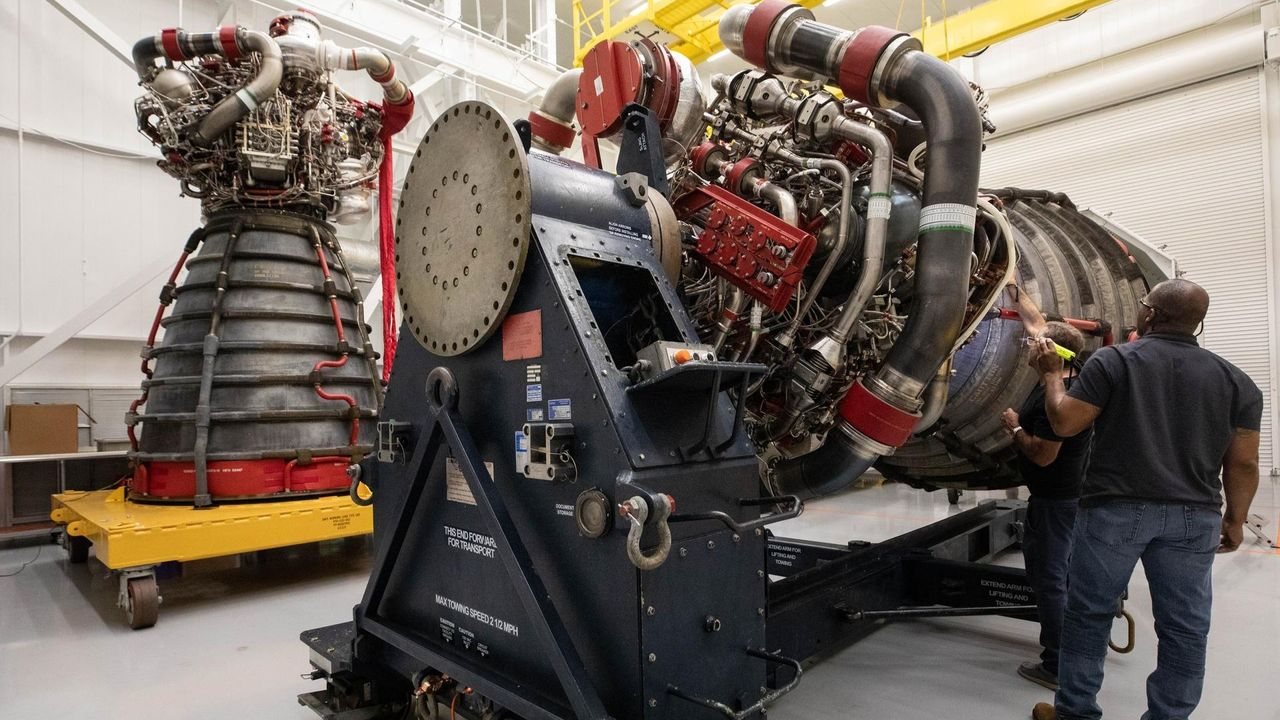
The Artemis III mission represents the culmination of years of development and testing of key hardware. The Space Launch System rocket, which will provide the thrust needed to send astronauts beyond Earth's orbit, has undergone extensive upgrades following its successful uncrewed debut during the Artemis I mission in 2022. Engineers at NASA's Michoud Assembly Facility in New Orleans and the Stennis Space Center in Mississippi are currently integrating the core stage for Artemis III, incorporating lessons learned from the earlier flight to improve reliability and performance.
Alongside the rocket, the Orion spacecraft is also being readied for its first crewed flight. Orion will carry the astronauts from Earth to lunar orbit and back, serving as the primary living and command module during the journey. Recent tests have focused on the spacecraft's life support systems, navigation software, and heat shield, which must withstand temperatures exceeding 5,000 degrees Fahrenheit during reentry into Earth's atmosphere. NASA has reported that Orion's critical systems are performing as expected in simulations and ground tests.
A central challenge for Artemis III is the development of the lunar lander, which will transport two astronauts from Orion in orbit down to the Moon's surface. SpaceX's Starship, selected by NASA as the initial human landing system, is undergoing iterative testing at the company's facility in Boca Chica, Texas. While Starship has achieved several test flights, including a successful orbital insertion and controlled reentry, the vehicle has yet to demonstrate the ability to land on the Moon. NASA and SpaceX are collaborating closely to address technical hurdles, including the need for in-space refueling and precise landing capabilities in the rugged terrain of the south pole.
The mission's timeline has shifted several times since its original announcement. Initially planned for 2024, Artemis III faced delays due to technical challenges, funding uncertainties, and the impact of the COVID-19 pandemic on supply chains. NASA now projects a launch date no earlier than 2027, though officials caution that the schedule remains dependent on successful completion of key milestones. Among these milestones are the Artemis II mission, a crewed flight around the Moon currently slated for late 2025, which will test Orion's systems with astronauts aboard for the first time.
The Artemis program, named after the twin sister of Apollo in Greek mythology, aims to establish a sustainable human presence on the Moon. Unlike the Apollo missions of the 1960s and 1970s, which were focused on short-duration visits, Artemis seeks to build infrastructure that can support repeated landings and eventually a lunar base. The program includes plans for the Lunar Gateway, a small space station in orbit around the Moon that will serve as a staging point for surface missions and a platform for scientific research.
International partners are playing a significant role in Artemis III and the broader program. The European Space Agency is providing the service module for Orion, which supplies propulsion, power, and thermal control. The Canadian Space Agency is contributing the Canadarm3 robotic arm for the Gateway, while Japan and other nations are involved in scientific instruments and potential crew contributions. These collaborations underscore the global nature of modern space exploration and the shared interest in unlocking the Moon's secrets.
Scientific objectives for Artemis III include collecting samples from the lunar south pole, which may contain water ice in permanently shadowed craters. Such ice could be used to produce drinking water, breathable oxygen, and rocket fuel, reducing the cost and complexity of future missions. The mission will also deploy experiments to study the Moon's geology, radiation environment, and potential resources, providing data that will inform plans for a permanent lunar outpost.
NASA's renewed focus on the Moon comes amid growing competition from other nations. China has announced plans to land astronauts on the Moon by 2030, and its Chang'e program has already returned samples from the lunar surface. Russia and India have also demonstrated lunar landing capabilities, with India's Chandrayaan-3 mission successfully touching down near the south pole in 2023. The Artemis program, therefore, carries strategic as well as scientific importance, as the United States seeks to maintain its edge in space exploration and establish norms for international cooperation on the lunar frontier.
As preparations intensify, NASA has emphasized the importance of safety and thorough testing. The agency's leadership has stated that the 2027 target is ambitious but achievable, provided that technical risks are managed carefully. With the Artemis II mission on the horizon and the lander development progressing, the next few years will be critical in determining whether the United States can return humans to the Moon and begin a new chapter of exploration.
127