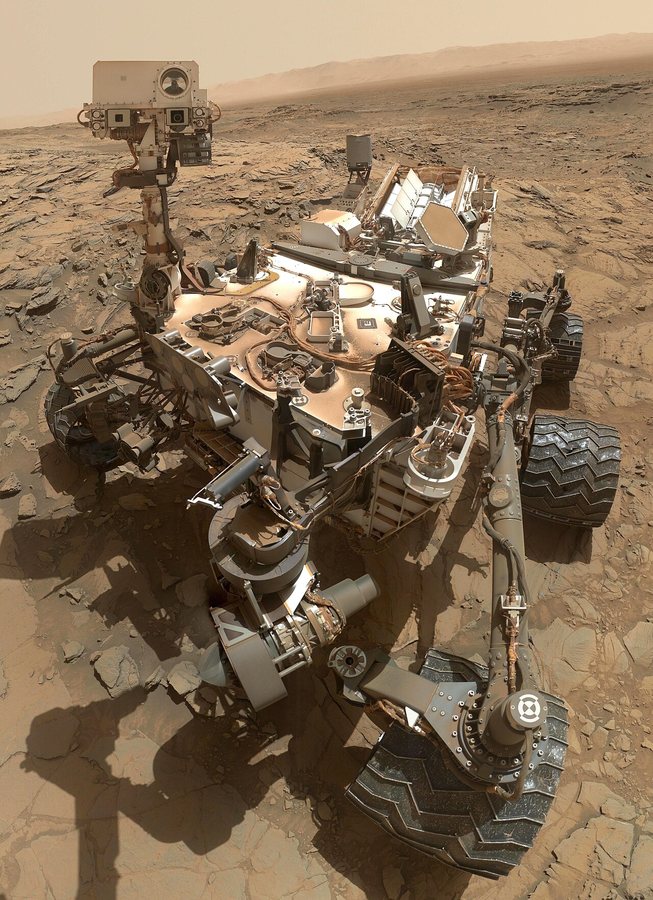
NASA's Curiosity rover has captured a striking image of dawn breaking over the ancient Martian landscape, offering scientists a fresh look at the Red Planet's rugged terrain and atmospheric conditions. The image, taken from the rover's vantage point in Gale Crater, shows the first light of the Martian sun illuminating the distant rim of the crater and the slopes of Mount Sharp, the central peak that has been Curiosity's primary target since its landing in 2012.
The photograph highlights the stark beauty of Mars while serving a scientific purpose. By studying how sunlight interacts with the Martian atmosphere at dawn, researchers can better understand the planet's dust cycle, cloud formation, and the scattering of light in its thin carbon dioxide atmosphere. Such observations help refine models of Martian weather and climate, which are essential for planning future robotic and human missions.
Curiosity's mission has already established that Gale Crater once held a lake and possessed conditions suitable for microbial life billions of years ago. The rover continues to climb the lower slopes of Mount Sharp, analyzing sedimentary layers that record a transition from a wetter, warmer environment to the cold, dry desert that Mars is today. Each new image and measurement adds to the growing picture of how the planet's climate evolved over time.
The dawn image also underscores the rover's enduring legacy. Originally designed for a two-year mission, Curiosity has now operated for more than a decade, far exceeding expectations. Its plutonium power source and robust engineering have allowed it to weather dust storms, extreme temperatures, and rugged terrain. The data it sends back continues to shape our understanding of Mars and to inform the design of future missions, including the planned Mars Sample Return campaign.
While the image is visually spectacular, it is the scientific context that gives it real value. Researchers use such photographs to calibrate instruments, monitor changes in the landscape, and identify targets for further study. The rover's cameras are not just tools for public outreach; they are precision instruments that help geologists interpret the history of the Martian surface.
As Curiosity continues its ascent of Mount Sharp, each new dawn brings another opportunity to explore the ancient landscape of Mars and to piece together the story of a world that may once have been habitable. The latest image is a reminder that even after more than a decade of exploration, the Red Planet still has much to reveal.
15