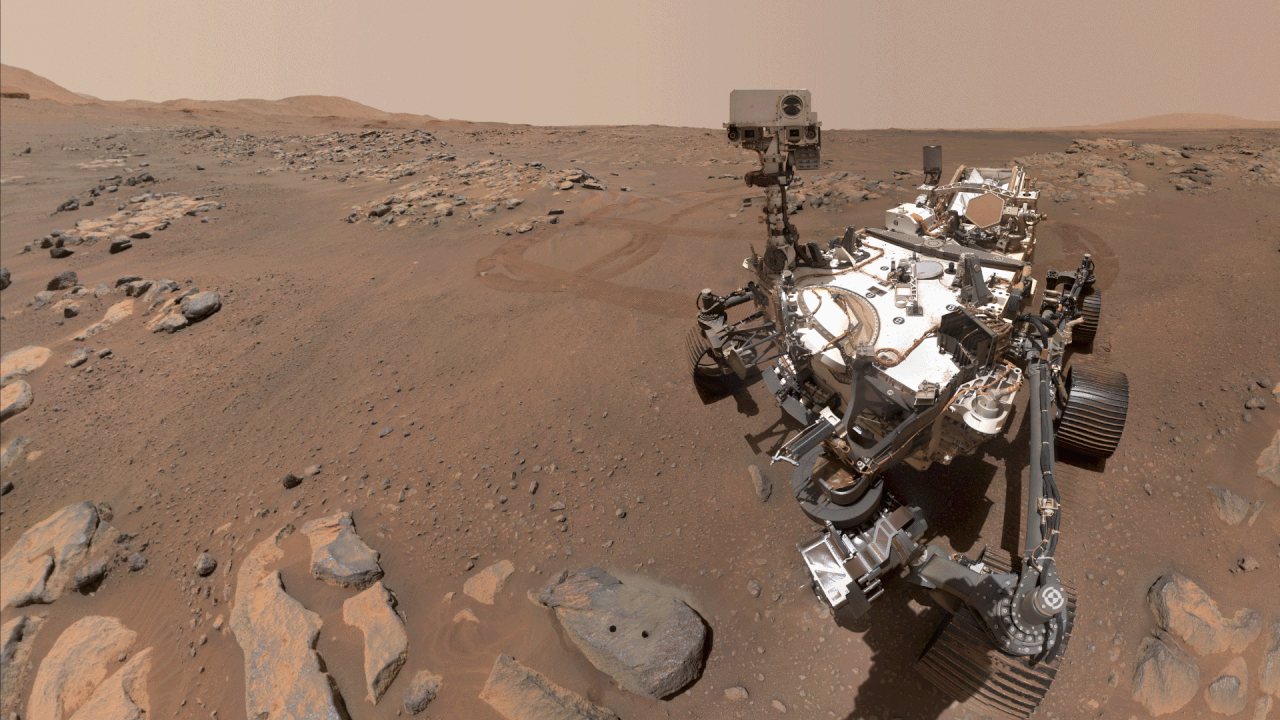
NASA's Perseverance rover has become the most traveled vehicle ever to operate on the surface of another planet, logging 28.1 miles (45.2 kilometers) on Mars as of Sunday. The milestone surpasses the previous record held by NASA's Opportunity rover, which logged 28.06 miles (45.16 kilometers) during its 15-year mission on the Red Planet.
The record reflects a steady accumulation of distance rather than a single dramatic sprint. Perseverance has been exploring Mars since its dramatic landing in Jezero Crater in February 2021, methodically traversing the ancient lakebed and surrounding terrain in search of signs of past microbial life. Its odometer now stands as the farthest any wheeled vehicle has traveled on a world other than Earth.
Opportunity, which operated from 2004 to 2018, had held the off-world driving record for years. That rover famously covered marathon-distance terrain during its long mission, but Perseverance's newer, more capable design and ongoing operational lifespan have allowed it to eclipse that mark. The achievement highlights the durability and navigational precision required to keep a robotic vehicle moving across a hostile, dusty environment millions of miles from the nearest repair shop.
Perseverance's driving distance is more than a number. Each mile represents carefully planned routes, autonomous hazard avoidance, and the slow, deliberate pace of a rover that must balance scientific exploration with the risk of getting stuck in soft sand or jagged rock fields. Mission controllers at NASA's Jet Propulsion Laboratory in Southern California plot each drive with an eye toward both safety and science targets, often sacrificing speed to investigate intriguing rock formations or collect samples.
The rover's travels are part of a broader effort to characterize the geology of Jezero Crater, a site scientists believe once held a lake and river delta. Perseverance has been caching rock and soil samples for a potential future mission that could return them to Earth for detailed laboratory analysis. The distance it has covered expands the range of geologic diversity available to researchers and increases the odds of encountering materials that might preserve evidence of ancient life.
While the driving record is a notable engineering milestone, it also underscores the growing role of long-lived robotic explorers in planetary science. Perseverance is not the only active rover on Mars — NASA's Curiosity rover continues to operate in Gale Crater — but its combination of range, sample-caching capability, and onboard instruments has made it a central platform for Mars exploration in the 2020s.
The new record comes as NASA and its international partners weigh ambitious plans for future Mars missions, including sample return and eventual human exploration. Each additional mile driven by Perseverance adds to the operational experience and data that will inform those efforts. For now, the rover continues to roll across the Martian surface, extending a record that may stand until another vehicle — robotic or human — arrives to challenge it.
13