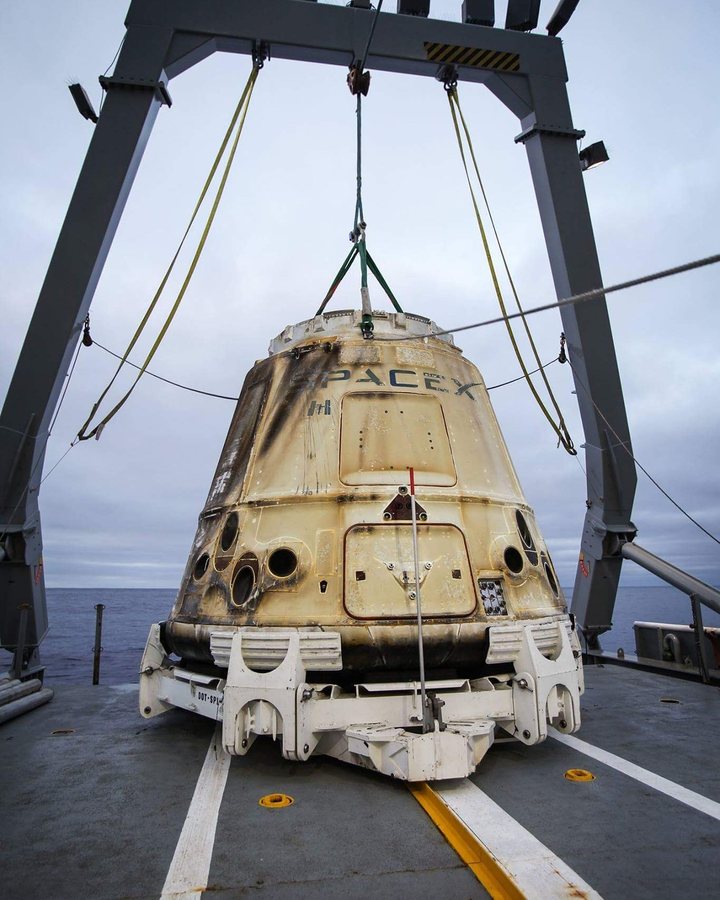
NASA's SpaceX Crew-12 astronauts have returned to Earth after spending 237 days in space, traveling more than 100 million miles and completing over 3,792 orbits. The crew splashed down safely, closing out a mission that combined long-duration spaceflight research with record-setting spacewalk achievements.
The mission's scientific program focused on experiments designed to prepare for future human missions to the Moon and Mars. Living and working aboard the International Space Station for nearly eight months, the astronauts conducted research that could transform medicine both in space and on Earth. The extended duration of the flight provided valuable data on how the human body adapts to prolonged exposure to microgravity and the space environment.
During their time in orbit, the crew also contributed to a record-setting spacewalk milestone. The achievements add to a growing body of experience in extravehicular activity, which will be essential as NASA and its partners plan for lunar surface operations and eventual crewed missions to Mars. Spacewalks are a critical part of building and maintaining spacecraft and habitats, and the lessons learned on this mission will inform future procedures and equipment design.
The return marks the end of a mission that covered more than 100 million miles — a distance that underscores the sheer scale of orbital travel accumulated over 237 days. Completing over 3,792 orbits, the crew circled Earth at roughly 17,500 miles per hour, conducting scientific investigations throughout the flight.
The research carried out aboard the station spans multiple disciplines, with a strong emphasis on biomedical studies. Scientists are particularly interested in how spaceflight affects human physiology, including bone density, muscle mass, cardiovascular function, and the immune system. Findings from such studies are not only relevant to astronaut health but can also inform medical treatments and preventive care for people on Earth.
NASA has emphasized that long-duration missions like Crew-12 serve as essential stepping stones toward the Artemis program and future journeys to Mars. The agency's plans call for sustained human presence in low Earth orbit as a testing ground for technologies and operational concepts needed for deeper space exploration. Each crew rotation adds to the cumulative understanding of how to keep astronauts healthy and productive during extended missions.
The splashdown concludes a mission that combined operational experience with scientific discovery. The data and samples returned by the crew will be analyzed by researchers for years to come, contributing to fields ranging from space medicine to materials science. As NASA and its international partners look ahead to the Moon and Mars, the results from Crew-12 will help shape the next generation of space exploration.
22