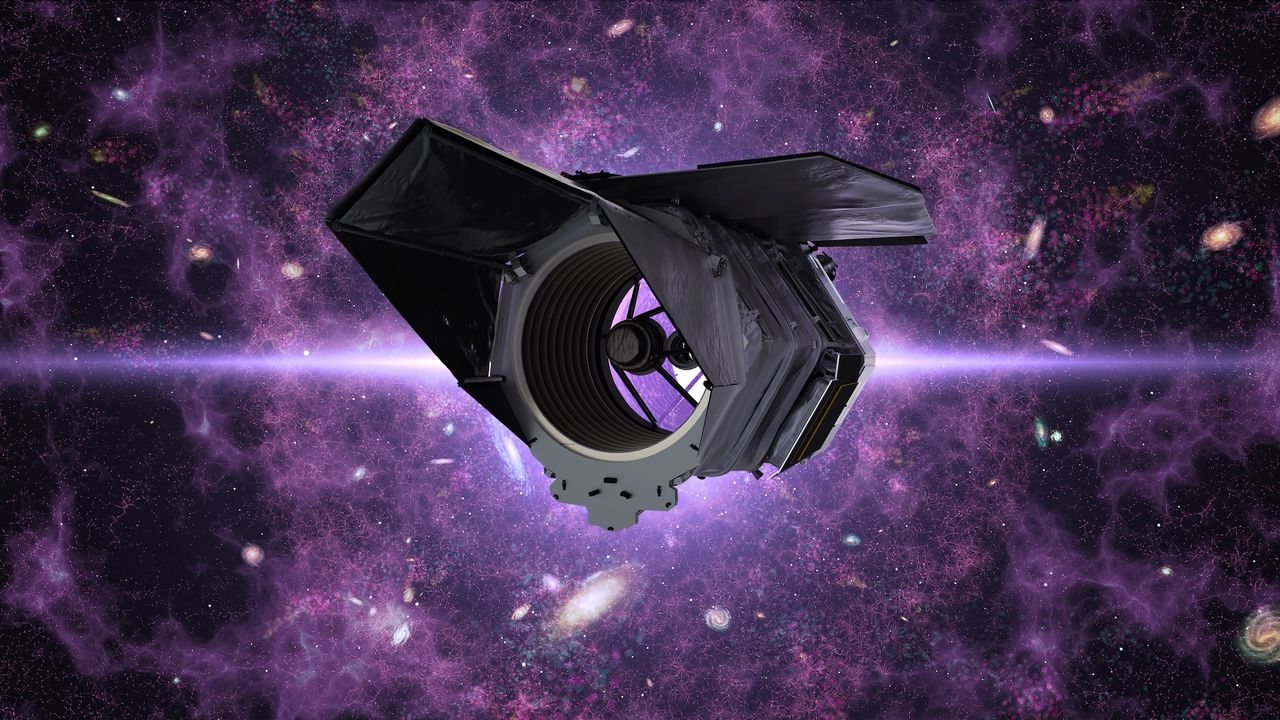
NASA’s Nancy Grace Roman Space Telescope is scheduled to launch on August 30, marking the start of a mission that will observe the cosmos with the same sharpness as the Hubble Space Telescope but across a field of view about 100 times larger. The telescope, named after Nancy Grace Roman, NASA’s first chief astronomer, is designed to tackle some of the biggest questions in astrophysics, including the nature of dark energy, the distribution of dark matter, and the search for planets beyond our solar system.
The Roman telescope carries a 2.4-meter mirror, comparable in size to Hubble’s, but its optics are optimized for wide-field infrared observations. This design allows it to capture in a single image a region of the sky that would take Hubble hundreds of pointings to cover. Because infrared light penetrates dust more effectively than visible light, the telescope will be able to peer through obscuring material in galaxies and star-forming regions, offering a clearer view of the universe’s structure and evolution.
One of the mission’s primary goals is to investigate dark energy, the mysterious force thought to drive the accelerated expansion of the universe. By mapping the distribution of galaxies and measuring their distances, Roman will help astronomers understand how dark energy has changed over cosmic time. The telescope will also study dark matter through gravitational lensing, a technique that measures how massive objects bend light from background sources, revealing the otherwise invisible mass that shapes galaxies and clusters.
In addition to cosmology, Roman is expected to revolutionize the study of exoplanets. The mission will conduct a microlensing survey, a method that detects planets by the slight brightening of a background star when a foreground star and its planets pass in front of it. According to a report in Nature, Roman could find about 40 times the number of distant worlds that have been detected so far, potentially adding tens of thousands of new exoplanets to the catalog. This survey will be particularly sensitive to planets in the habitable zones of their stars, including rocky worlds that are difficult to find with other techniques.
The telescope’s journey to the launch pad has not been without obstacles. In 2025, the previous administration attempted to cancel the mission, but Congress restored funding, and the project continued. The telescope was originally conceived as the Wide Field Infrared Survey Telescope (WFIRST), but in 2020 NASA renamed it in honor of Nancy Grace Roman, who played a pivotal role in the development of space-based astronomy. Roman, who died in 2018, was instrumental in launching the Hubble Space Telescope and other orbital observatories.
The hardware itself has a unique backstory. The telescope’s primary mirror and structure were originally built for a classified reconnaissance satellite for the National Reconnaissance Office, the U.S. agency responsible for space surveillance. After the military program was canceled, the hardware was transferred to NASA in 2011, providing a cost-effective foundation for the WFIRST mission. The donation allowed the project to move forward at a fraction of the cost of building a new telescope from scratch.
Roman will operate from a halo orbit around the Sun-Earth L2 point, about 1.5 million kilometers from Earth, where it will have a stable view of the sky without interference from Earth’s atmosphere or thermal radiation. The mission is expected to last at least five years, with the potential for extension. Alongside its core surveys, Roman will also serve as a general-purpose observatory, supporting a wide range of astrophysical investigations, from the study of nearby stars to the most distant galaxies.
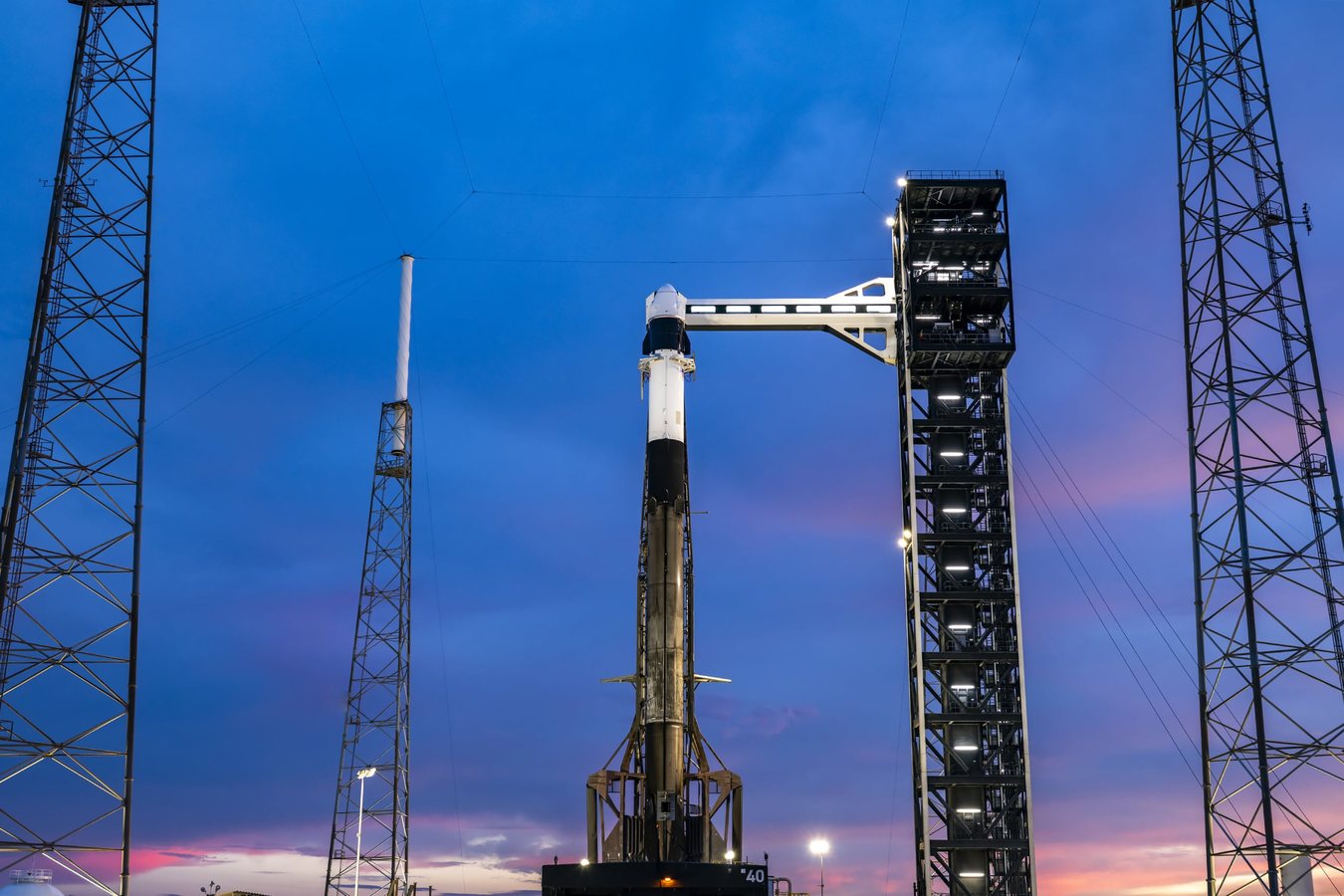
The launch, set for August 30, will place the telescope into orbit aboard a Falcon Heavy rocket from Cape Canaveral, Florida. Once in space, Roman will undergo a commissioning phase before beginning its scientific operations. Astronomers around the world are eager to see the first images, which are expected to demonstrate the telescope’s ability to capture large swaths of the universe in unprecedented detail.
124