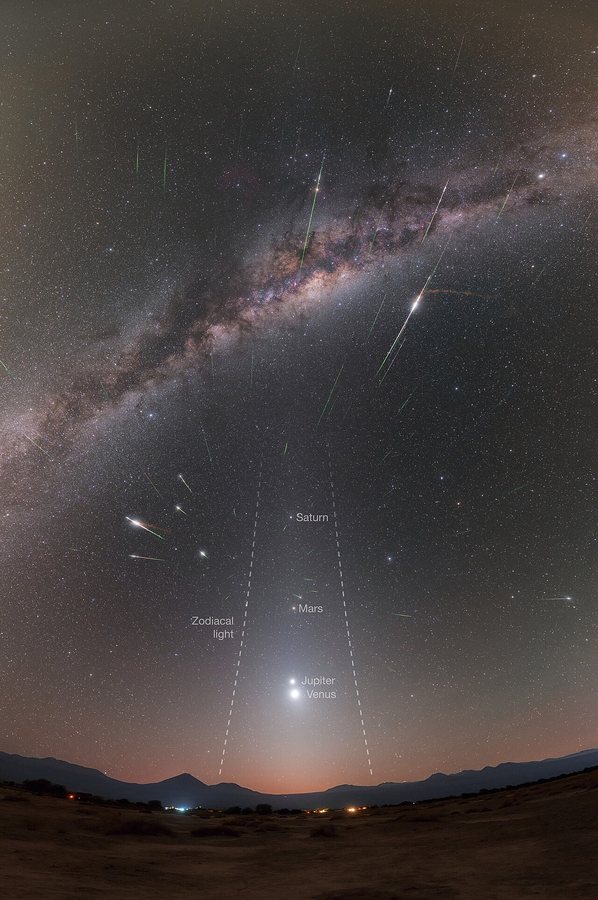
Skywatchers in Maryland will have a chance to see debris from Halley's Comet when the Orionid meteor shower peaks in 2026. The annual shower occurs when Earth passes through the stream of dust and ice particles left behind by the famous comet, producing a display of fast, bright meteors that appear to radiate from the constellation Orion.
The Orionids are one of two meteor showers created by Halley's Comet each year, the other being the Eta Aquariids in May. Halley's Comet itself only returns to the inner solar system about every 76 years, but its debris trail remains in orbit and Earth crosses it every October. The particles hit the atmosphere at high speed and burn up, creating streaks of light.
For observers in Maryland, the best viewing will be after midnight and before dawn, when the radiant point in Orion rises higher in the sky. The shower is expected to produce a moderate number of meteors per hour, though the exact rate can vary. Viewing conditions will depend on weather and moonlight, so checking a local forecast is advised.
No special equipment is needed to watch the Orionids. Find a dark location away from city lights, allow your eyes to adjust for about 20 to 30 minutes, and look up at a wide area of the sky. Meteors can appear anywhere, not just near Orion, so lying back and taking in as much sky as possible improves the chances of spotting them.
The Orionids are known for their speed, striking the atmosphere at around 66 kilometers per second. That speed can produce persistent trains, glowing trails that linger for a moment after the meteor passes. While the shower is not as prolific as the Perseids in August, it offers a direct connection to one of the most famous comets in history.
Halley's Comet last appeared in the inner solar system in 1986 and will not return until 2061. Its debris, however, continues to produce annual meteor showers that remind skywatchers of the comet's passage. The Orionids are visible from both hemispheres, though observers in the Northern Hemisphere have a better view of the radiant before dawn.
Maryland observers should dress warmly, bring a blanket or reclining chair, and be patient. Meteor showers often come in bursts, with quiet periods between brighter streaks. Avoiding bright screens and giving eyes time to adapt to darkness are simple ways to improve the experience.
The 2026 Orionid peak is expected in late October, though the shower is active for several weeks around that time. Even if the peak night is cloudy, nearby nights may still offer meteors. Checking the weather and planning for a dark-sky location will help make the most of the event.
14