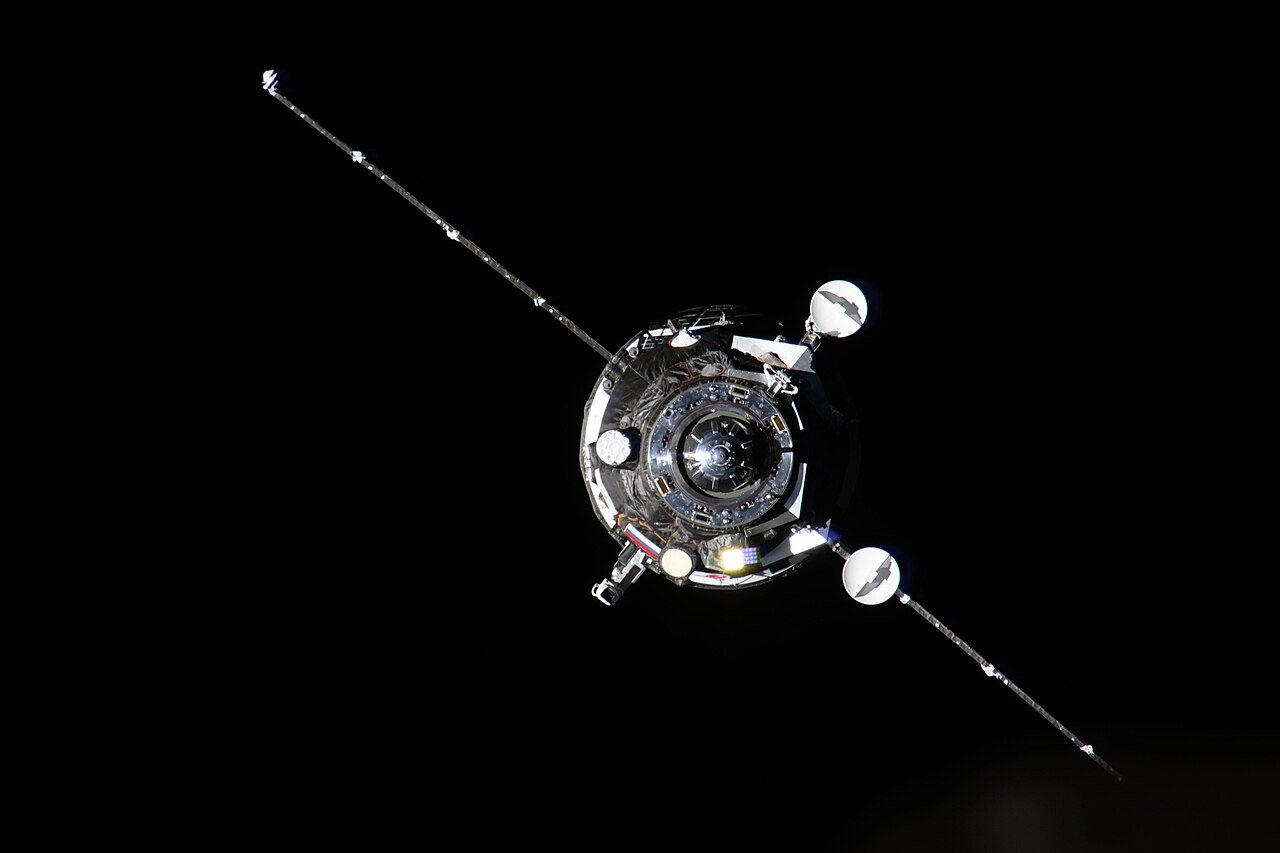
Roscosmos is preparing to launch the Progress MS-35 cargo spacecraft to the International Space Station on Wednesday, Sept. 16, from the Baikonur Cosmodrome in Kazakhstan. The uncrewed resupply vehicle will lift off atop a Soyuz 2.1b rocket from Site 31/6 at 13:33 UTC, carrying 2,600 kilograms of cargo for the Expedition 75 crew currently aboard the orbiting laboratory.
The launch comes after an earlier attempt on Sept. 9 was scrubbed due to issues with the Soyuz rocket's third stage. The vehicle was rolled back to the assembly building, where faulty components were repaired, before returning to the pad for the current launch window. The instantaneous launch opportunity is required because the station's orbital plane must align with the launch site to allow the spacecraft to reach a matching orbit and execute a efficient rendezvous.
The Soyuz 2.1b is a three-stage, medium-lift rocket developed by Roscosmos. It stands 46.3 meters tall and generates a total liftoff thrust of 4,550 kilonewtons. The vehicle can deliver up to 8,670 kilograms to low-Earth orbit. This mission will mark the sixth Soyuz 2.1b launch of 2026 and the 105th overall flight of the variant.
The Progress MS-35 spacecraft itself has a launch mass of 7,280 kilograms and measures 7.4 meters long with a diameter of 2.7 meters. Its 10.7-meter solar array will unfurl after separation to power the vehicle during its two-day journey to the station. The cargo manifest includes pressurized supplies such as food, science equipment, and maintenance hardware, along with fuel for the Zvezda module's propulsion system, potable water, and gases to replenish the station's atmosphere.
After reaching orbit, Progress MS-35 will spend approximately 48 hours and complete 34 orbits to catch up with the ISS. Docking is scheduled for Friday, Sept. 18, at 18:37 UTC at the Poisk zenith port. The spacecraft will rely on its primary automated Kurs-NA rendezvous system, though the manual Teleoperator Control Mode, or TORU, will remain available as a backup for cosmonauts if needed.
The Poisk port became available following the departure of Progress MS-33, which undocked on Sept. 7 at 18:27 UTC and subsequently reentered Earth's atmosphere destructively, ending a mission that began with a March 22 launch and lasted roughly six months docked to the station.
Roscosmos first developed the Progress spacecraft in 1978, with early 7K-TG vehicles supplying the Salyut 6, Salyut 7, and Mir stations. The current MS series has flown since 2015, operating alongside SpaceX's Cargo Dragon in resupplying the ISS. The upcoming flight will be the 188th overall mission of a Progress vehicle.
Meanwhile, the Expedition 75 crew continues to await the arrival of the NASA/SpaceX Crew-13 mission, which was originally slated for mid-September. During routine pre-launch preparations, engineers identified an oxidizer leak in the spacecraft, prompting SpaceX and NASA to delay the flight for additional testing and rework. A new launch date has not yet been announced.