A growing number of planetary scientists are turning their attention to Titan, Saturn’s largest moon, as a potential destination for a future crewed mission. Despite its extreme distance from Earth and frigid surface temperatures, researchers argue that Titan’s unique environment—including a thick atmosphere and abundant organic compounds—makes it a surprisingly viable target for human exploration. The concept, still in early planning stages, has sparked new discussions about the long-term future of human spaceflight beyond Mars.
Titan is the only moon in the solar system with a substantial atmosphere, composed primarily of nitrogen, similar to Earth’s. This atmospheric blanket, about 50 percent denser than Earth’s, would provide natural protection from cosmic radiation and solar particles, a major advantage over other destinations such as the Moon or Mars. The presence of stable liquid methane and ethane lakes and seas on the surface also offers potential resources for fuel and life support, according to scientists involved in the preliminary studies.
Researchers from NASA and several academic institutions have begun mapping out the key challenges and opportunities for a crewed Titan mission. One of the most significant hurdles is the sheer distance: Titan orbits Saturn at about 886 million miles from the Sun, roughly ten times farther than Earth. A one-way trip using current propulsion technology would take approximately seven years, raising concerns about crew health, life support reliability, and mission duration. However, advances in nuclear thermal propulsion or other high-efficiency engines could reduce travel time substantially, making the mission more feasible within the coming decades.
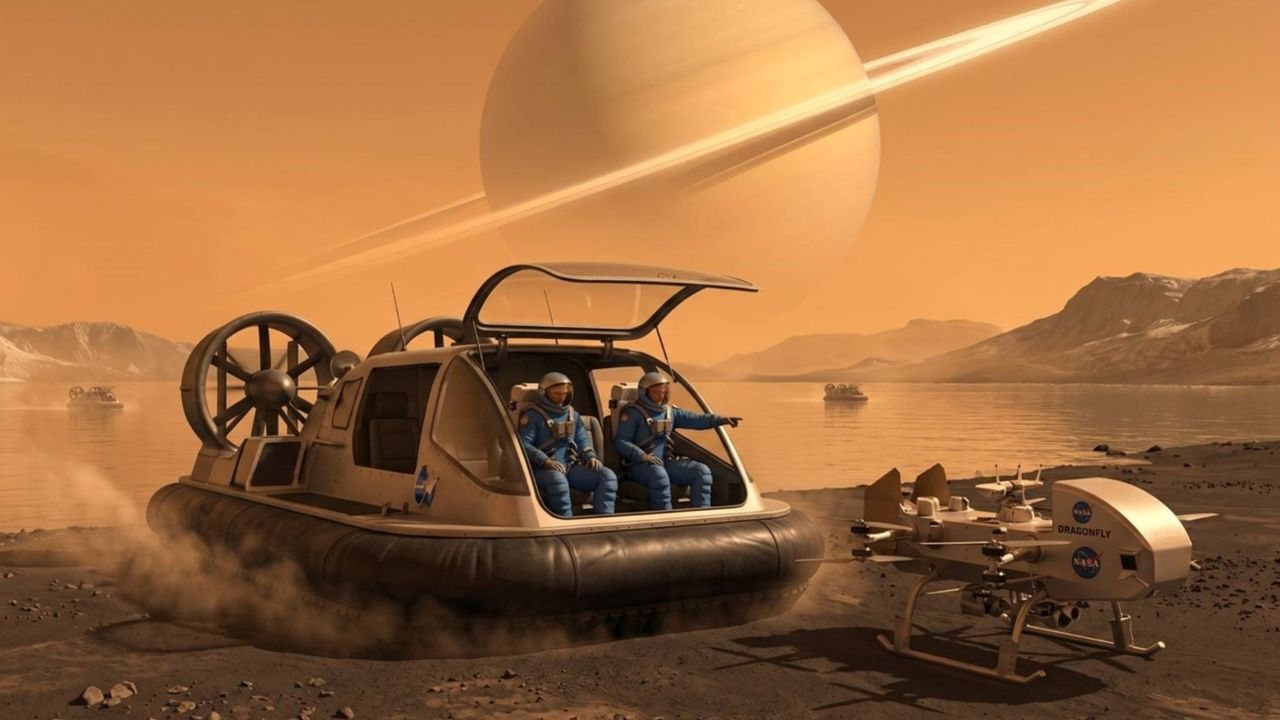
The surface of Titan is also inhospitable by human standards, with temperatures averaging around minus 290 degrees Fahrenheit. Any habitat or spacesuit would require advanced insulation and heating systems to protect astronauts from the extreme cold. Yet the thick atmosphere means that temperature swings are less severe than on airless bodies like the Moon, and the atmospheric pressure is about 1.5 times that of Earth, which could simplify habitat design. Engineers are exploring concepts such as heated, pressurized modules that could float on Titan’s methane lakes or rove across its icy plains.
Scientific interest in Titan is driven by its complex organic chemistry and its potential to harbor microbial life. The moon’s surface is covered with dunes, mountains, and river channels carved by liquid methane, and its subsurface is thought to contain a liquid water ocean. Studying Titan up close could provide insights into the origins of life on Earth and the possibilities for life elsewhere in the universe. A crewed mission would allow for real-time sample analysis, drilling, and exploration far beyond what robotic missions like NASA’s Dragonfly—a rotorcraft lander set to launch in 2028—can achieve.
Proponents of a human Titan mission emphasize that it is not a near-term goal but rather a long-range vision that could guide technology development over the next several decades. The challenges are immense, but the potential scientific rewards are equally significant. As one researcher noted, Titan is actually a very reasonable destination for humans, provided that the necessary propulsion, life support, and habitat technologies are matured. The moon’s abundant resources, including water ice and hydrocarbons, could be used to produce fuel, oxygen, and building materials, reducing the need to transport everything from Earth.
International collaboration will likely be essential for such an ambitious endeavor. Space agencies including NASA, ESA, and others have already begun preliminary discussions about joint missions to the outer solar system. The Artemis program’s focus on lunar exploration and the ongoing development of Mars mission architectures are expected to provide foundational technologies that could be adapted for Titan. In the meantime, robotic missions will continue to gather critical data about Titan’s atmosphere, geology, and climate, informing the design of future human habitats and landing sites.
While a crewed Titan mission remains a distant prospect, the fact that scientists are seriously mapping out its requirements marks a significant shift in thinking about human exploration. For decades, Mars has been considered the next logical step beyond the Moon, but Titan offers a different set of advantages and challenges that could make it a compelling alternative or complement. The moon’s thick atmosphere, liquid resources, and organic richness make it a unique destination in the solar system—one that could one day host human explorers seeking to understand the boundaries of life and the history of planetary systems.
168