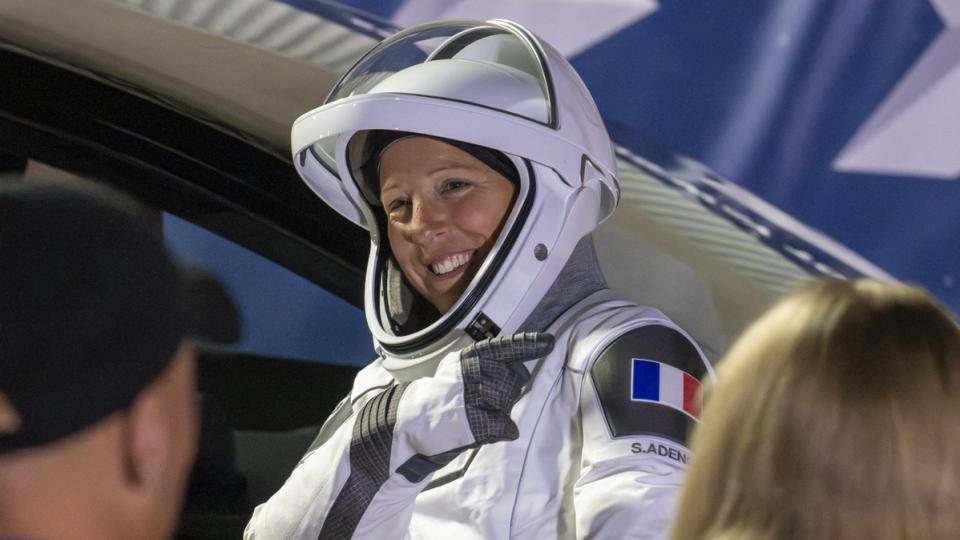
French astronaut Sophie Adenot is set to return to Earth after spending 235 days aboard the International Space Station, a record for a European astronaut. She departed the ISS aboard a SpaceX Crew Dragon capsule and is expected to splash down off the coast of California after a journey of approximately 27 hours. The mission, which included several spacewalks, marks a significant milestone in European spaceflight.
Adenot's extended stay in microgravity may have left her slightly taller than when she left. According to a 2013 NASA study, astronauts can gain up to 3% of their body height during spaceflight. On Earth, gravity compresses the spine and pulls the body downward. In the microgravity environment of the ISS, that constant compression is removed, allowing the vertebrae to expand and the spine to lengthen. The effect is temporary, and most astronauts return to their original height within a few months of returning to Earth.
The physical changes associated with long-duration spaceflight extend beyond height. Astronauts experience muscle atrophy, bone density loss, and fluid shifts that can affect vision and cardiovascular health. These effects are closely monitored by space agencies as they plan for future missions to the Moon and Mars. Adenot's 235-day mission provides valuable data on how the human body adapts to extended periods in space.
Beyond the physical toll, the psychological and emotional dimensions of spaceflight are equally profound. Extended isolation, confinement, and the overview effect—the cognitive shift reported by many astronauts upon viewing Earth from space—can reshape an astronaut's sense of self and connection to humanity. Adenot's return marks the end of an experience that, by all accounts, transforms both body and mind.
The return of a European astronaut after such a long mission also highlights the growing role of international collaboration in space exploration. The ISS, a joint project involving the United States, Russia, Europe, Japan, and Canada, has been continuously occupied for more than two decades. Adenot's mission underscores the importance of multinational partnerships in advancing scientific research and human spaceflight.
As Adenot readjusts to life on Earth, her experience will contribute to a growing body of knowledge about the effects of spaceflight on the human body. Researchers will continue to study her recovery, tracking how quickly her height, bone density, and muscle mass return to baseline. The findings will inform preparations for longer missions, including potential crewed journeys to Mars, where astronauts could spend years in microgravity.
For now, Adenot's return marks the end of a record-setting mission and the beginning of a new phase of scientific analysis. Her journey offers a reminder that space exploration is not only about reaching new destinations but also about understanding the limits and resilience of the human body.
16