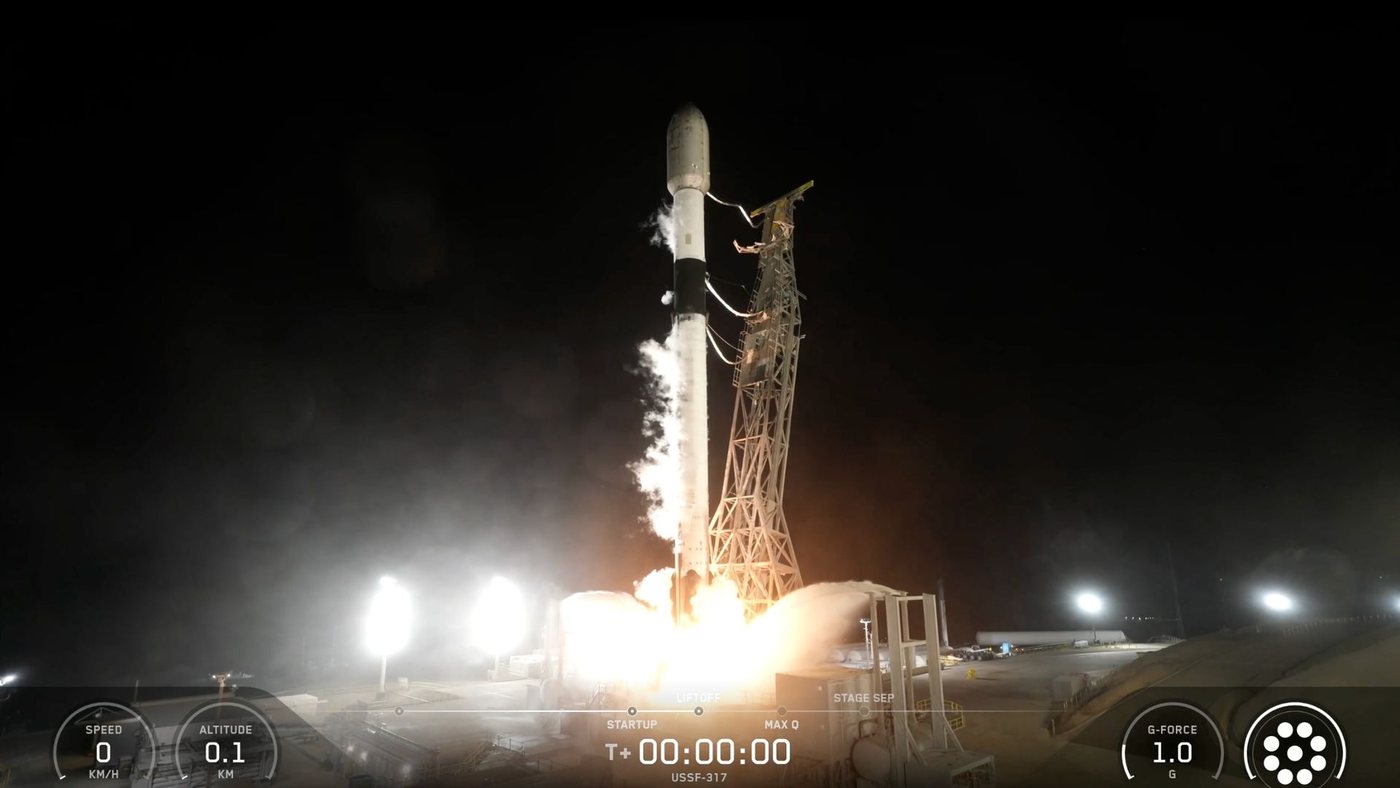
A SpaceX Falcon 9 rocket launched a classified mission for the U.S. Space Force from Vandenberg in California on November 6, lifting off at 4:48 p.m. Pacific time from pad 4E. The flight, designated USSF-432 and also known as R-4, was the latest in a series of secretive launches that the military has been carrying out with the company.
The mission had originally been scheduled for November 1, but it was delayed several times. Neither the Space Force nor SpaceX has explained the reasons for the postponements, and the military has declined to disclose details about the payload or its objectives.
Based on available information, the satellites are believed to be built on SpaceX's Starshield platform, a satellite bus designed for government customers. Each launch in the R-series is reportedly carrying 23 satellites. Satellite tracker Jonathan McDowell has linked the program to the Space Force's Space Based Sensing and Targeting initiative, which is intended to track objects and support military targeting from orbit. Neither agency has confirmed that connection.
The R-series began in August with USSF-366, followed by USSF-153, designated R-2, in September, and USSF-385, or R-3, later that same month. Taken together, the launches show a steady cadence of national security missions flown by SpaceX on behalf of the Pentagon.
The first stage of the rocket, booster B1095, was on its eighth flight and landed on a drone ship in the Pacific Ocean off the coast of Baja California. Earlier missions in the series launched from Florida, but the flights shifted west to California after an April GPS launch. Whether earlier R-series payloads were deployed successfully has not been confirmed publicly by either SpaceX or the Space Force, leaving key questions about the program unanswered.
Credit. Based on reporting by Mike Wall for Space.com. Is this your work? Write to us.
19