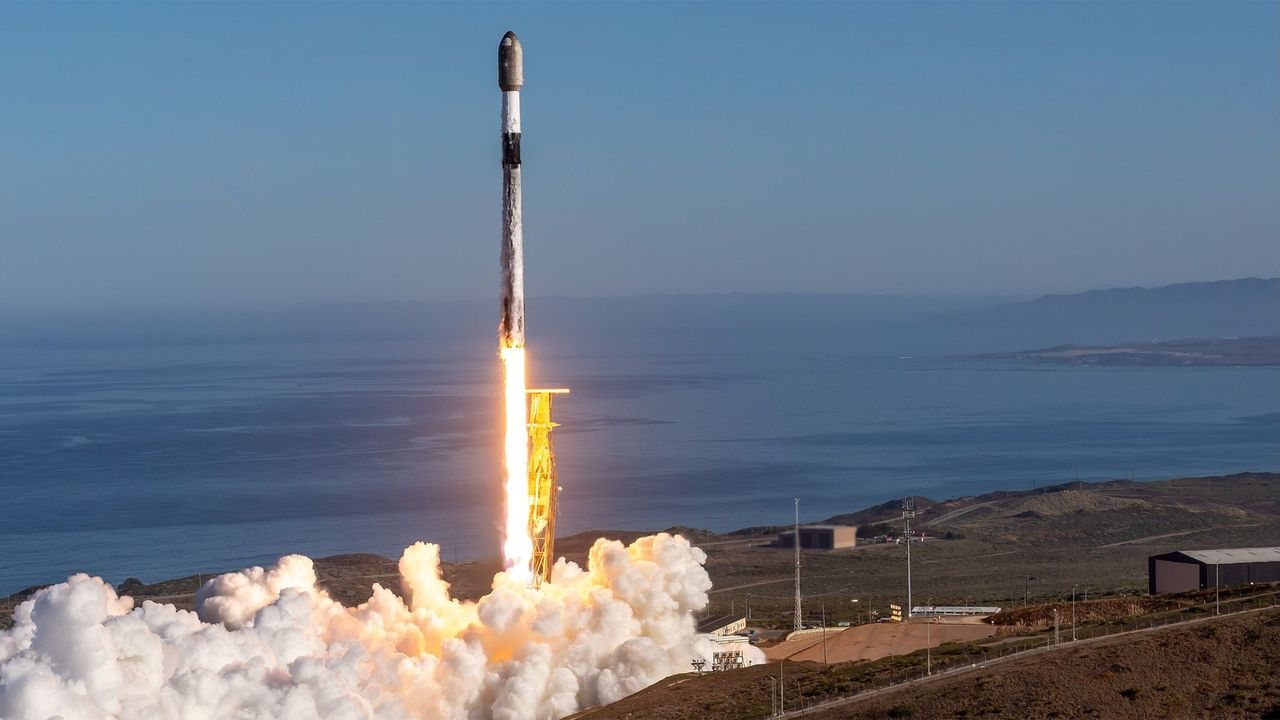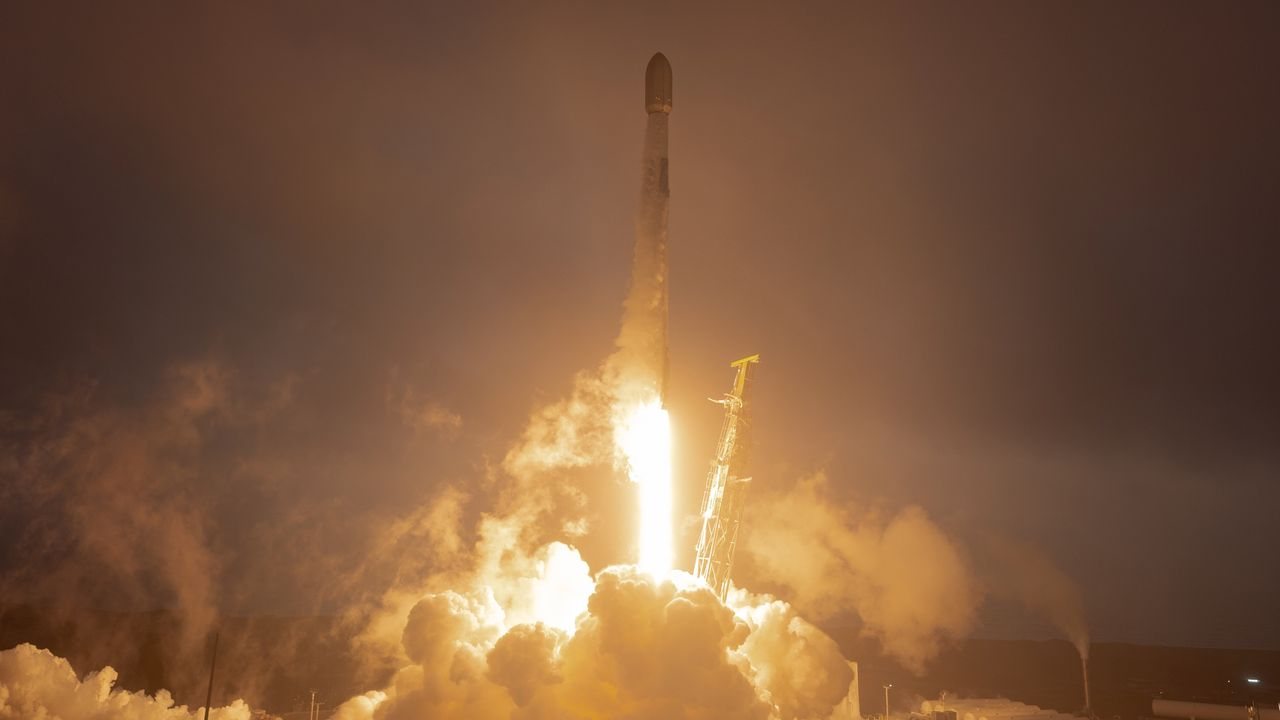
SpaceX launched 24 Starlink satellites into orbit from California on a Falcon 9 rocket, continuing the company's rapid expansion of its satellite internet network. The mission, designated Starlink Group 17-52, lifted off from Vandenberg Space Force Base on California's Central Coast.
After powering the upper stage and its satellite payload toward space, the Falcon 9's first stage separated and flew back to a landing on SpaceX's autonomous droneship «Of Course I Still Love You». The ship was positioned in the Pacific Ocean to catch the booster as it descended under its own guidance, bringing another flight to a successful conclusion.
The recovery is part of SpaceX's broader strategy of reusing rocket hardware. Rather than discarding the booster after a single use, the company aims to inspect, refurbish, and refly it in later missions, reducing the overall cost of launching satellites. Landing at sea also allows SpaceX to recover boosters on missions that require more performance and leave less fuel for a return-to-site landing.
The 24 satellites were released into low Earth orbit after the second stage finished its burn. From there, the spacecraft are expected to maneuver to their working altitudes, complete system checks, and enter service within the Starlink constellation.
Starlink is designed to supply high-speed internet to users around the world, including areas where ground-based broadband is impractical. The network now serves residential customers, businesses, schools, government agencies, and humanitarian organizations, and it has been used in marine, aviation, and emergency-response settings when terrestrial communication links were unavailable.
Because the satellites operate much closer to Earth than traditional communications satellites, they can provide relatively low-latency connections. The trade-off is that many spacecraft are needed to maintain continuous coverage, which is why SpaceX has moved to regular, high-cadence launches.
The California site has become an important departure point for Starlink missions. Vandenberg's location on the West Coast is well suited to launches into polar and sun-synchronous orbits, which allow satellites to pass over the entire planet as Earth rotates while keeping their solar arrays in favorable sunlight for power generation.
SpaceX has built the Starlink system through a large series of Falcon 9 group flights, with each launch carrying multiple satellites. Newer versions of the spacecraft have included upgrades meant to improve bandwidth, reduce interference, and make the constellation easier to manage as its size grows.
The completion of Starlink Group 17-52 adds 24 more satellites to the network, which already ranks among the largest constellations ever deployed in space. Additional launches are expected in the weeks and months ahead as SpaceX works to broaden coverage, increase capacity, and bring internet service to more regions worldwide.