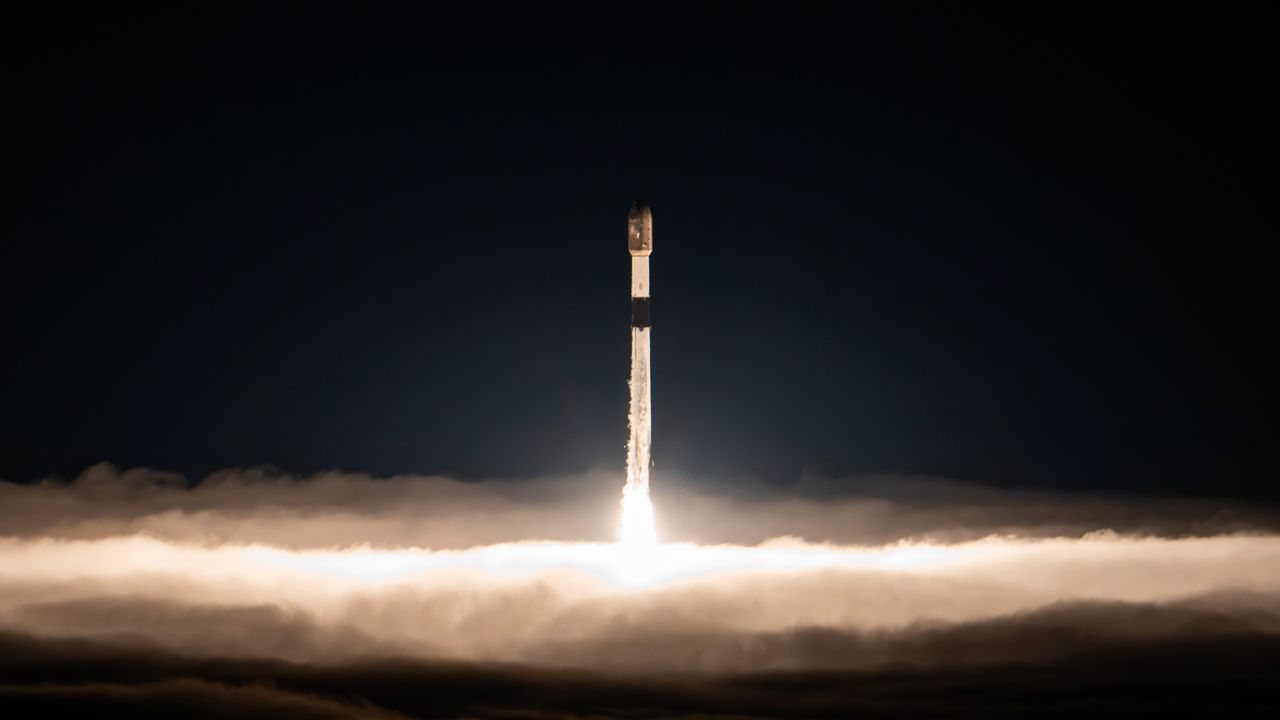
SpaceX has reached a new milestone in its launch cadence, sending 27 Starlink satellites into low Earth orbit on the company's 100th Falcon rocket mission of the year. The flight, designated Starlink Group 15-20, lifted off from Vandenberg Space Force Base in California, continuing the company's rapid deployment of its broadband internet constellation.
The Falcon 9 rocket launched during a window that opened in the early morning hours, with the booster's first stage returning to Earth for a landing on a droneship stationed in the Pacific Ocean. This recovery marked another routine success for SpaceX, which has made booster reuse a standard part of its operations. The upper stage continued on to deploy the 27 satellites into their intended orbit, where they will join thousands of other Starlink spacecraft already operating.
Reaching 100 launches in a single calendar year is a significant achievement for the company, reflecting both the growing demand for satellite internet services and the operational maturity of the Falcon 9 vehicle. The pace of launches has accelerated steadily over the past several years, with SpaceX now routinely flying multiple missions per week. This particular mission was the latest in a series of dedicated Starlink flights that have become the backbone of the company's launch manifest.
The Starlink constellation is designed to provide high-speed internet access to users around the globe, particularly in rural and remote areas where traditional ground-based infrastructure is limited or unavailable. The system works by using a network of satellites in low Earth orbit that communicate with user terminals on the ground, offering lower latency than conventional geostationary satellites. As the constellation grows, SpaceX has expanded its service offerings to include maritime, aviation, and enterprise customers, alongside its consumer-focused plans.
Each Starlink satellite is equipped with Hall-effect thrusters that allow it to maneuver in orbit and perform deorbiting maneuvers at the end of its operational life. The satellites are designed to burn up completely in Earth's atmosphere upon reentry, a measure intended to minimize space debris. SpaceX has also worked with astronomers to reduce the reflectivity of the satellites, addressing concerns about their impact on ground-based astronomical observations.
The 100th launch milestone comes as SpaceX continues to develop its next-generation Starship vehicle, which is intended to eventually replace the Falcon 9 for many missions. While Starship has yet to reach operational status, the Falcon 9 remains one of the most reliable and frequently used rockets in the world. The company has also been selected by NASA to use Starship for crewed lunar landings under the Artemis program, adding to its portfolio of government and commercial contracts.
For now, the Falcon 9 continues to carry the bulk of SpaceX's launch workload, with Starlink missions accounting for a large share of the total. The company has stated that it plans to continue launching Starlink satellites at a high rate to meet growing demand and to complete the constellation's planned configuration. With each successful mission, SpaceX moves closer to its goal of providing global broadband coverage, while also maintaining a launch schedule that has become a benchmark for the industry.
80