SpaceX launched a mission for Northrop Grumman on Tuesday that aims to extend the operational life of aging satellites in geostationary orbit. The mission, backed by the Defense Advanced Research Projects Agency (DARPA), involves installing propulsion pods on three commercial satellites to keep them functioning beyond their planned lifespan.
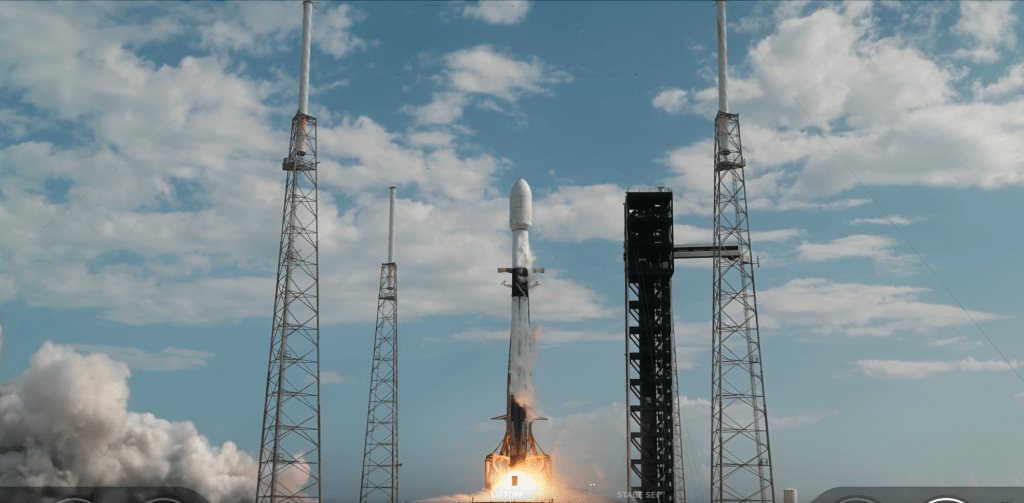
The launch took place from Cape Canaveral Space Force Station in Florida aboard a Falcon 9 rocket. The payload, developed by Northrop Grumman, is designed to dock with satellites that are running low on fuel and provide them with additional propulsion capabilities. This approach could reduce the need for costly satellite replacements and help manage orbital debris by keeping satellites in their designated orbits.
The mission is part of DARPA's broader effort to develop technologies for on-orbit servicing and assembly. By demonstrating the ability to refuel or reboost satellites, the program aims to enhance the resilience and longevity of space assets, which are critical for communications, weather monitoring, and national security. Geostationary satellites, which orbit about 22,000 miles above Earth, are particularly valuable because they maintain a fixed position relative to the ground, making them ideal for telecommunications and broadcasting.
Northrop Grumman's Mission Extension Vehicle (MEV) has previously demonstrated similar capabilities, including docking with a satellite in 2020 to extend its life. The current mission, however, focuses on installing smaller propulsion pods rather than attaching a full servicing vehicle. These pods are designed to be lighter and more cost-effective, allowing for multiple satellites to be serviced in a single mission.
The three satellites targeted for this mission are commercial spacecraft that have already exceeded their expected operational lifetimes. By providing them with additional fuel, the pods can help maintain their orbital positions and prevent them from becoming space debris. This is increasingly important as the number of satellites in orbit grows, raising concerns about collisions and the long-term sustainability of space activities.
SpaceX's Falcon 9 rocket, known for its reusability, has become a workhorse for such missions. The first stage of the rocket successfully landed on a drone ship in the Atlantic Ocean, marking another milestone in SpaceX's efforts to reduce launch costs. The company has now launched over 200 missions, many of which have been for commercial and government customers.
The mission also highlights the growing role of private companies in space operations. Northrop Grumman, a major defense contractor, has been at the forefront of satellite servicing technology, while SpaceX has revolutionized access to space with its reusable rockets. Together, they are enabling new capabilities that were once considered science fiction.
DARPA's involvement underscores the military's interest in maintaining and protecting its space assets. The agency has been exploring various concepts for on-orbit servicing, including robotic arms and autonomous docking systems. These technologies could eventually be used to repair, refuel, or upgrade satellites in orbit, extending their usefulness and reducing the need for expensive launches.
The success of this mission could pave the way for more routine satellite servicing operations. As satellites become more sophisticated and expensive, the ability to extend their lives becomes economically attractive. It also aligns with broader efforts to reduce space debris by ensuring that satellites can be safely deorbited at the end of their lives.
Industry experts have praised the mission as a significant step forward. Satellite operators are increasingly looking for ways to maximize the return on their investments, and life extension services offer a cost-effective alternative to building and launching new spacecraft. The technology could also be adapted for other purposes, such as inspecting satellites or removing debris from orbit.
The launch comes amid a busy period for SpaceX, which has been conducting multiple missions per week. The company is also preparing for the next test flight of its Starship rocket, which is designed for deep space exploration. Meanwhile, Northrop Grumman continues to develop new technologies for the space industry, including advanced propulsion systems and satellite components.
As the space industry evolves, missions like this one demonstrate the potential for collaboration between government agencies and private companies. By combining DARPA's research goals with Northrop Grumman's engineering expertise and SpaceX's launch capabilities, the mission showcases a model for future space operations. The ability to service satellites in orbit could transform how we manage space assets, making them more sustainable and cost-effective over the long term.
126