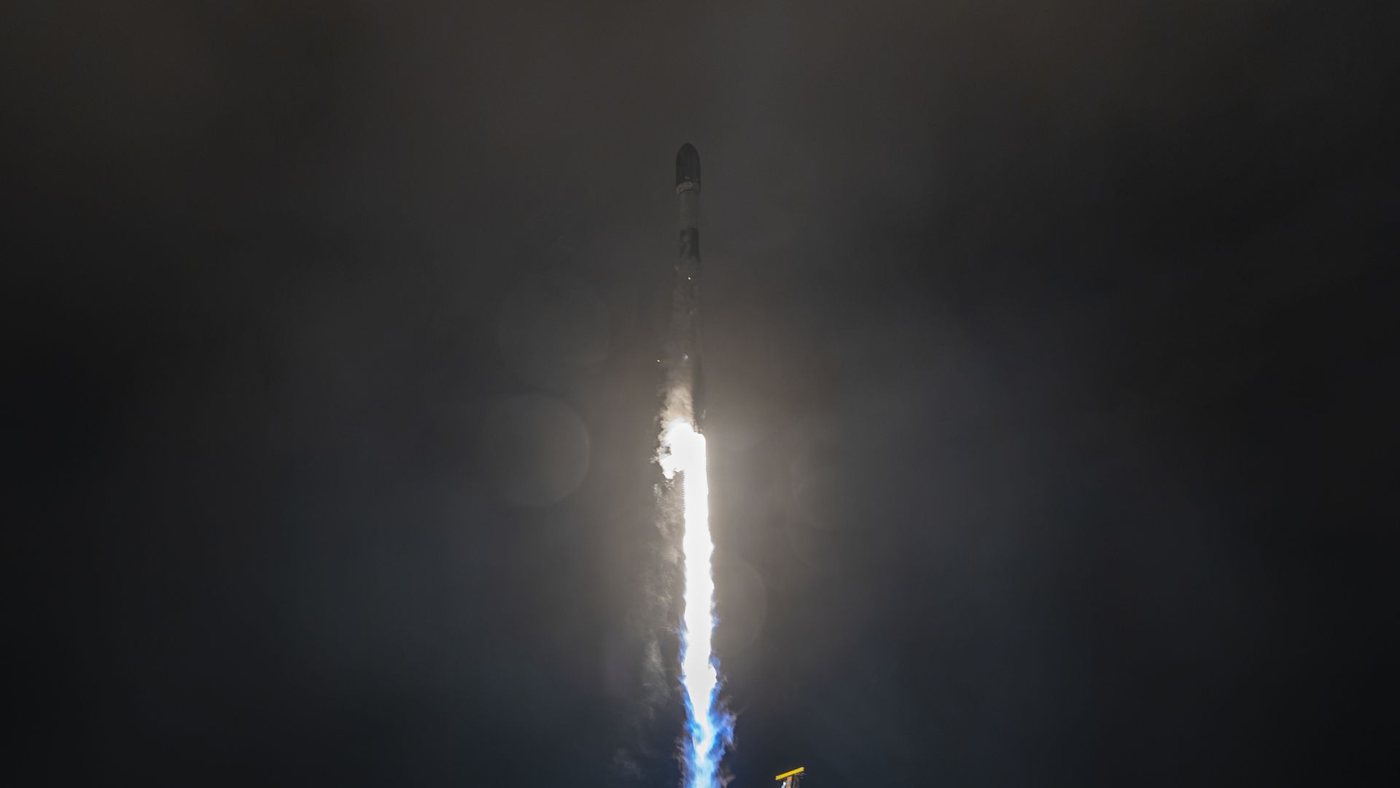
SpaceX launched a Falcon 9 rocket in the early morning from California, sending a batch of Starlink internet satellites toward orbit. The mission adds to the company's steady cadence of Starlink deployments, which form the backbone of its satellite broadband network.
The launch was documented in a video published by Space.com, which showed the rocket lifting off from the coast before daybreak. The Falcon 9's first-stage booster was assigned to land on an autonomous droneship stationed in the Pacific Ocean, a recovery method SpaceX has used for many of its West Coast missions. Reusing boosters in this way has allowed the company to fly missions at a rate few other providers can match.
Starlink missions from Vandenberg Space Force Base in California typically place their payloads into low Earth orbit, where the satellites are later raised to their operational altitudes. Each group of satellites joins a constellation that now numbers thousands of spacecraft, providing connectivity to customers in remote areas, aviation and maritime operators, and government users. The early-morning timing of the launch reflects the orbital geometry required for the specific deployment path.
The early-morning window matters for more than the rocket's trajectory. Launching before sunrise allows ground observers and the onboard systems to track the ascent and separation under controlled lighting, and it places the satellites on a path that suits the planned insertion into their orbital shell. Each Starlink batch is one step in building out coverage that the company has been adding in stages since its first operational deployments.
The footage that accompanied the report captures the rocket's climb through the dark sky, with the exhaust plume visible against the night as the vehicle clears the launch complex. Viewers watching from the coast would have seen the booster separate and begin its return toward the droneship, a sequence that has become routine for SpaceX but remains a visible demonstration of reusable launch technology. The company has repeatedly said that reflying boosters lowers the cost of getting payloads to orbit.
The source material does not specify the number of satellites carried on this particular flight, the exact orbital altitude or inclination, or the precise time of the booster landing. Those details are typically published by SpaceX and by the Space Force range operators following liftoff, and they would be needed for a complete accounting of the mission's parameters.
13