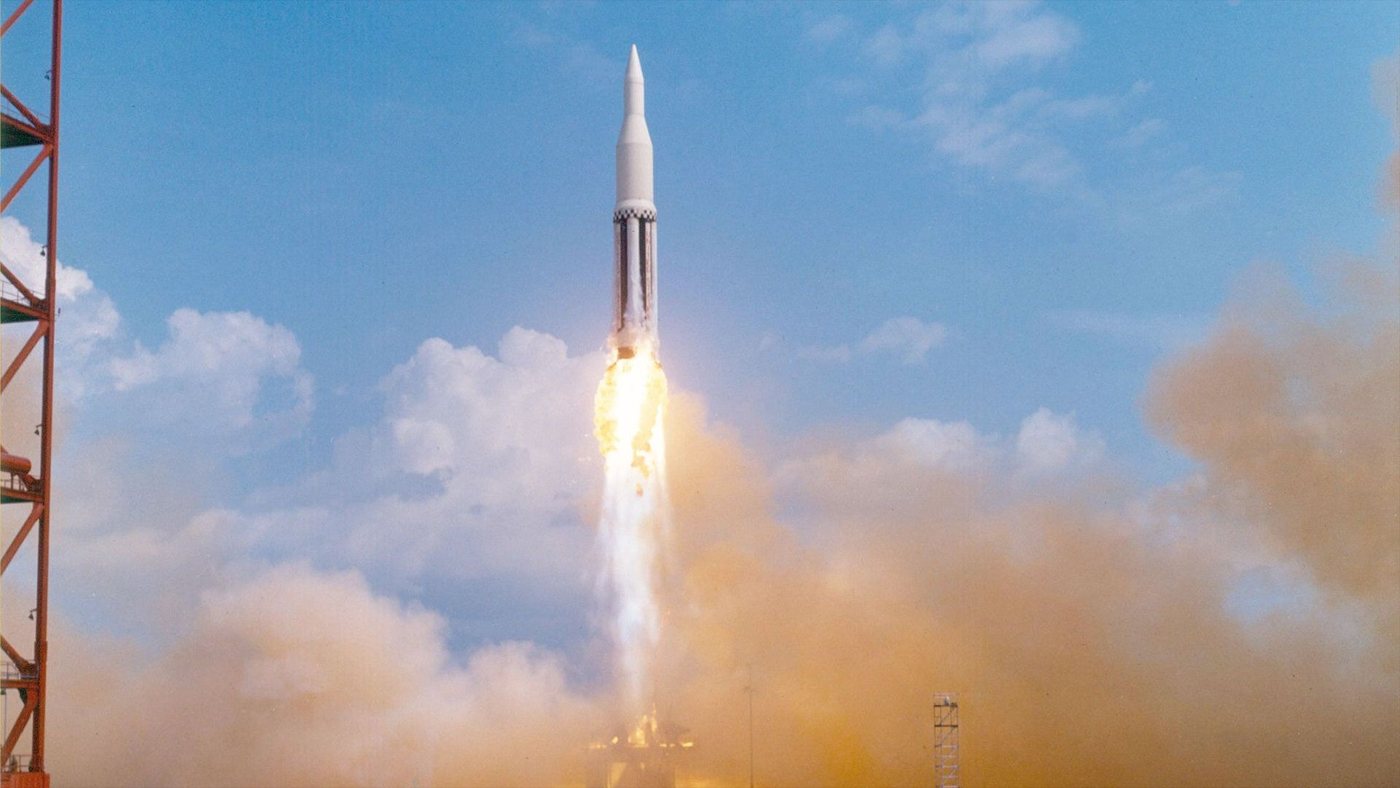
On October 27, 1961, NASA launched its Saturn I rocket on the first test flight from Florida, a milestone that prepared the way for the far more powerful Saturn V moon rocket that would later carry astronauts to the lunar surface.
The flight was part of the agency's effort to develop heavy-lift rockets capable of supporting missions beyond Earth orbit. Saturn I was built as a testbed, allowing engineers to validate the propulsion, guidance and structural systems that would be needed for larger vehicles in the Saturn family. Its clustered first stage, which combined several engines into a single booster, was one of the design features that engineers needed to prove under real flight conditions.
Engineers used the launch to gather performance data on the vehicle's behavior during ascent. That information was essential for refining the design of the Saturn V, which became the most powerful launch vehicle to fly successfully and powered the Apollo missions to the Moon in the late 1960s and early 1970s. Lessons drawn from the Saturn I flights helped shape the broader architecture of NASA's lunar program, including how stages were staged, how engines were arranged, and how the rocket was controlled during flight.
The Saturn I program represented a significant investment in American rocketry during the early years of the space race. It came at a time when the United States was working to catch up with the Soviet Union, which had already sent the first satellite and the first human into orbit. Each successful test reduced technical uncertainty and built confidence within NASA that the Saturn family could carry the heavy payloads required for the agency's ambitions.
The October 1961 flight was one in a series of launches that gradually proved the Saturn concept. Subsequent tests pushed the rocket's performance further, moving the program steadily toward the larger vehicles needed for the Apollo era. By demonstrating that a cluster of engines could be made to work together reliably, the Saturn I campaign helped establish the engineering foundation on which the Moon missions depended.
13