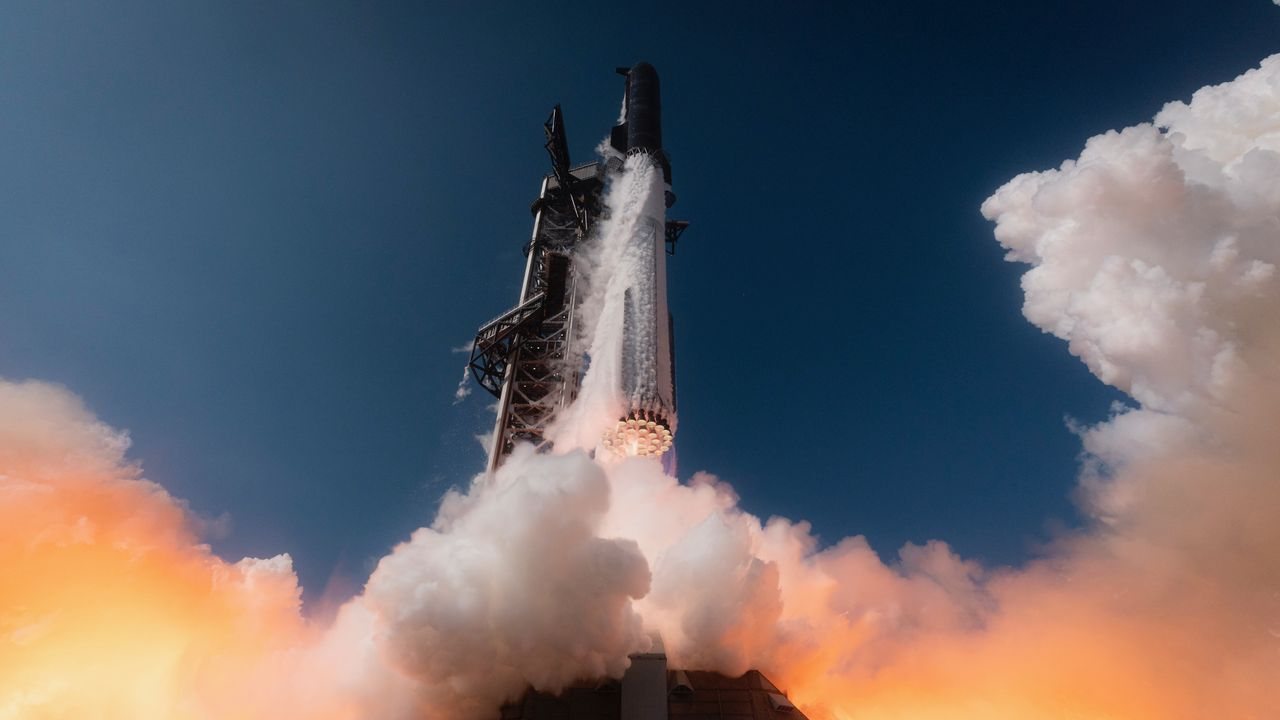
SpaceX is preparing to launch the world's largest rocket, Starship, on its 13th test flight, a mission that carries significant weight for the company's ambitions to deploy next-generation Starlink satellites. The test, designated Flight 13, is scheduled to lift off from the company's Starbase facility in Boca Chica, Texas, and represents a critical step toward making Starship an operational vehicle for satellite deployment and deep-space missions.
The primary objective of this flight is to attempt the first-ever deployment of Starlink V3 satellites from Starship's payload bay. These advanced satellites are designed to provide higher bandwidth and improved connectivity for SpaceX's growing internet constellation. If successful, the mission would demonstrate Starship's ability to deliver payloads to orbit, a capability that could revolutionize the satellite launch industry by offering a much larger and more cost-effective platform than existing rockets.
Starship is the most powerful rocket ever built, standing nearly 400 feet tall and generating over 16 million pounds of thrust at liftoff. The vehicle consists of two stages: the Super Heavy booster and the Starship upper stage. On Flight 13, SpaceX will again attempt to catch the Super Heavy booster with the launch tower's mechanical arms, known as chopsticks, after it separates and returns to the launch site. This maneuver, previously achieved on Flight 5, is a key part of SpaceX's strategy to rapidly reuse rockets and reduce launch costs.
The flight profile for Flight 13 includes a series of complex maneuvers. After liftoff, the Super Heavy booster will separate and attempt a controlled descent back to the launch mount. Meanwhile, the Starship upper stage will continue to orbit, where it will open its payload door and release the Starlink V3 satellites. The upper stage will then perform a controlled reentry and splashdown in the Indian Ocean, testing its heat shield and flight control systems under extreme conditions.
SpaceX has made several upgrades to the Starship vehicle based on lessons learned from previous flights. These include improvements to the heat shield tiles, upgraded Raptor engines, and enhanced avionics for better control during reentry. The company has also refined the software that governs the booster catch attempt, aiming to increase reliability after a partial success on Flight 6.
The launch window for Flight 13 opens at 5:00 p.m. EST and extends for several hours, with backup opportunities available on subsequent days. Weather conditions at the Texas coast are expected to be favorable, though SpaceX will monitor winds and upper-level shear closely. The Federal Aviation Administration has issued a launch license for the mission, following a review of SpaceX's safety and environmental compliance.
Beyond the immediate test objectives, Flight 13 is a stepping stone for SpaceX's broader goals. The company plans to use Starship for crewed missions to the Moon under NASA's Artemis program, as well as for eventual missions to Mars. The ability to deploy Starlink V3 satellites also supports SpaceX's business model, as the Starlink network generates revenue that funds further Starship development. Each Starship launch could carry dozens of V3 satellites, accelerating the expansion of the constellation and improving service for users worldwide.
The test comes amid increasing competition in the heavy-lift launch market. Blue Origin's New Glenn rocket and NASA's Space Launch System are both vying for roles in deep-space exploration, but Starship's fully reusable design gives it a potential cost advantage. However, the vehicle has faced technical challenges, including engine failures and heat shield damage on earlier flights, which SpaceX has addressed through iterative design changes.
Industry observers will be watching Flight 13 closely for signs of progress. A successful satellite deployment would mark a major milestone, proving that Starship can perform the core function of a commercial launch vehicle. Even partial success, such as a booster catch or a controlled reentry, would provide valuable data for future missions. SpaceX founder Elon Musk has described the test campaign as a series of rapid iterations, with each flight informing the next.
The launch will be streamed live on SpaceX's website and social media channels, with commentary from company engineers. Viewers can expect to see the Super Heavy booster attempt its catch maneuver about seven minutes after liftoff, followed by the satellite deployment roughly 45 minutes into the flight. The upper stage's reentry and splashdown will occur about 90 minutes after launch, concluding the mission.
As SpaceX pushes the boundaries of rocket technology, Flight 13 represents both a technical challenge and a commercial opportunity. The outcome will shape the company's timeline for operational Starship launches and influence the broader landscape of space transportation. For now, all eyes are on the Texas coast as the countdown begins for what could be a defining moment in modern rocketry.
188