SpaceX has moved its Super Heavy booster back to the launch pad at Boca Chica, Texas, for final preflight checkouts as the company prepares for the 13th integrated test flight of its Starship system. The rollback, which occurred over the weekend, signals that the launch campaign is entering its final phase, though a specific launch date has not yet been announced.
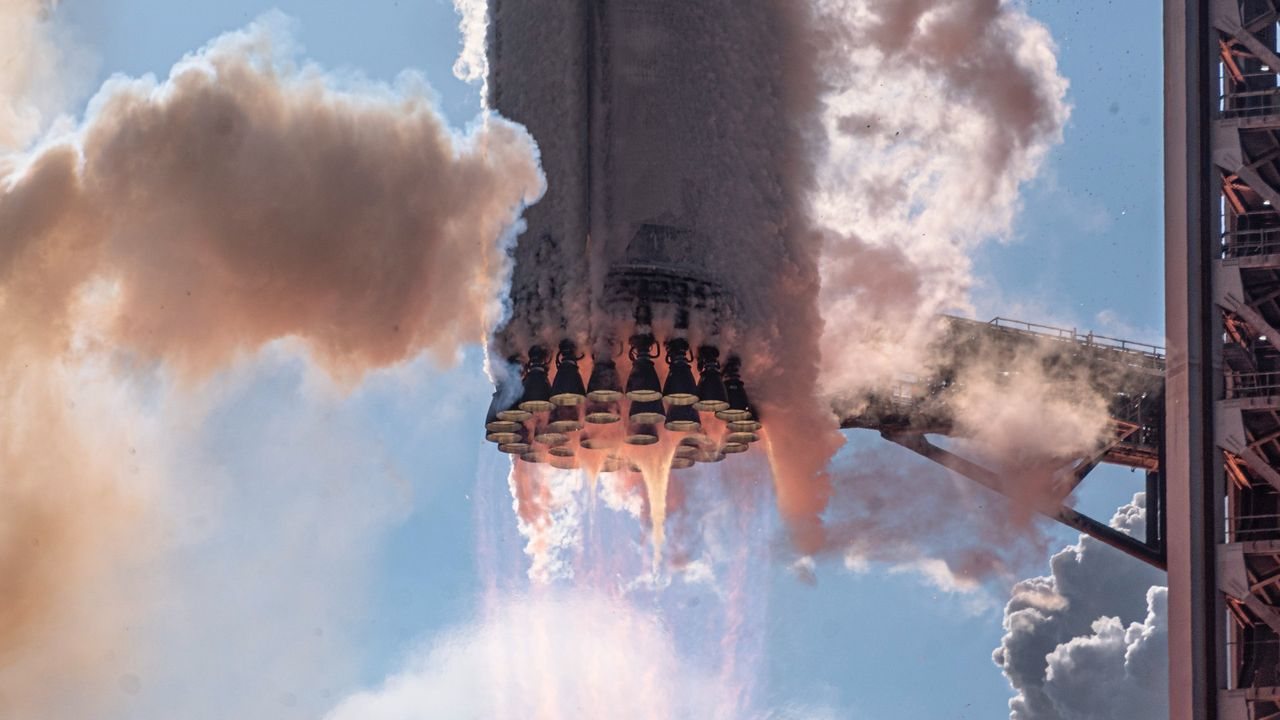
The booster, designated Booster 14, was transported from the production facility to the orbital launch mount at SpaceX's Starbase site. Engineers are expected to conduct a series of tests, including static fire engine tests and propellant loading demonstrations, before the vehicle is cleared for flight. The Super Heavy booster is the first stage of the Starship system, powered by 33 Raptor engines that generate over 16 million pounds of thrust at liftoff.
Flight 13 will be the latest in a rapid series of test flights that began with the first integrated launch in April 2023. Each flight has aimed to push the vehicle's capabilities further, with recent missions achieving milestones such as stage separation, booster landings, and orbital insertion attempts. The upcoming flight is expected to include a payload deployment demonstration, though SpaceX has not disclosed specific mission details.
The Starship system is central to SpaceX's long-term goals, including crewed missions to the Moon under NASA's Artemis program and eventual human exploration of Mars. NASA has awarded SpaceX a contract to use a modified Starship as the human landing system for the Artemis III mission, currently targeted for the mid-2020s. Each successful test flight brings the company closer to demonstrating the vehicle's reliability and reusability.
SpaceX's iterative development approach has drawn both praise and scrutiny. The company frequently tests hardware early and often, accepting failures as learning opportunities. Previous Starship flights have ended in explosions during ascent or landing, but each has provided data that led to design improvements. The Super Heavy booster, for example, has undergone multiple upgrades to its engine shielding and grid fin systems based on lessons from earlier flights.
The Federal Aviation Administration (FAA) oversees launch licenses for Starship tests. After each flight, the FAA conducts a mishap investigation if any anomalies occur, which can delay subsequent launches. For Flight 13, SpaceX has worked closely with regulators to ensure compliance with safety and environmental requirements. The company has also implemented changes to the launch site's water deluge system and sound suppression measures to address concerns raised by local communities and environmental groups.
Starbase, located near Brownsville, Texas, has become a hub for Starship development. The facility includes production buildings, test stands, and the orbital launch mount. SpaceX has invested heavily in expanding the site, including new propellant storage tanks and a second launch tower currently under construction. The company envisions launching multiple Starships per day from Starbase in the future, supporting missions to orbit, the Moon, and beyond.
The Starship vehicle itself is the largest rocket ever built, standing nearly 400 feet tall when fully stacked with the Super Heavy booster. It is designed to be fully reusable, with both stages capable of landing vertically after launch. SpaceX has demonstrated booster landings on several recent flights, though the upper stage has yet to survive reentry intact. Engineers are working on thermal protection system upgrades, including new heat shield tiles and improved flap designs, to address the extreme temperatures encountered during atmospheric reentry.
For Flight 13, the upper stage, known as Ship 30, has also undergone final preparations. The ship has been fitted with upgraded avionics and propulsion systems. SpaceX has not confirmed whether the ship will attempt an orbital insertion or a suborbital trajectory similar to previous flights. The company often adjusts mission profiles based on real-time data and regulatory approvals.
The broader space industry is watching Starship's progress closely. Competitors such as Blue Origin and United Launch Alliance are developing their own heavy-lift rockets, but Starship's payload capacity — estimated at over 100 metric tons to low Earth orbit in its reusable configuration — far exceeds current vehicles. If successful, Starship could dramatically reduce the cost of access to space and enable new types of missions, from large space telescopes to Mars colonization.
SpaceX founder Elon Musk has stated that the company aims to achieve orbital flight with Starship by the end of 2026, though timelines have slipped in the past. Flight 13 represents a critical step toward that goal. The rollback of the Super Heavy booster for final checkouts indicates that the launch team is methodically working through its preflight checklist, with a launch window likely to be announced in the coming weeks.
As the space community awaits further updates, the focus remains on the technical readiness of the vehicle and the regulatory landscape. SpaceX has demonstrated an ability to move quickly from one test to the next, and Flight 13 could provide valuable data that shapes the design of future Starship iterations. Whether the flight ends in success or provides lessons for improvement, it will mark another chapter in the development of what could become a transformative launch system.
99