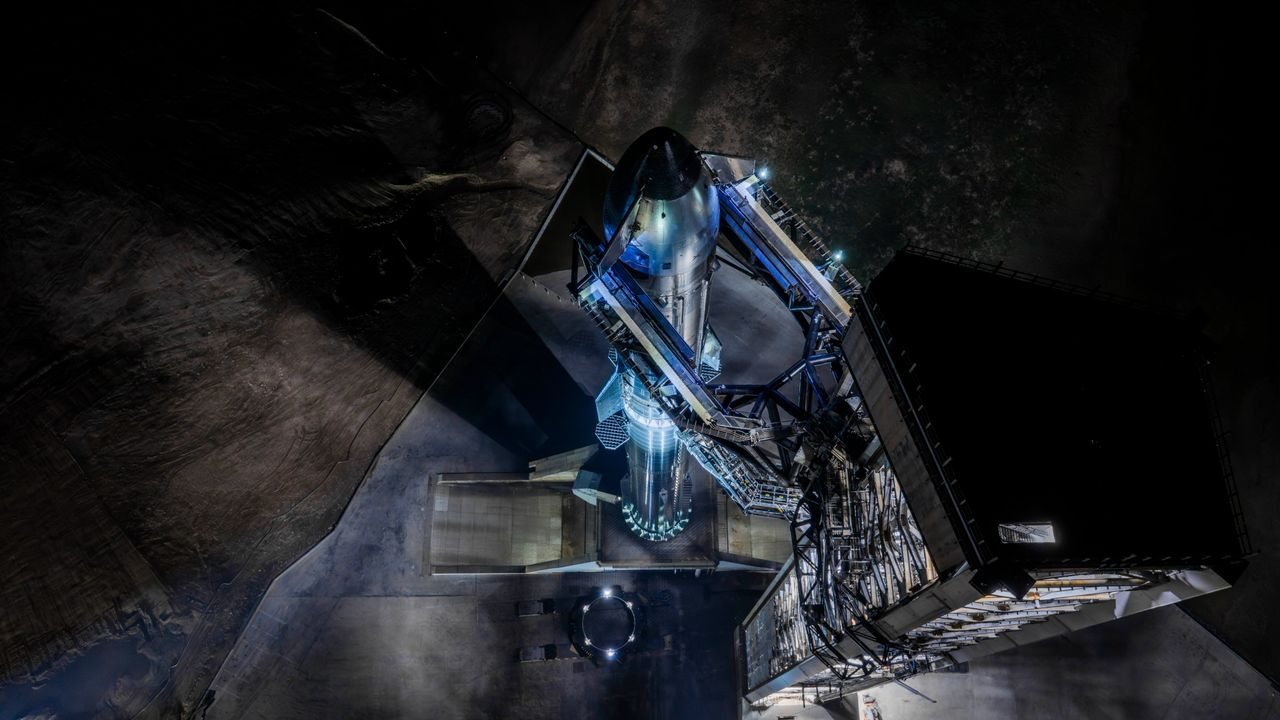
SpaceX has completed stacking its Starship rocket ahead of the planned Flight 13 test launch, positioning the massive vehicle for what could be another milestone in the company's ambitious spaceflight program. The stacking operation, which involves placing the Super Heavy booster beneath the Starship upper stage, took place at the company's Starbase facility in Boca Chica, Texas.
The fully assembled rocket stands approximately 120 meters tall, making it the largest and most powerful launch vehicle ever built. Flight 13 represents the latest in a series of increasingly complex test flights aimed at validating the vehicle's design and operational capabilities. Previous flights have demonstrated key milestones, including stage separation and controlled reentry maneuvers, though some have ended in explosions or premature shutdowns.
SpaceX has not yet announced an exact launch time for Flight 13, but the stacking operation typically occurs within 24 to 48 hours of a planned liftoff. The company has been working toward a launch window that could open as early as today, pending regulatory approvals from the Federal Aviation Administration (FAA) and favorable weather conditions at the Texas launch site.
The Starship system is designed to be fully reusable, with both the Super Heavy booster and the Starship upper stage intended to return to Earth for vertical landings. This reusability is central to SpaceX's goal of reducing the cost of space access and enabling missions to the Moon, Mars, and beyond. NASA has already selected a modified version of Starship as the human landing system for its Artemis program, which aims to return astronauts to the lunar surface later this decade.
Flight 13 is expected to include several test objectives, though SpaceX has not disclosed the full manifest. Based on previous flights, the mission may attempt an orbital insertion, a controlled reentry, and a landing demonstration. The Super Heavy booster is likely to attempt a landing at the Gulf of Mexico, while the Starship upper stage may target a splashdown near Hawaii or another Pacific Ocean location.
The stacking process itself is a complex engineering operation. The Super Heavy booster, which is powered by 33 Raptor engines, is first moved to the launch mount. The Starship upper stage, equipped with six Raptor engines, is then lifted by a massive crane and placed on top of the booster. The two stages are mechanically and electrically connected, and the vehicle is fueled with liquid methane and liquid oxygen before launch.
SpaceX has been iterating rapidly on the Starship design, incorporating lessons learned from each test flight. The company has made changes to the vehicle's thermal protection system, engine configuration, and avionics to improve reliability and performance. Flight 13 will be the first to test several of these upgrades in a flight environment.
The test launch program has drawn significant attention from the space community and the public, as Starship is seen as a potential game-changer for space exploration. If successful, the vehicle could carry up to 100 metric tons of cargo to low Earth orbit, far exceeding the capacity of any existing rocket. It could also support crewed missions to the Moon and Mars, as well as commercial applications such as satellite deployment and space tourism.
However, the program has also faced challenges. The FAA has required SpaceX to complete a series of environmental and safety reviews before each launch, and some flights have been delayed by regulatory hurdles. The company has also dealt with technical issues, including engine failures and structural problems during testing.
Despite these obstacles, SpaceX continues to push forward with the Starship program. The company's founder and CEO, Elon Musk, has stated that he hopes to see Starship conduct regular orbital flights within the next few years, with the ultimate goal of establishing a self-sustaining city on Mars. While that vision remains distant, each test flight brings the technology closer to operational reality.
For now, all eyes are on Boca Chica as SpaceX prepares for Flight 13. The launch will be streamed live on the company's website and social media channels, allowing space enthusiasts around the world to watch the event unfold. Whether the flight ends in success or failure, it will provide valuable data that will inform the next iteration of the Starship design.
90