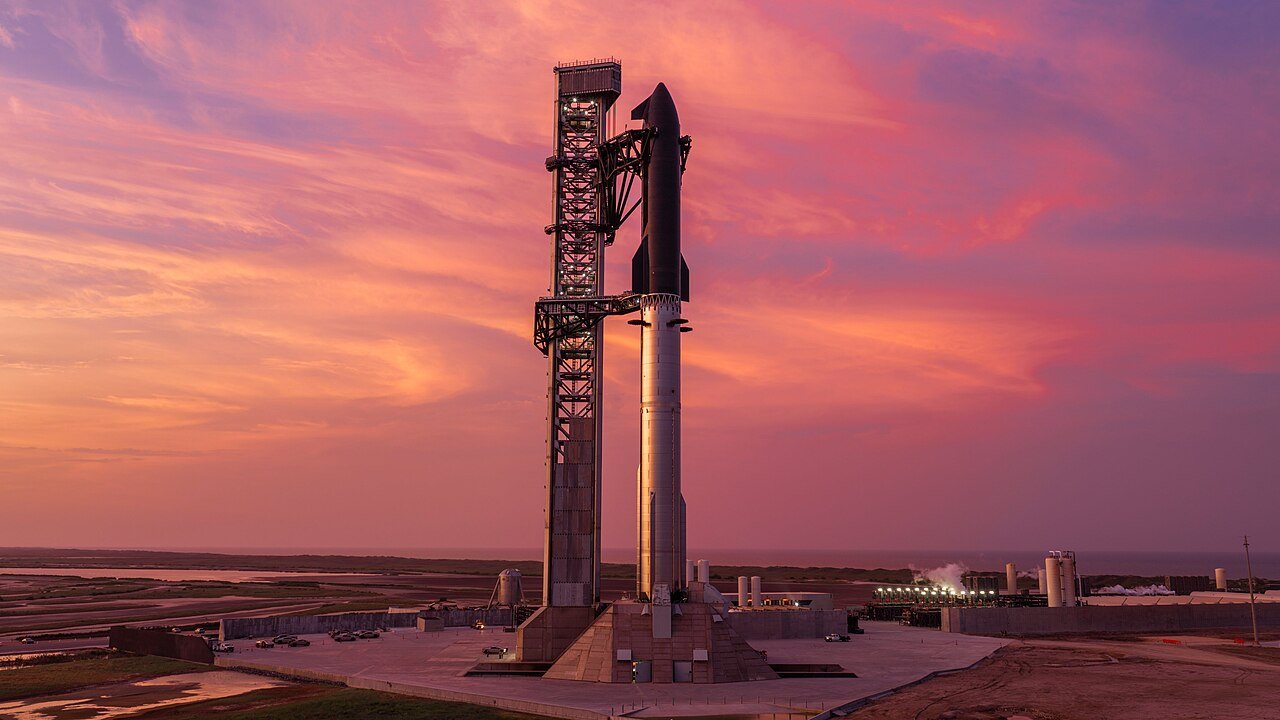
NASA and SpaceX are targeting no earlier than 6:33 a.m. EDT on Tuesday, Oct. 13, to launch the 35th SpaceX commercial resupply mission to the International Space Station. A Falcon 9 rocket is set to lift the Dragon spacecraft from Space Launch Complex 40 at Cape Canaveral Space Force Station in Florida, carrying more than 6,300 pounds of supplies and scientific hardware. NASA cautions that the launch time remains a target and may shift with real-time operations.
The headline cargo is the final pair of International Space Station Roll-Out Solar Arrays, known as IROSAs. According to NASA's mission overview, these are the last IROSAs that will be installed on the station, completing the augmentation of its power system to support critical operations, including its safe and controlled deorbit. The agency links this final power upgrade not only to ongoing research but also to the station's end-of-life operations.
Dragon is expected to dock autonomously around 11 a.m. on Thursday, Oct. 15, at the space-facing port of the station's Harmony module. NASA astronaut Anil Menon and Canadian Space Agency astronaut Joshua Kutryk will monitor the arrival. The spacecraft is scheduled to remain at the station for about a month before departing in mid-November and splashing down off the coast of California.
The station has supported research by scientists from more than 110 countries over more than 25 years, enabling more than 4,000 experiments in microgravity, according to NASA. The agency says that work helps prepare long-duration missions to the Moon under Artemis and to Mars.
Several new experiments are flying on this mission. With LambdaVision-1, NASA is testing how to manufacture artificial retinas in microgravity one thin layer at a time. Reduced settling in orbit may create more uniform, stable layers, and the implants could one day help restore vision for patients with retinal diseases that are currently incurable.
Stellar Spheroids will study how microgravity affects the growth and function of 3D human heart tissue models, including whether it improves the formation of vascular networks, with an eye on larger-scale drug testing. ELF-Unconventional Glass 2 will examine how glass made from non-traditional elements forms in microgravity, and samples will return to Earth for analysis.
MINDS uses brain organoids, including «organoid villages» that combine cells from multiple people, to study inflammation linked to Alzheimer's, Parkinson's and multiple sclerosis.
Dragon also carries a collapsible contingency urinal, a demonstration and test unit supporting NASA's Artemis III mission. A large foam clamshell will fly up empty so it can bring home the failed Canadarm2 robotic arm joint that was replaced during a June 30 spacewalk. Other equipment includes a toilet dose pump, a toilet pretreat quality sensor and a robot micro-conical tool for maintenance work.
On the return trip, Dragon will carry the failed Canadarm2 joint for analysis and refurbishment, a spacesuit for ground refurbishment, a fluid- and pressure-control pump assembly from the urine processor and a filtration unit for the water processor assembly.
NASA plans live launch coverage starting no earlier than 6 a.m. EDT on Oct. 13.
13