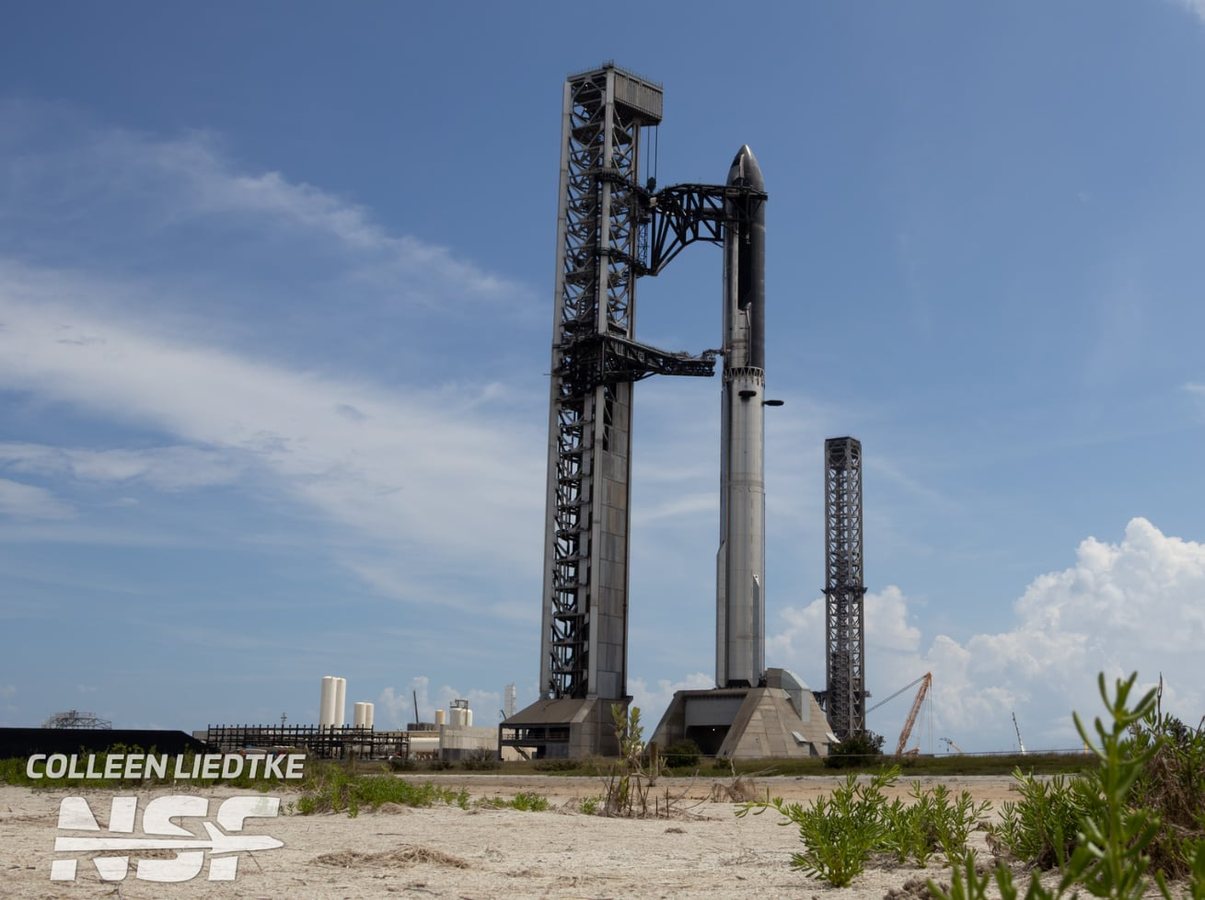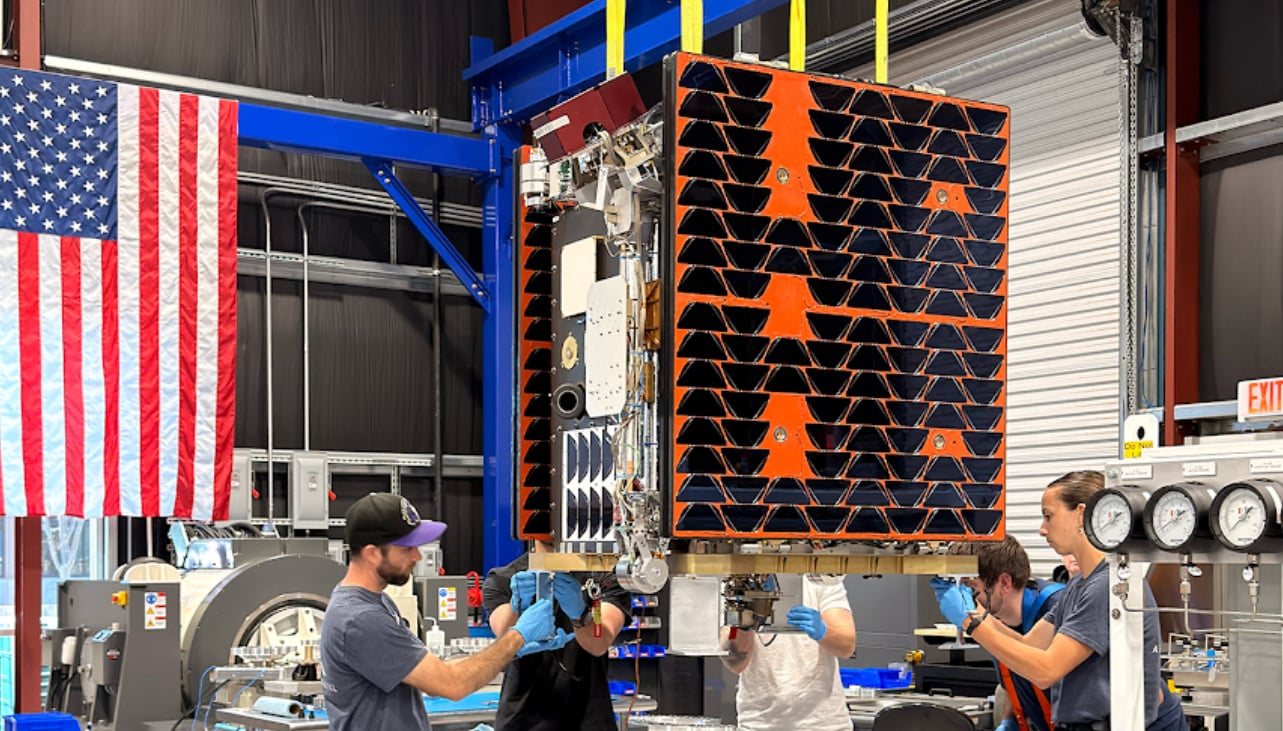
Starfish Space has completed its first full-scale Otter satellite servicing vehicle and assigned it to a customer mission, a milestone the Seattle-area company says marks its transition from technology demonstrations to operational service. The spacecraft is scheduled to launch no earlier than October 2026 on SpaceX's Transporter-18 rideshare, a dedicated Falcon 9 mission to sun-synchronous orbit from Vandenberg Space Force Base in California.
The company disclosed the milestone on September 23 during an industry event at the Seattle Aquarium. After commissioning in orbit, the first Otter will fly NASA's Small Spacecraft Propulsion and Inspection Capability mission, known as SSPICY. The $15 million Phase III Small Business Innovation Research award, issued in 2024 and managed through NASA Ames' Small Spacecraft Technology program, funds close approaches to multiple U.S.-owned defunct satellites in low Earth orbit.
Otter is expected to close to within hundreds of meters of each target and begin collecting spin rate, spin-axis, and surface-condition data in 2027. NASA has framed the flight as the first agency-funded commercial debris inspection mission and a precursor to later capture, repair, or disposal work.
«This is the moment Otter becomes real,» co-founder Austin Link said. «It's no longer something we're designing for the future. The first Otter is built, it has a customer and a mission, and it's going to space.»
Founded in 2019 by Link and Trevor Bennett, both former Blue Origin flight-sciences engineers, Starfish has spent several years trying to make rendezvous, proximity operations, and docking affordable enough for routine commercial use. Otter is a compact electric-propulsion servicer, roughly oven-sized, designed for life extension and end-of-life disposal.
Its architecture is built around three in-house systems: CETACEAN computer-vision navigation, CEPHALOPOD autonomous guidance and control, and the Nautilus capture device, which is intended to attach to an unprepared flat surface rather than a dedicated docking fixture. That last point is central to the business case, given most satellites already in orbit were never designed to be serviced.
The company has already flown pathfinders. Otter Pup 1 launched in 2023, recovered from a high-rate tumble after its transfer tug failed, lost its chemical thruster, and still completed a roughly one-kilometer rendezvous with a D-Orbit ION vehicle. Otter Pup 2 launched on Transporter-14 in June 2025 and has since been working toward a docking attempt after its original D-Orbit target was withdrawn; Starfish later selected Gilmour Space's ElaraSat as a replacement and has been conducting relative-navigation operations.
A separate 2025 collaboration with Impulse Space, called Remora, demonstrated autonomous rendezvous to about 1,250 meters using Starfish software on a Mira tug.
Those flights sit behind a growing contract book. Starfish holds deals with Intelsat for geostationary life extension, Space Systems Command for dynamic space operations in GEO, and the Space Development Agency for disposal of Proliferated Warfighter Space Architecture satellites in LEO. Additional Otters are planned for those customers. The first vehicle on Transporter-18 is the NASA inspection flight, after which Starfish says it will prepare the same architecture for commercial work.
«Humanity's ambitions in space are growing, but the infrastructure to support those ambitions is still in its infancy,» Bennett said. «We built Otter because we believe spacecraft should be serviceable after they launch. If we can make that routine, it opens up an entirely different way of designing, operating and sustaining spacecraft, and that is the future Starfish is working toward.»
10